 Contact
 Help
Help






PAMP Suisse: The MKS PAMP Refinery Explained



PAMP stands for Produits Artistiques Métaux Précieux, and it is the bullion brand of MKS PAMP, one of the largest precious metals refining and trading groups in the world. The refinery sits in Castel San Pietro, in the Swiss canton of Ticino, a few kilometres from the Italian border. The bars it produces, those carrying the Lady Fortuna design above all, are among the most recognised in the industry.
If you have come across PAMP and MKS separately and are unsure how the two relate, the answer is that they are now the same company. MKS was founded in Geneva in 1979 by gold trader Mahmoud Kassem Shakarchi, acquired a controlling interest in the PAMP refinery in 1981, and the two formally merged on 30 November 2021 to become MKS PAMP SA. MKS is the company; PAMP is the name stamped on the metal.
This guide covers who MKS PAMP are and how the group fits together, the refinery itself and its standing in the industry, what it produces and how to check that a piece is genuine using Veriscan and its CertiPAMP packaging, what PAMP bullion costs over the spot price and why, and how to buy and sell it, including the MMTC-PAMP refinery in India.
Highlights
- PAMP, an abbreviation of Produits Artistiques Métaux Précieux, is one of Switzerland’s largest precious metals refineries, based at Castel San Pietro in the Canton of Ticino.
- The refinery’s annual capacity exceeds 450 tonnes of gold, 600 tonnes of silver and 30 tonnes of platinum group metals.
- PAMP and the Geneva trading house MKS merged in 2021 to form a single company, MKS PAMP SA. The wider group also includes Manfra, Tordella & Brookes in New York and the MMTC-PAMP refinery in India.
- PAMP was the first refiner to decorate the reverse of its minted bars, introducing the Lady Fortuna in 1979. Minted bars are sealed in tamper-evident CertiPAMP assay cards, and products bearing the Veriscan logo can be authenticated free against the refinery’s own production records.
- PAMP sits on the LBMA’s Good Delivery referee panel, one of seven refiners worldwide that assess applicants to the Good Delivery List and assay sample bars from other refineries.
Who Is PAMP? (MKS PAMP Group)
PAMP is a Swiss precious metals refinery and bullion producer, and since 2021 it has formed part of a single company called MKS PAMP SA. The name is an abbreviation of ‘Produits Artistiques Métaux Précieux’, and the business was registered as PAMP SA in the canton of Ticino in 1977, starting out as a maker of small minted gold bars. Bars from the refinery are marked PAMP SUISSE, which is why the brand is almost always called PAMP Suisse in the trade, even though that has never been the company’s registered name.
The refinery stands in Castel San Pietro, in the far south of Ticino close to the Italian border, and within a few kilometres of two of the largest gold refineries in the world, Valcambi and Argor-Heraeus. That concentration is no accident. All three established themselves in southern Ticino to serve the Italian gold jewellery industry, for a long time the biggest in the world, and this one corner of Switzerland still accounts for a significant share of global gold refining.
PAMP and MKS: How the Two Became One Company
If you have searched for MKS gold and found little to go on, it is because MKS does not put its own name on retail bullion. The bars carry the PAMP name; MKS is the company behind them.
MKS was founded in Geneva in 1979 as MKS (Switzerland) SA by Mahmoud Kassem Shakarchi, a gold trader who had built his business in Beirut through the 1960s and early 1970s before moving to Switzerland in 1976. MKS began by trading PAMP’s bars into the Middle East, and in 1981 it bought a controlling interest in the refinery. Shakarchi’s children took over running the business in 1983.
MKS opened its first overseas office in Sydney in 1998, and added offices in Istanbul, Dubai, Bangkok, Singapore and Hong Kong. In 2001 it acquired the New York coin and bullion dealer Manfra, Tordella & Brookes, and in 2008 it established a refinery in India with the state-owned MMTC, covered further below. On 30 November 2021 MKS (Switzerland) SA and PAMP SA merged into one entity, MKS PAMP SA, which is why company records and LBMA listings now show that name rather than PAMP SA.
The MKS PAMP Group Today
MKS PAMP is headquartered in Geneva and operates as a group of five brands across sixteen offices in eleven countries, spanning refining, physical and financial trading, and distribution.
| Entity | Based | Role |
|---|---|---|
| MKS PAMP SA | Geneva, Switzerland | Parent company, trading operation, and the Ticino refinery |
| PAMP | Castel San Pietro, Switzerland | The bullion brand stamped on the bars |
| MMTC-PAMP | Haryana, India | Refinery joint venture with the Indian state trading corporation, majority owned by the group |
| MTB (Manfra, Tordella & Brookes) | New York, United States | Wholesale coin and bullion distributor for the US market |
The group also owns retail distribution businesses and, since 2025, a tokenised gold venture. On the trading side, MKS PAMP is one of a small number of reference price participants in the Shanghai Gold Benchmark Price, which gives it a direct role in how gold is priced in the largest physical market in the world.
The Refinery and Its LBMA Standing
The Castel San Pietro plant has an annual refining capacity exceeding 450 tonnes of gold and 600 tonnes of silver, along with 30 tonnes of platinum group metals. It can extract precious metal from any metal-bearing material (whether mining doré or recycled scrap), recast existing investment bars including large Good Delivery bars into smaller sizes, and offers an assaying service to clients. Output reaches well beyond investment bars: bullion coins and coin blanks, commemorative issues, alloys in rod and wire form for the jewellery and watch trades, gold and silver grain, and platinum and palladium sponge.
The clearest measure of the refinery’s standing is its place on the LBMA’s Good Delivery referee panel. Referees are the refiners that maintain the standard every other refiner is measured against. They assess applicants to the Good Delivery List, provide technical guidance to the LBMA, and assay sample bars submitted by other refineries. For decades that panel had only five members, MKS PAMP among them, before the LBMA expanded it to seven in March 2025. The others are the Perth Mint, Metalor, Argor-Heraeus, Rand Refinery, Tanaka and Germany’s Agosi.
Accreditation of that kind has a practical consequence for anyone buying. Good Delivery bars from the refinery are accepted for settlement on the major exchanges, including COMEX in the United States, TOCOM in Japan, the Dubai Multi Commodities Centre and the Shanghai Gold Exchange, and both PAMP and MKS are members of the Swiss precious metals trade body, the ASFCMP. It is that global acceptance, in addition to the brand’s recognisability, that makes a PAMP bar straightforward to sell almost anywhere in the world.
What the PAMP Refinery Produces
PAMP is the largest producer of minted bars in the world, and its range is unusually broad even by the standards of a major refiner, covering four metals, two fabrication methods, and weights from a third of a gram up to 400 troy ounces.
Every bar it makes falls into one of two categories. Minted bars are cut from rolled sheet and struck under a press, which gives them a polished surface, sharp edges, and the ability to carry a detailed design. Cast bars are poured into a mould and left to cool, leaving the rougher, more traditional finish. Minting is the more expensive process, which is why a minted bar normally carries a slightly higher premium than a cast bar of the same weight, and it is the minted side of the business that PAMP’s reputation was built on.
| Metal | Minted bars | Cast bars |
|---|---|---|
| Gold | 0.3 g to 1 kg, plus ¼, ½, 1, 5, 10 and 20 troy oz, and 1 to 5 tola | 50 g, 100 g, 250 g, 500 g, 1 kg, 1 tael, 10 tola and 400 oz |
| Silver | Comparable sizes and designs to the gold range | 500 g, 1 kg and 1,000 oz |
| Platinum | 1 g to 1 kg | 3 – 6 kg Good Delivery |
| Palladium | 1 g to 1 kg | 3 – 6 kg Good Delivery |
Two of those units say something about where PAMP sells. The tola, at 11.6638 grams, is the traditional unit across India, Pakistan and the Gulf, and the tael is its Chinese equivalent at roughly 37 grams. Very few Western refiners bother with either, sticking to grams and troy ounces. PAMP produces both, which is a reasonable indication of how much of its output goes east rather than west.
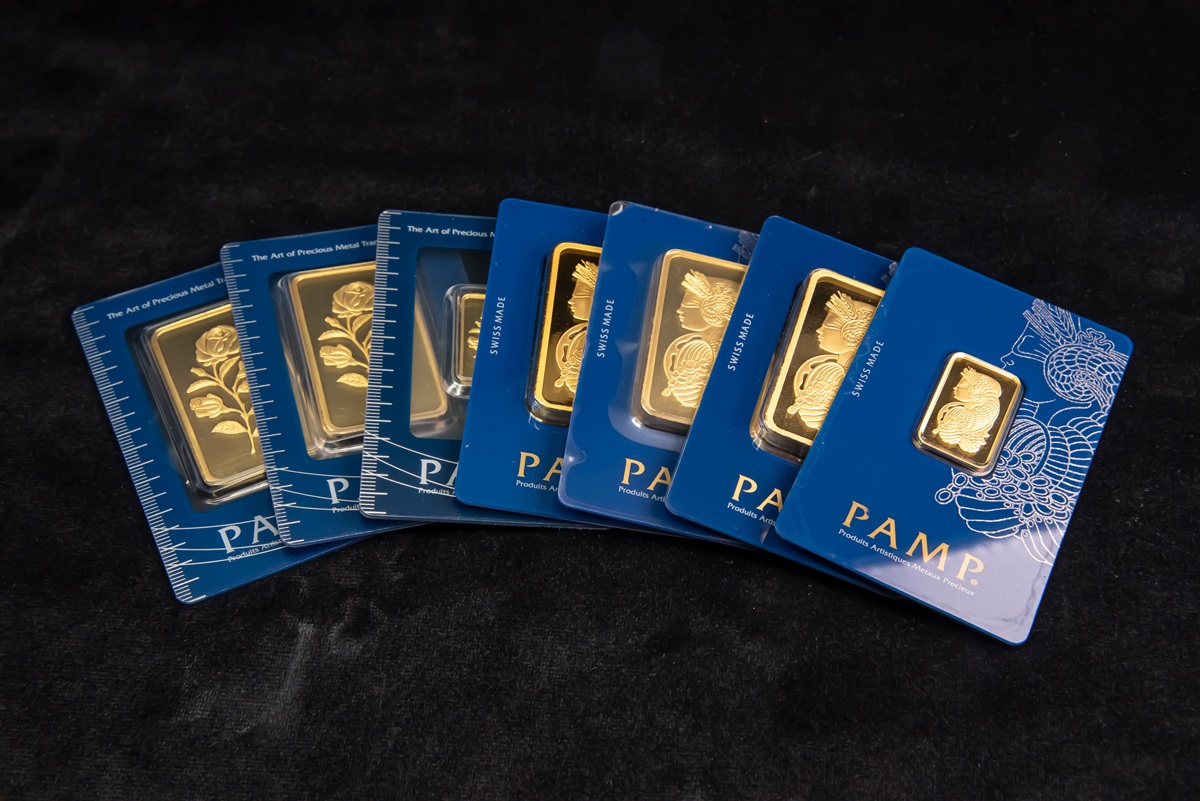
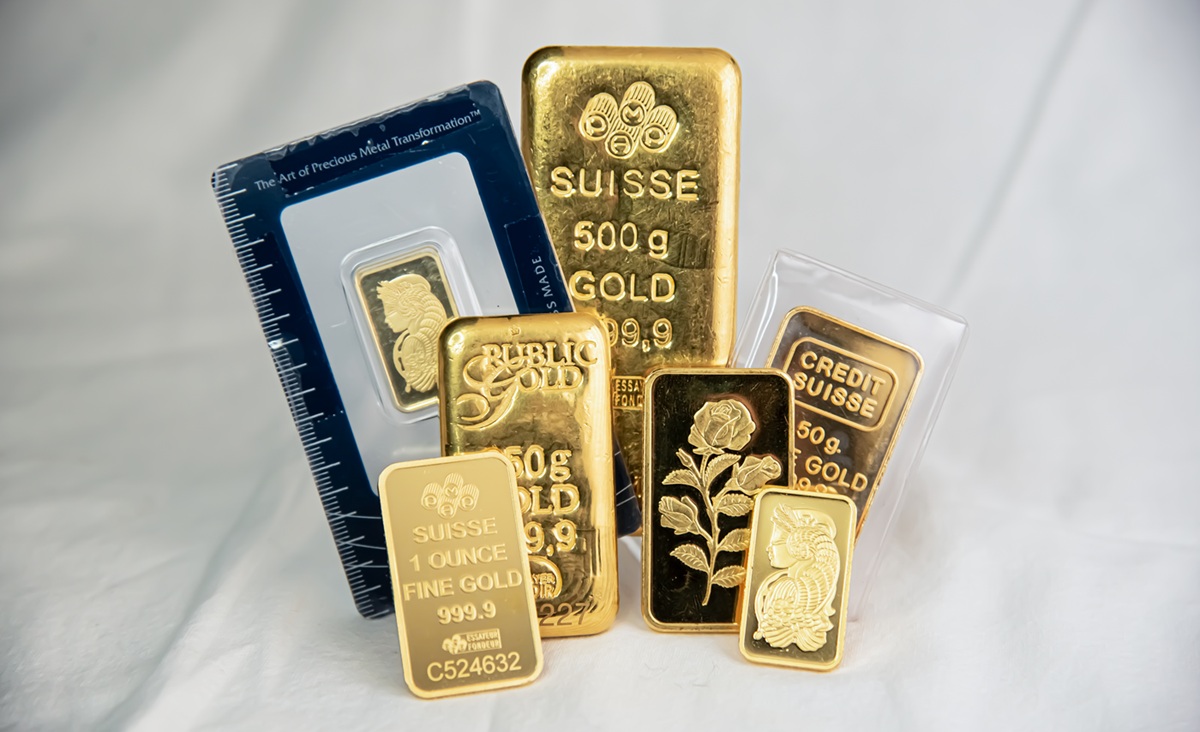
PAMP was the first bar producer to put artistic designs on a minted bar, and the range now extends well past the Lady Fortuna it is known for, taking in Rosa, a rose in bloom, and Liberty, which carries the Statue of Liberty, and a very popular annual Lunar series following the Chinese zodiac. PAMP also produces a wide variety of commemorative and branded collaboration designs.
One format worth singling out is the Multigram series, consisting of a single card holding multiple smaller bars that snap out individually. It answers the divisibility problem that otherwise pushes smaller buyers towards coins, at the cost of a higher premium per gram than a single larger bar would carry.
BullionStar stocks PAMP across most of the minted range, along with cast bars and the current Lunar series in gold, silver, and platinum. Despite the decorative nature of the designs, most of the PAMP Suisse bars we stock qualify for GST exemption in Singapore as Investment Precious Metals. BullionStar holds direct relationships with MKS, PAMP and MTB, which is how our PAMP range is sourced.
The Lady Fortuna Design and Veriscan Security
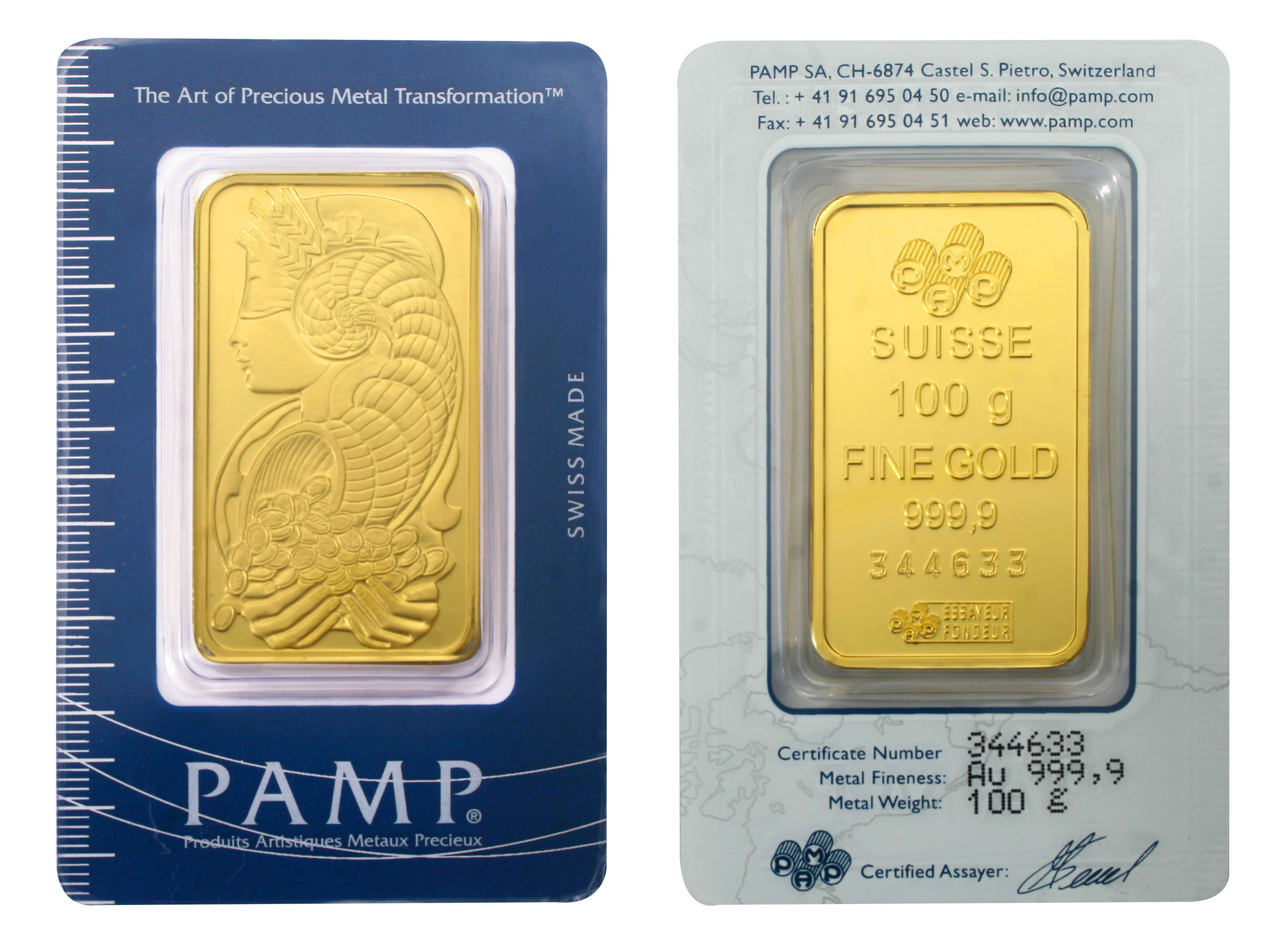
The Lady Fortuna is the most recognisable design in bullion. PAMP introduced it in 1979 and in doing so became the first refiner to decorate the reverse of a minted bar, a break from the plain logo-and-weight convention every other producer followed at the time.
The subject is Fortuna, the Roman goddess of good fortune, portrayed with her mythological attributes: a sheaf of wheat, the poppy flower, the Horn of Plenty spilling coins, the Wheel of Fortune, and the Hands of Fortune sharing her benevolence. It is struck with a highly polished and frosted proof-like finish, so the design catches the light differently across its surface, and that combination is part of what makes a genuine bar hard to copy convincingly. The 1 oz Lady Fortuna gold bar is also the first minted bar to be certified carbon neutral by the Carbon Trust, marked by a label on the front of its assay card.
Recognition of that kind cuts both ways. PAMP is among the most counterfeited names in bullion precisely because the design is so widely known: a fake carrying the Lady Fortuna will pass a glance from far more people than a fake carrying an unfamiliar refiner’s logo. Counterfeits circulate mainly through private sales, social media listings and open marketplaces, and the most reliable warning sign is a price sitting below what the metal alone is worth. Buying from an established dealer removes the problem almost entirely, since the bar has been through a professional verification process before it reaches you.
CertiPAMP Packaging
PAMP developed its CertiPAMP packaging in the 1990s, and it has since become the industry standard. The bar is sealed into a tamper-evident card that doubles as its certificate, carrying the bar’s individual serial number, the signature of an independent Swiss Federal Assayer, and a QR code. The serial number on the card should match the number stamped on the bar itself. Keeping that seal intact is worth the discipline, because a bar still in unbroken CertiPAMP is easier to sell privately.
How Veriscan Works
Veriscan works on the same principle as a fingerprint. During production the refinery scans the microscopic surface profile of each bar and stores it as a digital record. Because that profile is unique to the individual piece and effectively impossible to reproduce, a later scan can be matched against the original.
The important qualification comes first: Veriscan only covers products that carry the Veriscan logo and a QR code, either on the CertiPAMP assay card or on the paper certificate accompanying a cast bar. A PAMP bar without that logo cannot be checked this way, which includes anything made before the system launched in 2015. If you are buying second-hand, it is worth confirming the product is Veriscan-enabled if you’re relying on it for verification.
Scanning is free and done through PAMP’s Veriscan app, which requires an iPhone 7 or newer running iOS 12 or above. There is also scanner software for PC, though that is aimed mainly at distributors. The sequence is to scan the QR code from within the app rather than with the phone’s own camera, tell the app whether the bar is still in its assay card, then hold the camera flat over the bar and follow the on-screen alignment guide. The app returns a pass, or tells you it was unable to authenticate. Bars can be scanned either sealed or loose, and larger products can be verified on all six sides.
One limit is worth understanding. Veriscan confirms that a particular bar matches a particular record held by the refinery. That is a strong check on identity, but it is not a test of the metal itself, so it does not replace physical assay if you have real reason to doubt where a bar came from.
Checking a PAMP Bar
– Match the serial number stamped on the bar against the number printed on the assay card.
– Check the CertiPAMP seal for signs of opening or resealing, and look closely at print quality on the card.
– Weigh it. A counterfeit that gets the dimensions right is usually wrong on weight, and one that gets the weight right is usually wrong on dimensions.
– Compare the design against a known genuine example, paying attention to the frosted and polished areas rather than the outline, which is the easier part to imitate.
– Run a Veriscan scan where the product supports it.
– Where any doubt remains, have the bar tested by a dealer.
Our guide on how to test gold covers the physical methods, from density and ultrasound through to X-ray fluorescence, in more detail.
PAMP Gold Prices and Premiums
There is no such thing as a PAMP gold price separate from the global gold spot price. A PAMP bar is priced at the live spot price of gold for its weight, plus a premium covering refining, minting, packaging and distribution. When the gold price moves, the price of every PAMP bar moves with it, minute by minute. What PAMP controls is the premium, and that is where it differs from other refiners.
That premium sits a little above the market for an equivalent bar. The table below compares four 1 oz minted gold bars from our range, priced at the same moment at the time of writing.
| 1 oz minted gold bar | Premium over spot |
|---|---|
| Perth Mint | 3.6% |
| Metalor | 4.0% |
| Argor-Heraeus | 4.0% |
| PAMP Lady Fortuna | 4.6% |
The spread between the cheapest and the dearest of the four is about one percentage point. What that buys is the proof-like finish, the CertiPAMP assay card, Veriscan compatibility, and a design recognised on sight in most of the world. Whether it is worth a percentage point is a judgement only a buyer can make, because the gold content is identical: all four are 999.9 fine, and all four come from refiners on the LBMA Good Delivery List.
The Design Premium
Standard Lady Fortuna bars price close to the rest of the market. PAMP’s design-led issues do not, and the gap is worth seeing in numbers. Priced at the same moment as the table above, the 2025 1 oz Lunar Year of the Snake carried a premium of roughly 10.8% over spot, and a 1 oz Good Luck Dragon roughly 22.9%.
That difference is a collector premium rather than a gold premium. It reflects limited mintages, seasonal demand around Lunar New Year, and the appeal of the design itself. On the secondary market that premium can hold, and for a sought-after year it can even grow. It can also disappear if you’re not selling privately, because a dealer buying the bar back is generally buying an ounce of gold.
What You Get Back When You Sell
A bullion dealer’s published buy-back prices are set by weight, not by refiner. They will show a single quoted price for a 1 oz gold bar, and it applies whether that bar is a PAMP Lady Fortuna, a Metalor, an Argor-Heraeus or a Perth Mint. The premium paid for the PAMP brand does not form part of the calculation when it comes back.
A private sale is the exception. The Lady Fortuna’s recognisability is a genuine advantage between individuals, and a Lunar bar still in its original packaging can find a buyer who values the design, which is the one route where a design premium may be partly recovered. That comes with the usual trade-offs of selling privately: finding the buyer, agreeing on authentication, and handling payment and security yourself.
You can check the live gold price in grams, ounces or kilograms on our live gold price page, and current buy-back rates for every product on our sell gold page.
MMTC-PAMP and Buying PAMP in Asia
MMTC-PAMP is PAMP’s Indian operation. It began in 2008 as a joint venture with MMTC, the Metals and Minerals Trading Corporation of India, the state trading company that was for years the country’s largest importer of gold. The refinery sits in Haryana, south of Delhi, with its corporate office in the capital, and it refines both imported mining doré and domestic jewellery scrap under the technical supervision of the Swiss operation. A group restructuring approved in 2024 left 72.65% of the company held by PAMP Ventures SA, so it is now majority Swiss-owned rather than an even partnership.
For a buyer, the practical question is whether an MMTC-PAMP bar is the same thing as a PAMP Suisse bar. Both are made to the same technical standards, and both are LBMA accredited, with MMTC-PAMP the only Indian refinery listed for Good Delivery in both gold and silver. They are separate products from separate refineries, though, with different markings: MMTC-PAMP’s minted bars usually carry a lotus design rather than the Lady Fortuna, and the refinery also strikes gold Sovereigns in India under licence from the Royal Mint, identifiable by their ‘I’ mintmark.
The PAMP range we stock is the Swiss-produced bullion described throughout this guide, sold and held from Singapore. For buyers elsewhere in Asia that carries a few practical advantages: qualifying Investment Precious Metals are exempt from Singapore’s GST, holdings can be kept fully allocated and insured in our Singapore vault, and bullion can be shipped internationally or collected in person at our Bullion Center.
Frequently Asked Questions
What does PAMP stand for?
PAMP stands for Produits Artistiques Métaux Précieux, French for “artistic precious metals products”. The name dates from the company’s registration in the Swiss canton of Ticino in 1977 and reflects its founding purpose: producing decorated minted bars at a time when every other refiner made plain ones.
Is PAMP the same as MKS PAMP?
Yes. MKS acquired a controlling interest in PAMP in 1981, and the two formally merged on 30 November 2021 into a single company, MKS PAMP SA, headquartered in Geneva. MKS PAMP is the company; PAMP is the brand name that appears on the bars it produces.
What is MKS gold?
MKS gold refers to bullion produced by MKS PAMP, the Swiss refining and trading group. MKS does not stamp its own name on retail bars, so gold produced by the group carries the PAMP name instead.
Where are PAMP bars made?
PAMP bars are made at Castel San Pietro, in the canton of Ticino in southern Switzerland, a few kilometres from the Italian border. The parent company, MKS PAMP SA, is headquartered in Geneva, and the group also operates the MMTC-PAMP refinery in Haryana, India.
Are PAMP bars a good investment?
PAMP bars track the gold price the same way as any other bar from an accredited refiner, because a bar’s value comes from its metal content rather than the name stamped on it. What PAMP adds is recognisability, tamper-evident packaging and Veriscan authentication, at a premium roughly a percentage point above comparable 1 oz bars from other refiners. Whether that is worth paying depends on whether verification and resale recognition matter more to you than the lowest possible premium.
How do I verify a PAMP bar is genuine?
Check that the serial number stamped on the bar matches the one printed on its CertiPAMP assay card, that the card’s seal is intact, and that the weight and dimensions are correct. If the packaging carries the Veriscan logo and QR code, PAMP’s free Veriscan app will compare the bar’s microscopic surface profile against the refinery’s own production record. Where any doubt remains, a reputable dealer can test the metal itself.
What is MMTC-PAMP?
MMTC-PAMP is PAMP’s Indian refinery, established in 2008 as a joint venture with MMTC, India’s state trading corporation, and now 72.65% owned by PAMP Ventures SA following a restructuring approved in 2024. Based in Haryana, south of Delhi, it is the only Indian refinery accredited on the LBMA’s Good Delivery Lists for both gold and silver. Its minted bars typically carry a lotus design rather than the Lady Fortuna.
Do PAMP bars carry a higher premium?
Slightly, yes. At the time of writing a 1 oz PAMP Lady Fortuna carried a premium of around 4.6% over spot, against roughly 3.6% to 4.0% for comparable 1 oz minted bars from the Perth Mint, Metalor and Argor-Heraeus. PAMP’s Lunar and commemorative issues sit far above that, from around 10% upwards, because they carry a collector premium on top of the gold content.
Buying and Selling PAMP Bullion
PAMP is undeniably one of the most popular and recognised bullion brands among investors today. The cost of that reputation is modest on standard bars and substantial on the design-led ones, and is worth considering when choosing what to buy.
Ready to buy? Browse our full PAMP range, alongside gold bars from other LBMA-accredited refiners if a lower premium is the priority. Bullion can be shipped internationally, collected in person from our Bullion Center at 45 New Bridge Road in Singapore, or held in secure vault storage. Live buy-back prices are published on our sell gold page at all times, and customers can lock in a sale 24/7 through their online account, so you can see both sides of the spread before you commit.
Subscribe to Gold University Articles
Copyright Information: BullionStar permits you to copy and publicize articles or information from the BullionStar Gold University provided that a link to the article's URL or to https://bullionstar.com is included in your introduction of the article or blog post together with the name BullionStar. The link must be target="_blank" without re="nofollow". All other rights are reserved. BullionStar reserves the right to withdraw the permission to copy content for any or all websites at any time.