 Contact
 Help
Help






The Perth Mint: Australia’s Government-Owned Mint and Refinery



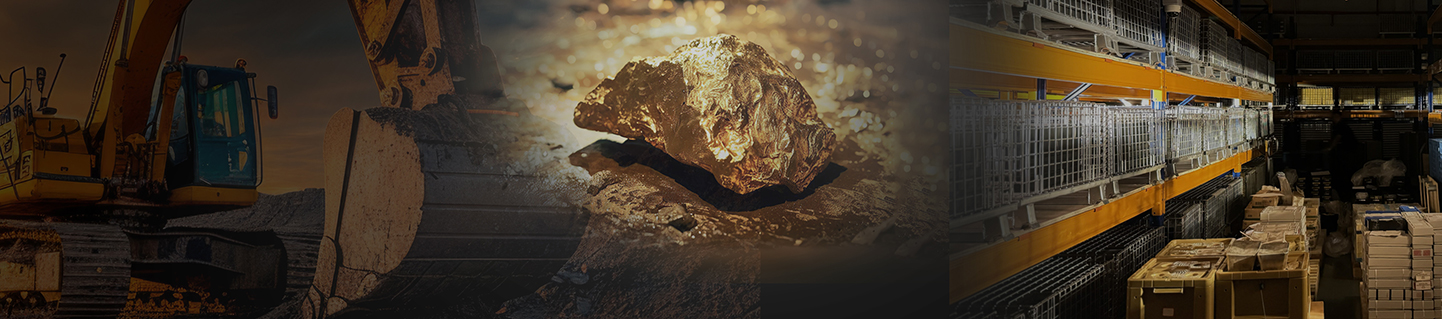
The Perth Mint is unusual among the world’s major bullion producers in being two businesses in one. It is a sovereign mint that strikes coins, and a large precious metals refinery that turns mined doré into bars. Very few institutions do both, the Royal Canadian Mint among them, and the distinction matters, because much of what carries the Perth Mint name is refinery output rather than coinage. Both sides of the business are based in Perth, in Western Australia, and both are owned outright by the Government of Western Australia, which makes the Mint one of very few bullion brands with a state balance sheet behind it.
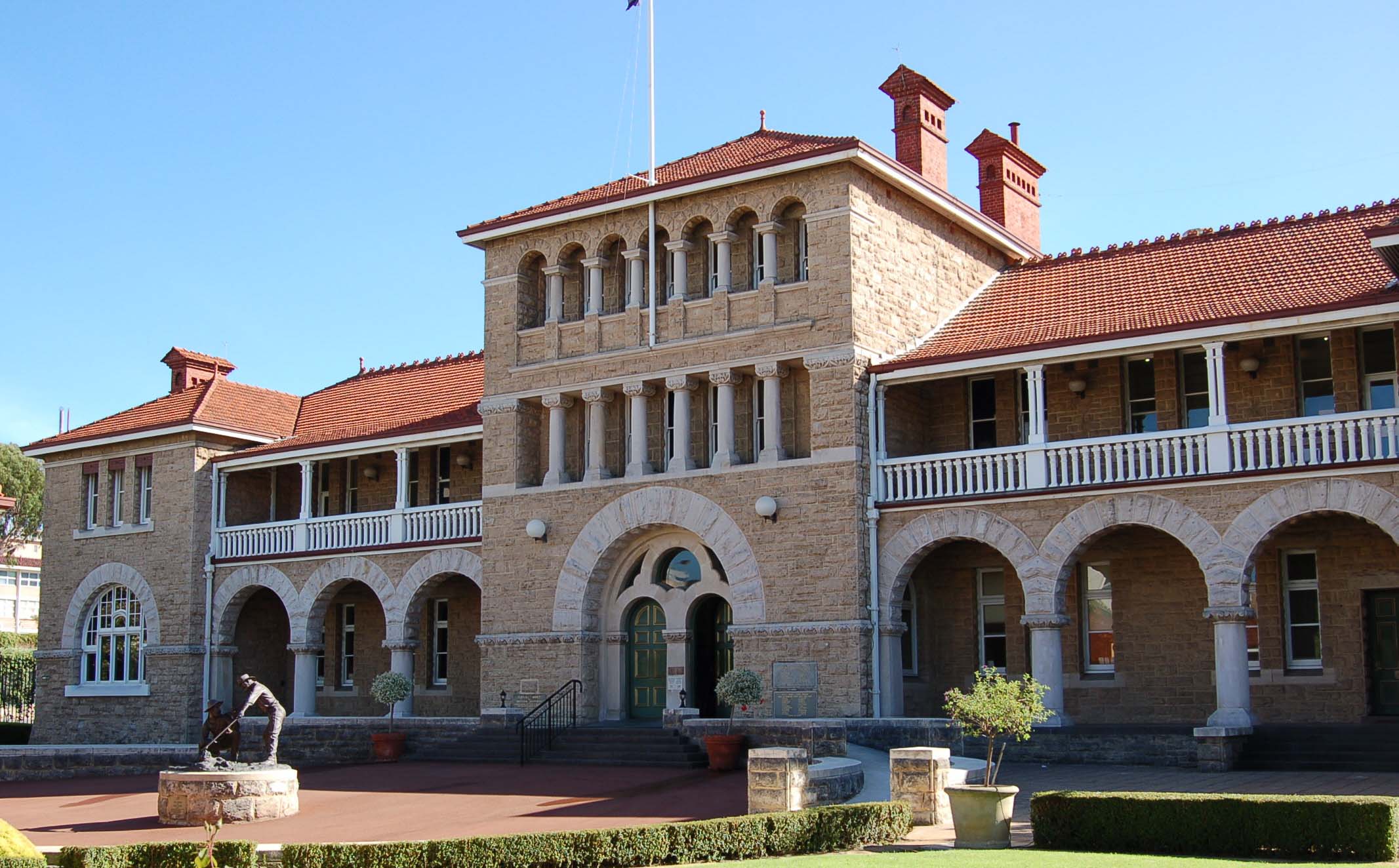
It opened in June 1899 as a branch of Britain’s Royal Mint, established to handle the gold pouring out of the Coolgardie and Kalgoorlie gold rush discoveries of 1892 and 1893, and struck gold sovereigns for the Empire until 1931. Control passed from London to the Western Australian government in 1970. Today it is best known for two things: the Australian bullion coin programme, built around native wildlife and an annual Lunar series, and a refinery that processes the majority of Australia’s mined gold.
This guide covers who owns the Perth Mint and how it is structured, the refinery behind the brand and the accreditations it holds, what it produces in coins and bars, how to check that a Perth Mint product is genuine, and what buying its bullion involves if you are outside Australia.
Highlights
- The Perth Mint is both a sovereign mint and a precious metals refinery, owned outright by the Government of Western Australia and trading as Gold Corporation.
- It opened in June 1899 as a branch of Britain’s Royal Mint, following the Coolgardie and Kalgoorlie gold discoveries, and passed to Western Australian government control in 1970.
- In the year to 30 June 2026 the Mint refined 440.1 tonnes of precious metal, sold 9.45 million minted coins and bars, and returned a A$47.7 million dividend to the Western Australian government, its largest in 127 years.
- Its Australian Bullion Coin Programme is built around the Kangaroo, Koala and Kookaburra wildlife series, alongside an annual Lunar series following the Chinese zodiac.
- The refinery is accredited on the LBMA’s Good Delivery Lists for both gold and silver, and in March 2025 became one of only seven LBMA Good Delivery referees worldwide.
Who Is The Perth Mint?
The Perth Mint is Australia’s oldest operating mint, and the trading name of Gold Corporation, a government trading enterprise established under Western Australia’s Gold Corporation Act 1987. It is owned outright by the state and works from two sites: the original 1899 building on Hay Street in East Perth (which still houses the retail shop and public exhibition after 127 years of continuous use), and a modern refinery beside Perth Airport.
The scale is easy to underestimate from the coins alone. In the year to 30 June 2026 the Mint refined 440.1 tonnes of precious metal, sold 9.45 million minted coins and bars, and turned over A$44.23 billion, with 93% of that revenue earned from exports. Profit before tax reached a record A$100.19 million, against A$15.67 million the year before. It employs more than 800 people, and its refinery processes the majority of all gold mined in Australia and ranks among the largest precious metals refineries outside Switzerland.
Government Ownership and the State Guarantee
State ownership is the Perth Mint’s most distinctive feature. Gold Corporation is wholly owned by the Government of Western Australia, runs on a commercial and self-funding basis, and pays dividends to the state rather than drawing on it. In the year to 30 June 2026 that dividend was A$47.7 million, the largest in the Mint’s 127-year history. Beyond ownership, Section 22 of the Gold Corporation Act has the Treasurer of Western Australia guarantee, in the name of the Crown, the payment of the cash equivalent of gold due and deliverable by the group.
No privately owned refiner has anything comparable, and it is a large part of why the Mint is regarded as one of the lowest-counterparty-risk names in the industry. It backs the group’s payment obligations, which is most relevant to anyone holding metal in an account with the Mint rather than to someone who has bought a bar and taken delivery of it. If you hold the physical bar, the bar is what you own.
From Branch Mint to Government Enterprise
Australia’s mints owe their existence to gold rushes. In the second half of the nineteenth century Australia was a collection of British colonies, and gold coins circulated as money across an Empire on the gold standard, so a colony that struck gold needed somewhere to turn it into currency. Branch mints of the Royal Mint of London opened in Sydney in 1855 and in Melbourne in 1872 to strike gold Sovereign coins from the New South Wales and Victorian rushes. Perth followed the discoveries at Coolgardie in 1892 and Kalgoorlie in 1893, both around 600 km east of the city, opening in June 1899 as the third and last Australian branch of the Royal Mint. It struck gold sovereigns for the Empire until 1931, when Britain left the gold standard.
Control stayed with the British government until 1970, when it passed to Western Australia and the operation became the Western Australian Mint. The modern Perth Mint dates from the second half of the 1980s. A marketing company, GoldCorp Australia, was established in 1986 to take the Mint’s forthcoming bullion coin programme international, and the Gold Corporation Act 1987 followed, establishing the Mint’s official bullion coin programme in legislation and providing for the reorganisation. Gold Corporation itself was incorporated in June 1988 as the holding company for both entities. The Australian bullion coin programme launched in 1987, and it is what the Mint is best known for today.
Perth Mint Refinery
The refinery is a separate operation on a separate site. Until 1989 the Mint refined metal within its Hay Street headquarters; since then the work has been done at a purpose-built facility beside Perth Airport. It is one of the largest precious metals refineries outside Switzerland, and in the year to 30 June 2026 it processed 440.1 tonnes of precious metal, down from 561 tonnes the year before, in a year when both revenue and profit reached records due to higher metal prices.
Most of that metal arrives as doré, the crude alloy that comes off a mine site, and the majority of all gold mined in Australia passes through this refinery. It also takes doré from mining operations across the wider region, along with industrial scrap and old jewellery. Its output goes well beyond investment bars: gold and silver granules for the jewellery trade, and coin blanks supplied to other mints around the world. It also feeds the mint next door. The refinery’s silver output supplies the Perth Mint’s own silver coin and blank production, which makes the group one of very few operations able to take metal from a mine and turn it into a finished legal tender coin without it leaving the organisation.
In 2026 the refinery showed the top of its range by casting the largest gold bar ever made, a single bar of 521.2 kilograms refined to 99.999% purity, which took the Guinness World Record from a 300 kilogram bar produced by a mint in Dubai. More than thirty-five specialists worked on it over about three days with Guinness adjudicators present throughout. The purity is the part worth noticing. Investment bars are made to 99.99% and that is the accepted standard across the industry, so a five-nines bar weighing half a tonne is a statement about what the refinery can do rather than a product anyone can buy. It joins the one tonne gold coin the Mint produced in 2011.
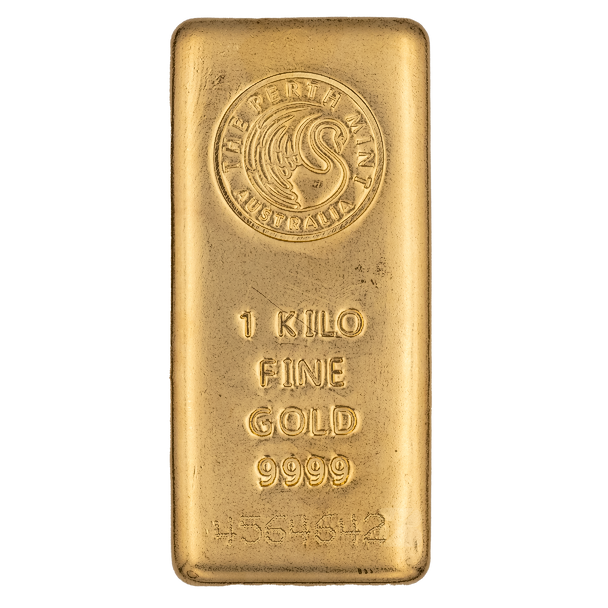
The swan stamped on Perth Mint bars and coins is a reference to the Swan River, which runs through the city. It is one of the more recognisable refiner’s marks in the industry, and one of the details worth examining closely on any bar presented as a Perth Mint product.
LBMA Accreditation and Good Delivery
The refinery is accredited on the London Bullion Market Association’s Good Delivery Lists for both gold and silver. This means its 400 oz gold bars and 1,000 oz silver bars are accepted as a standard unit of settlement in the wholesale market. Its large gold bars are also approved for delivery against contracts on COMEX in New York, TOCOM in Tokyo and the Shanghai Gold Exchange, and the refinery holds UAE Good Delivery accreditation alongside the LBMA’s responsible gold and silver certifications.
In March 2025 the LBMA went further and appointed the Perth Mint as one of its Good Delivery referees: the small panel of refiners that assesses applicants to the list, provides technical guidance to the LBMA, and assays sample bars submitted by other refineries. That panel had held five members for decades, and the Perth Mint and Germany’s Agosi were added to bring it to seven. The others are PAMP, Metalor, Argor-Heraeus, Rand Refinery and Tanaka.
How the Refinery Came Together
The refinery’s corporate history is more tangled than the Mint’s own. In 1998 the Western Australian Mint transferred all of its refining operations into a 50-50 joint venture with Golden West Refining Corp, based at Kewdale just east of Perth, called Australian Gold Refineries. Golden West had itself been a subsidiary of N.M. Rothschild & Sons in Australia between 1989 and 1995, during the era when the Rothschild name still chaired the London gold price fixing. Golden West’s share passed in 2001 to a company controlled by the American miner Newmont, and in 2002 the venture merged with Johnson Matthey’s Australian and New Zealand refining business to become AGR Matthey. The Perth Mint bought out its partners and took full ownership in 2010. Today’s refining operation is the combined inheritance of three separate Australian refining businesses.
The Mint has attracted scrutiny in recent years over gold sourcing, bar specification and compliance. Each matter has since been closed, and in the year to June 2026 the Mint completed its anti-money laundering remediation programme, confirming that it had delivered every requirement under its enforceable undertaking with AUSTRAC, Australia’s financial crime regulator. Perth Mint bullion remains among the most widely held and traded in the world.
What the Perth Mint Produces
Because the Perth Mint is both a mint and a refinery, its output splits into two streams that few organisations run side by side at this scale: legal tender bullion coins struck at the mint, and investment bars poured or pressed at the refinery.
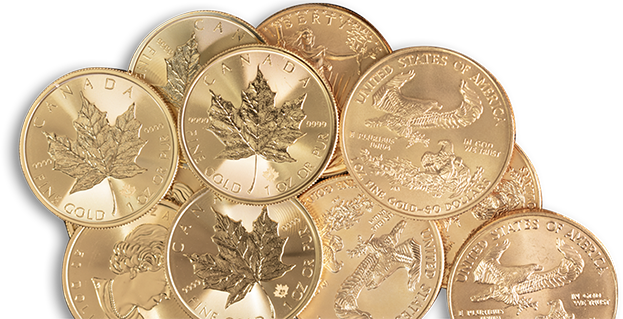
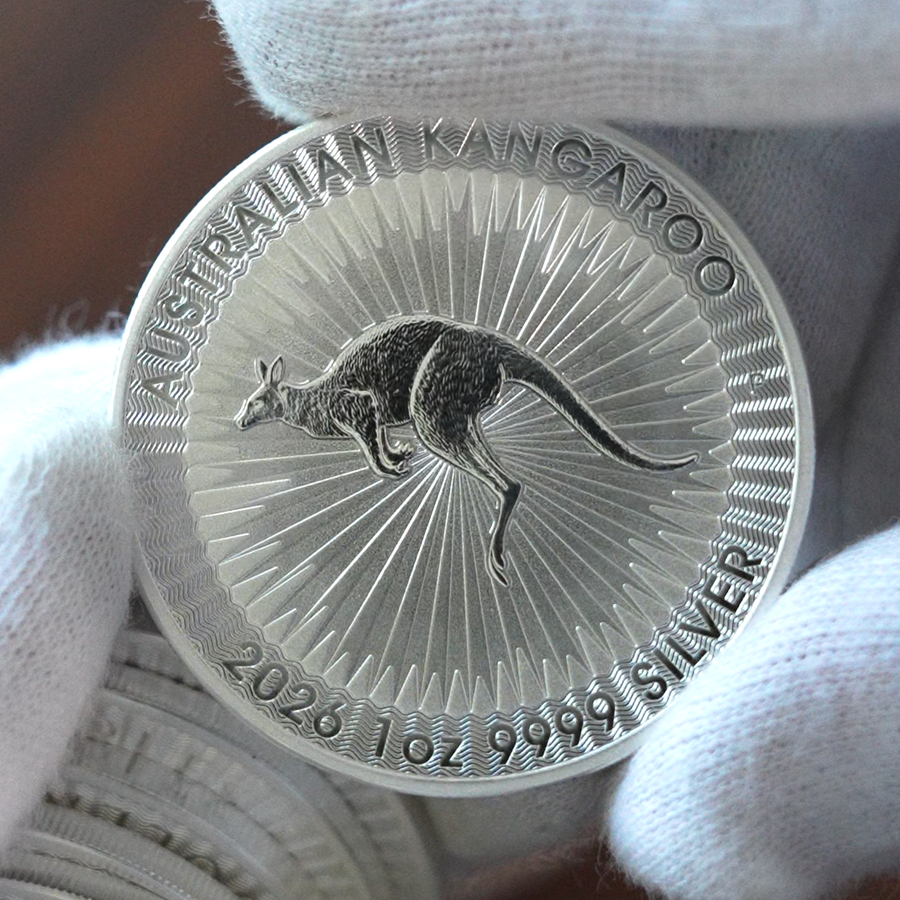
The coins come under the Australian Bullion Coin Programme, which the Mint has produced on the Australian government’s behalf since 1987. The core of its bullion range centres on the native wildlife of Australia. Coins include the Kangaroo, issued in gold, silver and platinum, and the Koala and Kookaburra in silver. Alongside those runs the annual Lunar series, following the animals of the Chinese zodiac, now in its third twelve-year cycle after Series III began in 2020. Because these are legal tender coins rather than privately produced bars, each carries the monarch’s effigy on the obverse, updated to King Charles III from 2024. Many of its product ranges feature annual designs, with a new reverse each year, adding to the appeal for collectors.
Two things distinguish them from most bullion coins. The finish is closer to proof quality than the plain bullion standard, which is why Perth Mint coins attract collectors as well as investors. And mintages vary by product. Some are struck without limit, while others are capped, and that scarcity can attach a collector premium on top of the metal. The Mint defines an unlimited mintage as one that may be sold in unlimited quantities for an unlimited period, but it can close a mintage later, so a coin bought as an ordinary bullion issue may end up with a fixed final mintage after the fact. Our guide to gold coins vs gold bars covers how legal tender status and collector premiums affect what you pay and what you get back.
The bars are a broader range and a plainer proposition. The refinery produces minted bars in small investment sizes, cast bars in the larger weights, and the 400 oz gold and 1,000 oz silver Good Delivery bars that serve the wholesale market rather than individual buyers.
BullionStar stocks the Perth Mint bar range in both minted and cast form, from one gram upwards, alongside Kangaroo, Koala, Kookaburra, and Lunar coins.
How to Identify Genuine Perth Mint Bullion
Perth Mint products are among the more counterfeited in the market, for the same reason PAMP’s are. The designs are widely recognised, so a convincing fake passes casual inspection more easily than one carrying an unfamiliar logo. Genuine products do carry a consistent set of markings, though, and the Mint has built real anti-counterfeiting work into its coins.
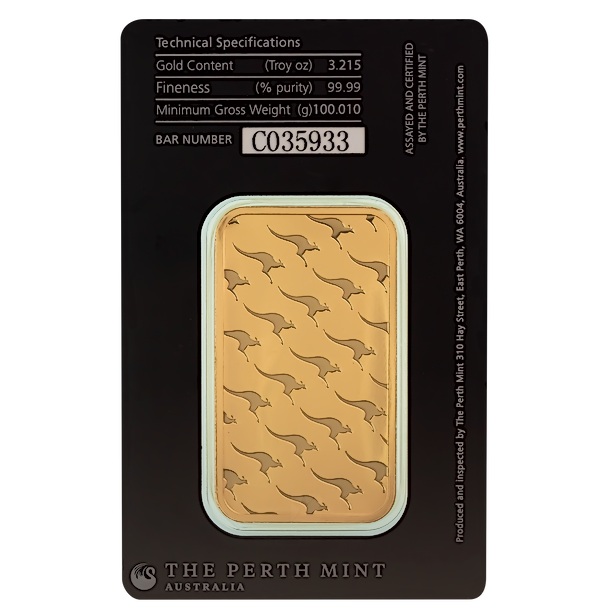
Start with the piece itself. Perth Mint minted bars are struck with the Mint’s swan logo, an inscription of their weight and purity, and a kangaroo motif on the reverse. That swan doubles as the refinery’s LBMA-accredited stamp. Bars are supplied in a serial-numbered, tamper-evident display card that also serves as the certificate. Minted bars are produced at 99.99% for gold and silver and 99.95% for platinum, so a minted bar claiming any other fineness is worth a closer look.
Checking a Perth Mint Serial Number
Older Perth Mint minted bar carry a serial number, stamped on the bar and printed on its display card. Those two numbers should match, and that match is the check that matters.
What a serial number cannot do is verify a bar by itself. There is no public database to look one up in. The number is a production record held by the Mint rather than a lookup service, so pages offering to “verify authenticity online” from a serial number alone are describing something that doesn’t exist. Counterfeiters print numbers onto replica cards, which means a plausible-looking number proves nothing on its own.
Read it the other way round instead. A mismatch between the number on the bar and the number on the card is a strong negative signal and reason enough to stop. A match is a necessary condition rather than proof, and it should be weighed alongside the bar’s weight, its dimensions and its physical markings.
Modern Perth Mint bars do not feature a serial number on the bar itself, but are supplied in an improved ‘tamper-evident’ case.
Security Features on Perth Mint Coins
The coins carry more protection than the bars. Since 2019, Australian Kangaroo gold coins have included a micro-engraved letter, small enough that magnification is needed to find it. It is a genuine deterrent, because reproducing engraving at that scale is beyond most counterfeit operations.
The caveat is worth stating plainly. No single security feature is proof of authenticity. Features can be imitated, and a fake that reproduces a design convincingly may still be wrong on weight, dimensions or density. Feature checks work best alongside physical measurement, not instead of it.
In practice, that means:
– Check that the serial number stamped on the bar matches the number printed on its card.
– Check the card for any sign of opening or resealing, and look closely at print quality.
– Weigh and measure the piece. A counterfeit that gets the design right is usually wrong on weight, dimensions, or both.
– Compare the swan stamp, the weight and purity inscription and the kangaroo motif against a known genuine example.
– On Kangaroo gold coins, look for the micro-engraved letter under magnification.
– Where any doubt remains, have the piece tested by a dealer.
Our guide on how to test gold covers the physical methods, from density and ultrasound through to X-ray fluorescence, in more detail.
Perth Mint Prices and Premiums
There is no separate Perth Mint gold price. Every Perth Mint product is priced from the live spot price for the metal it contains, plus a premium covering refining, minting, packaging and distribution. The metal price moves continuously through the trading day, and the premium is the part the mint and the dealer control.
Sovereign status might suggest a higher price, but Perth Mint bars are among the more competitively priced of the major accredited refiners. The table below compares 1 oz minted gold bars from our range, priced at the same moment at the time of writing.
| 1 oz minted gold bar | Premium over spot |
|---|---|
| Perth Mint | 3.6% |
| Metalor | 4.0% |
| Argor-Heraeus | 4.0% |
| PAMP | 4.6% |
More striking is what happens when you compare the bar with the coin. At the same moment, a 1 oz Australian Gold Kangaroo carried a premium of 3.6%, effectively identical to the Perth Mint 1 oz bar. A Perth Mint Lunar gold coin however showed a premium of 10.44%, a reflection of the limited mintage and appeal to collectors.
Silver behaves differently, because premiums are a much larger share of a cheaper metal. Comparing 1 oz silver coins from our range at the same moment:
| 1 oz silver coin | Premium over spot |
|---|---|
| Australian Kangaroo (Perth Mint) | 10.0% |
| UK Britannia (Royal Mint) | 10.0% |
| Austrian Philharmonic (Austrian Mint) | 10.0% |
| Canadian Maple Leaf (Royal Canadian Mint) | 10.4% |
| American Eagle (US Mint) | 20.7% |
| Australian Lunar, Year of the Horse (Perth Mint) | 29.8% |
The Silver Kangaroo sits level with the Britannia and the Philharmonic, and at half the American Eagle’s premium. The Perth Mint’s own Lunar coin is the most expensive on the list, which makes the point better than any generalisation could: the premium follows the product type, not the mint.
That gap matters most when you sell. A dealer will offer a fixed buy back for a 1 oz silver coin, regardless of the brand or design that has been stamped on it. A limited mintage can hold or grow its value in the collector market if selling privately, but a dealer buying the coin back is buying an ounce of silver.
The same is true for gold, so a 1 oz gold bar is quoted at the same price whether it came from Perth, Switzerland or anywhere else. Perth Mint’s lower entry premium therefore works in your favour on the round trip.
You can check today’s prices on our gold price today and silver price today pages, and current buy-back rates for every product on our sell gold & silver page.
Perth Mint Bullion Outside Australia
The Perth Mint operates its own retail business, but it also supplies other bullion dealers directly. That allows investors and collectors to buy Perth Mint products outside Australia with far less shipping, taxation and storage friction than importing them individually.
Most Perth Mint bullion products qualify for GST exemption in Singapore under the Investment Precious Metals (IPM) scheme, so there is no sales tax applied at purchase. Singapore also levies no capital gains tax, so no Singapore tax arises on any gain when you sell. Tax residents of other countries should check their local rules, since a gain may still be taxable where you live.
Purchases made with BullionStar can be shipped internationally, stored securely in our Singapore vault, or collected from our Bullion Center. Metal left in the vault can also be sold back online at any time without being shipped anywhere first.
Frequently Asked Questions
Is the Perth Mint government owned?
Yes. The Perth Mint is the trading name of Gold Corporation, a government trading enterprise owned outright by the Government of Western Australia under the Gold Corporation Act 1987. It operates commercially and pays dividends to the state, and Section 22 of that Act has the Western Australian Treasurer guarantee the group’s payment obligations on behalf of the Crown, a protection no privately owned refiner can offer.
Are Perth Mint bars LBMA Good Delivery?
The Perth Mint refinery is accredited on the London Bullion Market Association’s Good Delivery Lists for both gold and silver, and since March 2025 it has also been one of the LBMA’s seven Good Delivery referees. Strictly speaking, Good Delivery status applies to the large wholesale bars — the 400 oz gold and 1,000 oz silver bars traded between institutions. Smaller retail bars are produced by that same accredited refinery to the same standards, but they are not themselves Good Delivery bars.
How do I check a Perth Mint serial number?
Match the serial number stamped on the bar against the number printed on its display card. The two should be identical, and a mismatch is reason enough to stop. There is no public database to look a number up in, because the serial number is a production record held by the Mint rather than a lookup service, so a match confirms the bar and its card belong together rather than proving authenticity on its own. Modern bars do not feature a serial number on the bar itself, but are supplied in ‘tamper-evident’ cards.
What is the difference between Perth Mint Kangaroo and Lunar coins?
The Kangaroo is the Mint’s flagship annual bullion coin, produced in high volumes, which keeps its premium low. The Lunar series changes animal and design every year following the Chinese zodiac, and is struck to a limited mintage, which attracts collectors and pushes the premium higher. Both are legal tender Australian coins at 99.99% purity.
Can I buy Perth Mint bullion outside Australia?
Yes. The Perth Mint supplies bullion dealers internationally as well as selling directly, so its coins and bars are widely available outside Australia. BullionStar stocks the range in Singapore, where most Perth Mint bullion qualifies for GST exemption as an Investment Precious Metal, with international shipping, allocated vault storage, or collection from our Bullion Center in Singapore.
Do Perth Mint bars carry a premium?
Every bullion product carries a premium over the spot price, and Perth Mint’s are among the more competitive of the major accredited refiners. At the time of writing a 1 oz minted gold bar carried a premium of around 3.6% over spot, against roughly 4.0% to 4.6% for comparable bars from other refiners, with the cast version slightly lower again.
Is Perth Mint bullion a good investment?
Perth Mint bullion tracks the gold and silver price in the same way as products from any other accredited refiner, because the value comes from the metal rather than the name or design struck on it. What the Perth Mint adds is sovereign ownership, a state guarantee behind the group’s obligations, LBMA accreditation for both metals, and premiums at the competitive end of the market.
Buying and Selling Perth Mint Bullion
The Perth Mint occupies an unusual position: a sovereign institution owned by a state government, and a working refinery that processes most of the gold mined in Australia and sits on the LBMA’s panel of Good Delivery referees. Either credential alone would justify a premium. In practice its bars are among the more competitively priced of the major accredited refiners, and a 1 oz Gold Kangaroo costs about the same as a plain 1 oz bar.
Ready to buy? Browse our full range of gold bars, gold coins, silver bars and silver coins, including the latest Kangaroo and Lunar releases. Bullion can be shipped internationally, held in allocated storage in our Singapore vault, or collected from our Bullion Center at 45 New Bridge Road. Live buy back prices are published at all times on our sell gold & silver page, and metal held in the vault can be sold back online at any hour without being shipped anywhere first.
Subscribe to Gold University Articles
Copyright Information: BullionStar permits you to copy and publicize articles or information from the BullionStar Gold University provided that a link to the article's URL or to https://bullionstar.com is included in your introduction of the article or blog post together with the name BullionStar. The link must be target="_blank" without re="nofollow". All other rights are reserved. BullionStar reserves the right to withdraw the permission to copy content for any or all websites at any time.