 Contact
 Help
Help






Deep Dive: China’s Exit from Retail Paper Gold Trading — Why Beijing Is Curtailing Leverage, Not Gold Ownership

 BullionStar
 0 Comments



China’s gold market has undergone a quiet but important structural change during 2026. Beginning in June, several major state-linked Chinese commercial banks announced that they would terminate intermediary services for retail customers trading certain Shanghai Gold Exchange (SGE)-linked precious metals contracts.

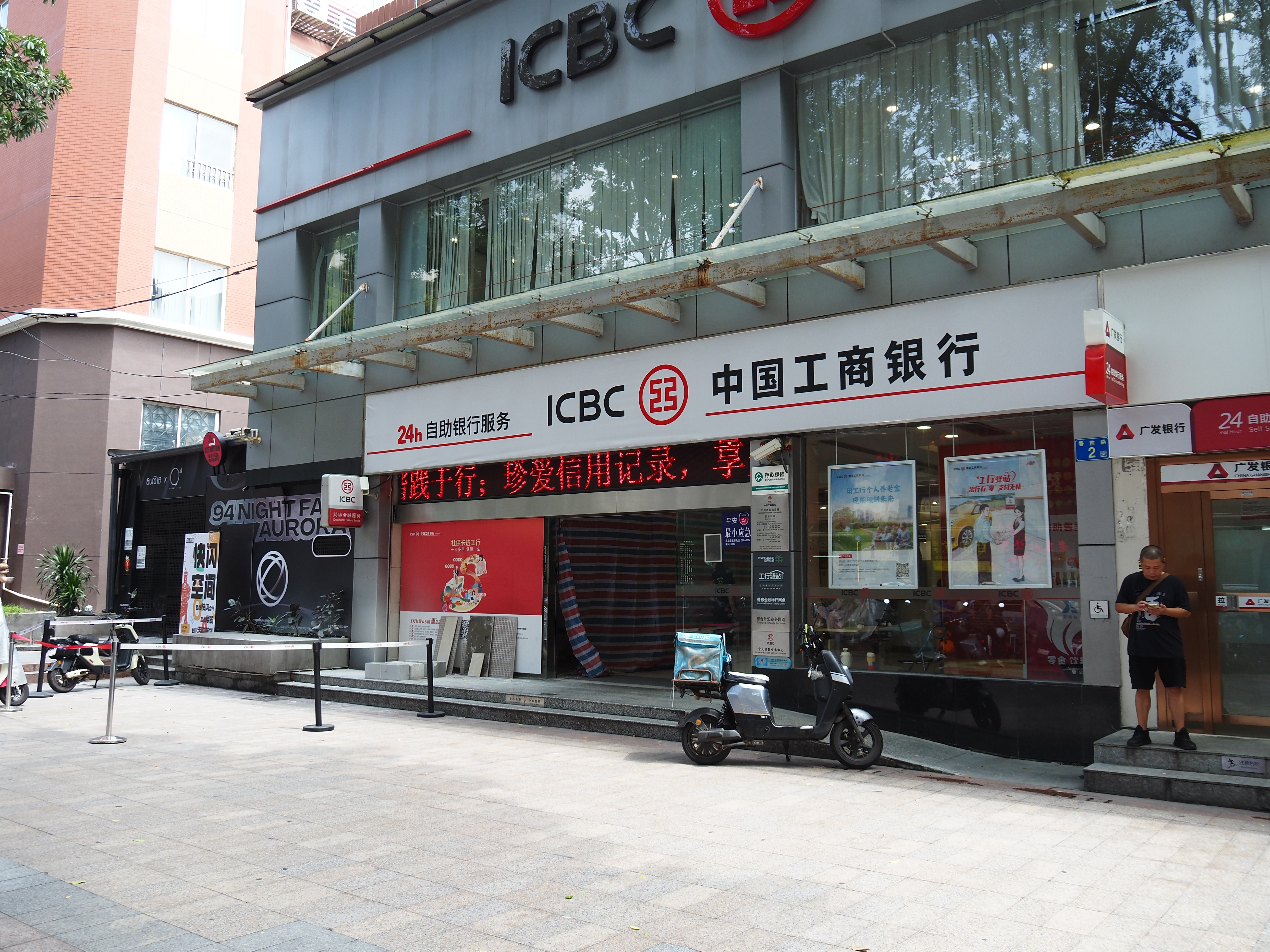
From 24 July, banks including Industrial and Commercial Bank of China (ICBC), Postal Savings Bank of China, Ping An Bank and China Guangfa Bank ceased facilitating these products for individual investors.
The announcements have prompted speculation that Beijing is attempting to suppress gold prices, weaken Western gold price discovery, or channel investors towards Hong Kong’s developing gold market. The available evidence, however, points to a different conclusion that involves domestic financial risk management.
Rather than restricting investment in gold, the measures are aimed at reducing retail participation in leveraged trading products. They form part of a broader effort by Chinese regulators to limit financial leverage and reduce the risks associated with speculative investment products sold through the banking system.
Importantly, China has not prohibited private ownership of gold. Retail investors remain free to buy physical bullion, participate in gold accumulation plans and invest in fully funded gold products. What has been withdrawn is access to margin-based trading products that provided leveraged exposure to gold prices without requiring investors to own the underlying metal.
Investors who still want exposure to gold are being redirected towards fully funded ownership structures rather than margin-based speculation.
Viewed in this context, the latest measures represent another step in China’s wider programme of financial risk management rather than a change in its long-standing approach to gold ownership.
What Actually Happened
The measures announced by major Chinese commercial banks in June represent the culmination of a tightening process that has been underway since 2025. Banks had already been restricting retail access to precious metals trading products through higher margin requirements, tighter account management and the gradual withdrawal of related services. The latest announcements complete that process and are consistent with a broader regulatory effort over recent years to reduce retail participation in higher-risk leveraged financial products.
The products affected are Shanghai Gold Exchange (SGE)-linked precious metals contracts offered to retail customers through commercial banks acting as intermediaries. These include deferred-settlement and leveraged contracts such as Au(T+D), mAu(T+D) and Ag(T+D), which allowed investors to gain exposure to movements in gold and silver prices without purchasing the underlying metal outright.
Under these arrangements, investors were required to post only a proportion of the total contract value as margin, enabling them to take leveraged positions. While leverage magnifies gains when prices rise, it also increases losses during market corrections and can trigger margin calls and forced liquidation when prices move sharply against investors.
In recent months, several banks have raised margin requirements on some products to around 120-140% of contract value, effectively eliminating the economic benefit of leverage (when a margin exceeds the value of the contract, investors must post collateral exceeding the contract value, thereby eliminating any leverage).
The subsequent announcements terminating intermediary services therefore represent the operational withdrawal of these products rather than a legal prohibition on gold investment. Customers were given time to close positions, dispose of holdings or, where applicable, arrange physical delivery. Banks had also been closing inactive precious metals accounts and returning customer funds since late 2025 as part of the same process.
The key point is that China has not prohibited retail ownership of gold. Instead, it has withdrawn a bank-distributed channel that enabled retail investors to speculate on precious metals prices using leverage.
Risk Control is the Primary Motive
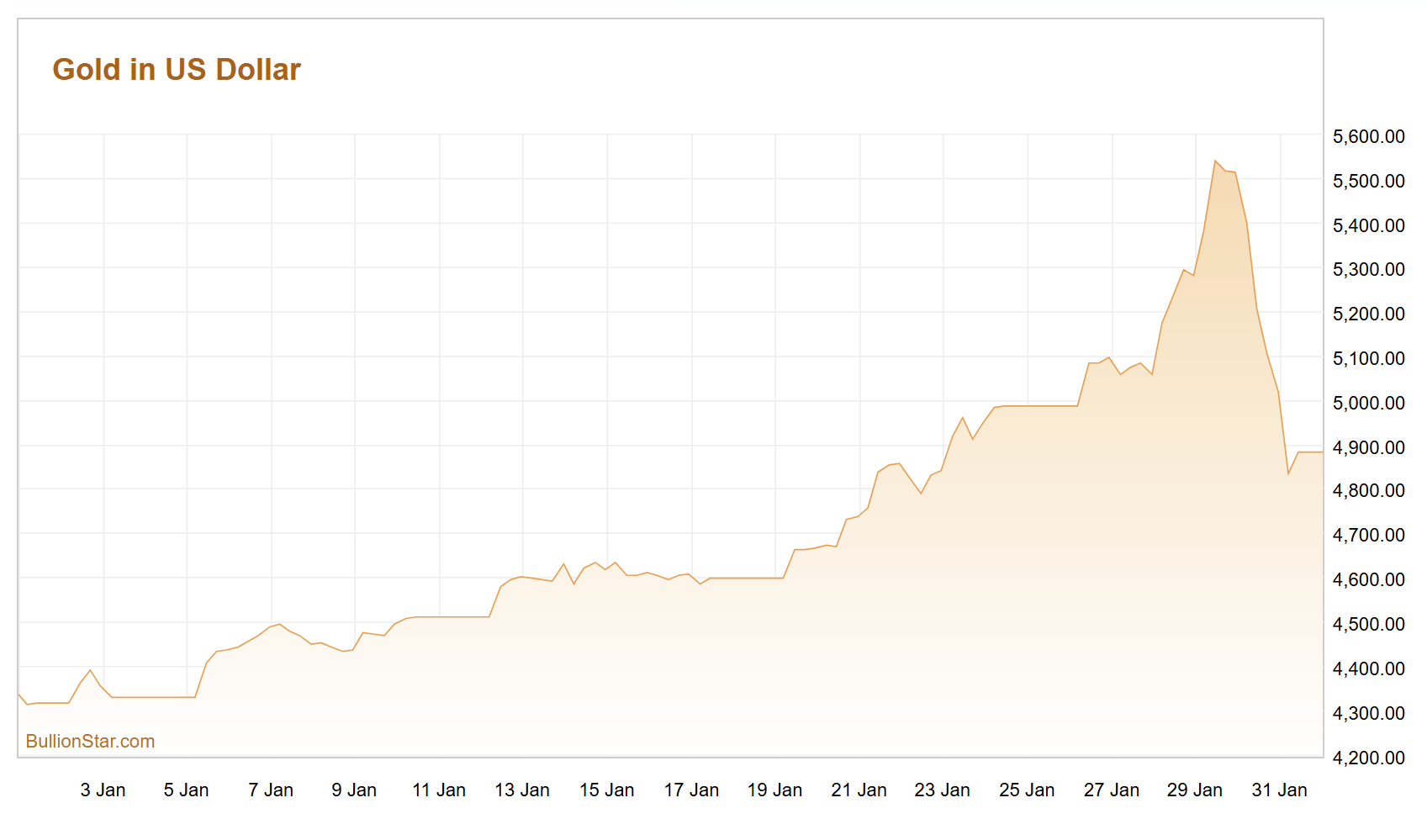
The immediate driver behind the banks’ decision appears to be financial risk management against a backdrop of heightened volatility in the gold market. After reaching record highs just short of US$5,600 per ounce in January 2026, gold prices corrected sharply, falling towards the US$4,000 level. Such price swings present obvious risks for leveraged investors, whose positions are subject to margin requirements and can quickly trigger margin calls and forced liquidation during periods of market stress.
For commercial banks, this creates both financial and operational risks. Sharp price declines increase the likelihood of customer losses, forced position closures and potential defaults, while also exposing banks to reputational damage if retail investors incur significant losses. Chinese financial regulators have repeatedly demonstrated a preference for limiting retail access to highly leveraged investment products where losses can escalate rapidly.
A key precedent was the 2020 “Crude Oil Treasure" incident involving Bank of China. The product gave retail investors exposure to crude oil futures, and when West Texas Intermediate (WTI) futures briefly traded below zero in April 2020, many investors suffered substantial losses. The episode highlighted the risks associated with distributing complex, leveraged financial products to retail investors and prompted closer regulatory scrutiny of such products.
Since then, Chinese authorities have progressively tightened controls over leveraged retail investment across a range of asset classes, including equities, property, cryptocurrencies and commodity-linked products. The latest measures affecting precious metals should therefore be viewed in this broader context. Rather than representing a change in China’s policy towards gold ownership, they form part of a longer-term effort to reduce retail leverage and strengthen financial stability within the banking system.
The Paper – Physical Distinction
The most important aspect of the Chinese banks’ measures is the distinction between financial exposure to the gold price and ownership of physical gold.
The SGE-linked products being withdrawn from retail customers provided exposure to gold and silver price movements, but they did not necessarily represent ownership of specific physical metal. These products allowed investors to speculate on price movements through leveraged trading structures rather than acquire and own bullion directly.
In contrast, physical gold ownership is fundamentally different. An investor purchasing a gold bar or gold coin owns a tangible, real asset. The investment is based on the metal itself, the investor’s legal title to that metal, and the security of its custody arrangements. Ownership of physical bullion does not depend on maintaining margin requirements or the solvency of a financial intermediary.
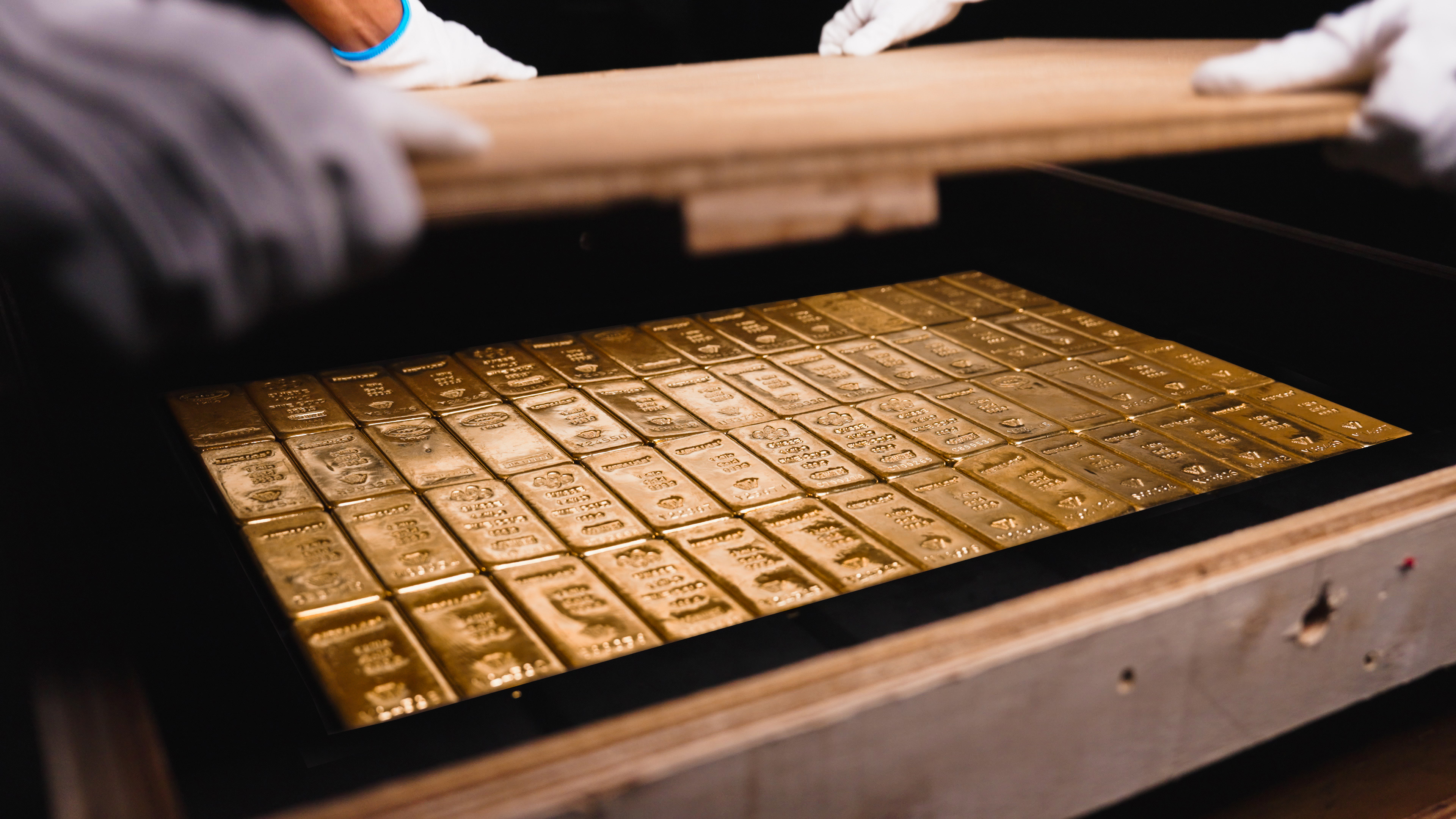
A leveraged gold position, on the other hand, represents a financial claim whose outcome depends on contractual arrangements, margin requirements, settlement mechanisms and the intermediary providing the service. While derivatives and exchange-traded products have central roles in price discovery, liquidity and hedging, they are fundamentally different from owning physical bullion.
The Chinese bank measures have therefore targeted the leveraged speculative element of gold market participation, not gold ownership itself. Retail investors in China can still purchase physical bullion, participate in gold accumulation programmes and access fully funded gold investment products.
This shows that the policy objective, which looks to have been centrally coordinated by Chinese regulators, is not China restricting its citizens from owning gold; rather, it is removing a bank-distributed channel for leveraged speculation while leaving direct ownership of tangible precious metals intact.
The Immediate Impact
The immediate impact of the measures is likely to be concentrated within the retail speculative segment rather than the broader Chinese gold market. The Shanghai Gold Exchange has lost a category of retail trading activity that contributed to market liquidity but also enabled leveraged speculation by individual investors.
In the short term, the unwinding of leveraged positions may have created some additional selling pressure as existing positions were closed. Retail investors have historically tended to maintain long exposure to gold, meaning that forced liquidations during periods of price weakness could temporarily add to market volatility.
However, the longer-term impact could be more supportive for physical gold ownership. Investors who previously used leveraged precious metals trading products may redirect capital towards physical bullion, gold accumulation programmes, physically backed investment products and other fully funded gold savings vehicles. In this sense, the regulatory shift does not remove retail demand for gold. Rather, it may encourage a transition away from leveraged price speculation and towards direct ownership of tangible gold assets.
For commercial banks, the measures represent a trade-off. Banks lose revenue associated with facilitating leveraged precious metals trading, but they may retain many of the same customers by offering them lower-risk gold products that generate recurring business without the same exposure to margin calls, forced liquidations and customer losses.
From a Chinese financial stability perspective, reducing retail leverage lowers the risk that a sharp correction in gold prices could trigger widespread investor losses, defaults or operational pressures within the Chinese banking system.
Observed Shifts in Chinese Gold Demand
The withdrawal of leveraged retail gold trading in China has taken place alongside an already established shift towards physical gold investment. According to World Gold Council (WGC) data, Chinese demand for physical gold bars and coins strengthened significantly in early 2026, reaching approximately 207 tonnes in Q1 2026, a 67% increase year-on-year. China also accounted for a significant share of global bar and coin investment demand during this period.
Importantly, the increase in physical gold demand occurred before the June announcements by Chinese commercial banks. The data therefore does not demonstrate that investors moved into physical gold as a direct result of the trading restrictions. What it does show is that Chinese investors were already showing a preference for tangible gold ownership before leveraged trading access was removed.
The latest measures may reinforce this existing trend by encouraging investors who previously sought leveraged exposure to gold prices to shift towards fully funded ownership structures, including physical bullion, gold accumulation programmes and other non-leveraged products. However, the extent of any such shift will only become clearer when third-quarter 2026 gold demand data becomes available.
Implications for China’s Gold Market
The withdrawal of retail leveraged gold trading will have effects beyond the immediate closure of bank-intermediated trading channels, although these effects should be viewed within the broader context of China’s gold market.
The Shanghai Gold Exchange remains the centre of China’s domestic gold market, with its importance based primarily on physical bullion trading, delivery infrastructure and institutional participation rather than retail speculation alone. While the removal of leveraged retail trading may reduce speculative activity in certain SGE-linked contracts, it does not fundamentally alter China’s position as the world’s largest gold producer and one of the world’s largest gold consumers.
Instead, the policy direction appears consistent with a broader evolution of China’s gold market: a shift away from short-term leveraged speculation and towards savings-oriented gold ownership. Rather than encouraging households to gain gold exposure through margin-based trading, the financial system is increasingly supporting participation through physical bullion, gold accumulation products and other fully funded investment channels.
This development aligns with China’s longer-term investment in gold market infrastructure, including domestic mine production, refining capacity, exchange systems, physical vaulting and RMB-denominated gold trading. These developments have helped transform gold from a purely trading asset into an important savings instrument and store of value for Chinese investors.
The broader implication is therefore not a reduction in China’s engagement with gold, but a change in the nature of that engagement. By reducing speculative leverage while maintaining access to physical gold ownership, China is encouraging a market structure based more on ownership and savings than short-term price speculation.
Hong Kong’s Gold Clearing Development: A Parallel Evolution
The timing of China’s retail leveraged gold trading restrictions has coincided with another important development in Asia’s gold market, which is the emergence of Hong Kong as a developing institutional gold clearing and settlement centre.

Hong Kong’s new gold clearing infrastructure represents a separate but complementary development in the regional gold market. The Hong Kong Precious Metals Clearing Company (HKPMCC) initiative is focused on strengthening institutional market infrastructure through enhanced clearing, delivery, settlement and physical bullion connectivity, with delivery-versus-payment (DvP) settlement placing greater emphasis on physical metal transfer and ownership certainty.
However, the two developments should not be confused or conflated. China’s withdrawal of retail leveraged gold trading was not designed to redirect individual investors into Hong Kong’s clearing system. Rather, they represent parallel trends. Mainland China is reducing retail leverage and encouraging fully funded gold ownership, while Hong Kong is expanding institutional physical gold market infrastructure.
The broader trend is a gradual shift towards greater transparency, settlement certainty and physical bullion connectivity in Asian gold markets. This differs from London’s OTC gold trading model, where trading is based on unallocated gold accounts and synthetic credit, and clearing is through the London Precious Metals Clearing Limited (LPMCL) bank owned clearing system ‘Aurum’.
China’s Broader Gold Strategy and the Role of the PBOC
The withdrawal of retail leveraged gold trading should also be viewed alongside China’s broader engagement with gold.
China’s central bank, the People’s Bank of China (PBoC), has continued adding gold to its official gold reserves, and has now added to its monetary gold reserves for 20 consecutive months up to mid-2026. In June 2026, the PBOC added approximately 14.93 tonnes of gold, its largest monthly increase since 2023.
Official gold reserve accumulation is only one part of China’s broader strategy in the gold market. China is also the world’s largest gold producer, one of the world’s largest gold importers, home to the Shanghai Gold Exchange and a major centre for physical bullion demand.
Gold serves multiple roles within China’s financial system. For households, it represents a store of value and a form of savings diversification. For institutions, it provides reserve diversification and an asset outside the traditional credit system. At the market level, gold supports China’s ambition to strengthen its role within global precious metals infrastructure.
Some commentary interprets Chinese gold policy primarily through the lens of geopolitical competition, currency alternatives or attempts to challenge existing Western market structures. These factors form part of the broader strategic environment, but they do not explain the immediate rationale behind the retail trading restrictions.
The more direct explanation is risk control. China can simultaneously reduce retail leverage while continuing to support long-term physical gold ownership and bullion market development.
Some Common Misreadings of China’s Gold Move
The announcements by Chinese commercial banks in June and into July have generated several interpretations that do not fully reflect the details of the measures.
Misreading 1: China is banning gold – This is incorrect. The measures do not restrict gold ownership. Chinese investors can still purchase physical gold bars and coins, participate in gold accumulation programmes, access gold investment products and invest in physically backed ETFs. The policy target by China’s regulators is leveraged speculation, not gold itself.
Misreading 2: China is attempting to suppress gold prices – This interpretation requires greater context. The closure of leveraged long positions does create some short-term selling pressure — and since most retail positions were long, the forced unwind coincides with the PBoC stepping up purchases, so there is a grain of truth here. However, explaining the move solely as a price suppression strategy overlooks the broader regulatory history.
The restrictions are consistent with a multi-year effort by Chinese authorities to reduce retail leverage and limit exposure to complex financial products. The same measures that reduce speculative activity can coexist with continued official and private-sector demand for physical gold.
Misreading 3: China is forcing retail investors into Hong Kong’s gold system – This is also inaccurate. Hong Kong’s developing clearing infrastructure is primarily designed for institutional market participants rather than former retail leveraged traders. At the same time, Hong Kong has continued to expand regulated investment access to gold through other channels, including gold ETFs and related investment products.
The broader message is not that Chinese investors are being excluded from gold. It is that the preferred form of gold participation is changing to physical.
Implications for Physical Gold Investors
For investors outside China, the most important lesson from these developments is the distinction between gold exposure and gold ownership. The gold market contains multiple forms of participation, including gold futures contracts, exchange-traded products and ETFs, unallocated accounts, allocated bullion and physical coins and bars. These instruments serve different purposes.
Financial products can provide liquidity, price exposure and trading flexibility. However, investors seeking long-term wealth preservation should focus on direct ownership of physical metal held in secure custody.
The Chinese experience highlights why the structure of a gold investment matters. Leveraged positions can provide amplified exposure to price movements, but they also introduce additional risks related to margin requirements, counterparties, settlement arrangements and forced liquidation.
Allocated physical ownership operates differently. The investor owns a defined quantity of physical metal rather than a leveraged financial claim dependent on market financing conditions. China’s policy direction therefore reinforces a broader investment principle, namely that understanding what you own is as important as understanding where the gold price is heading.
Conclusion
As Asian gold markets continue to evolve, different centres are developing complementary roles.
China remains the dominant physical gold market in Asia, supported by domestic production, imports, investment demand and the Shanghai Gold Exchange. Hong Kong is developing institutional clearing and settlement infrastructure that strengthens regional bullion connectivity.
Singapore occupies a different but highly relevant position. Its strengths include regulatory stability, international accessibility, secure bullion storage, strong legal protections and a mature precious metals ecosystem.

For international investors seeking physical gold ownership, Singapore provides a well-established jurisdiction connected to Asia’s expanding bullion markets.
The significance of China’s 2026 retail gold trading changes is therefore not that gold is becoming less important. The opposite is true. China is reducing one form of gold market participation, i.e. leveraged retail speculation, while continuing to support physical ownership and institutional bullion infrastructure. The broader trend is a separation between speculative exposure and direct ownership.
For investors thinking in years rather than weeks, the lesson is straightforward. The form in which gold is held matters. China’s evolving gold market demonstrates that physical gold ownership remains a fundamental component of the global bullion ecosystem.
Popular Blog Posts by BullionStar
 How Much Gold is in the FIFA World Cup Trophy?
 Essentials of China's Gold Market
 Singapore Rated the World’s Safest & Most Secure Nation
 Infographic: Gold Exchange-Traded Fund (ETF) Mechanics
 BullionStar Financials FY 2020 – Year in Review
 Michael Oliver – Bond Crisis, Gold’s Bull Trend and Silver’s Breakout
 Lehman Brothers Eighteen Years On
 Jim Rogers on Why He’ll Never Sell His Gold and Silver, the Fate of the Dollar, and the Complacency That Worries Him
 Why Gold & Silver Jumped Overnight
 The Gold Paradox: One Price, Two Markets