 Contact
 Help
Help






The Gold Paradox: One Price, Two Markets

 BullionStar
 0 Comments



By any historical intuition, gold should be flying. The United States and Iran spent the weekend of 18–19 July exchanging the heaviest strikes of a war now in its sixth month. Central banks are buying gold at a near-record pace, and, on World Gold Council figures, gold has by some measures overtaken US Treasuries as the world’s largest reserve asset. Yet the metal just posted its biggest weekly loss since June and spent the loudest weekend of the war going nowhere, defending US$4,000 after a fall of roughly 30 per cent from January’s record just short of US$5,600.
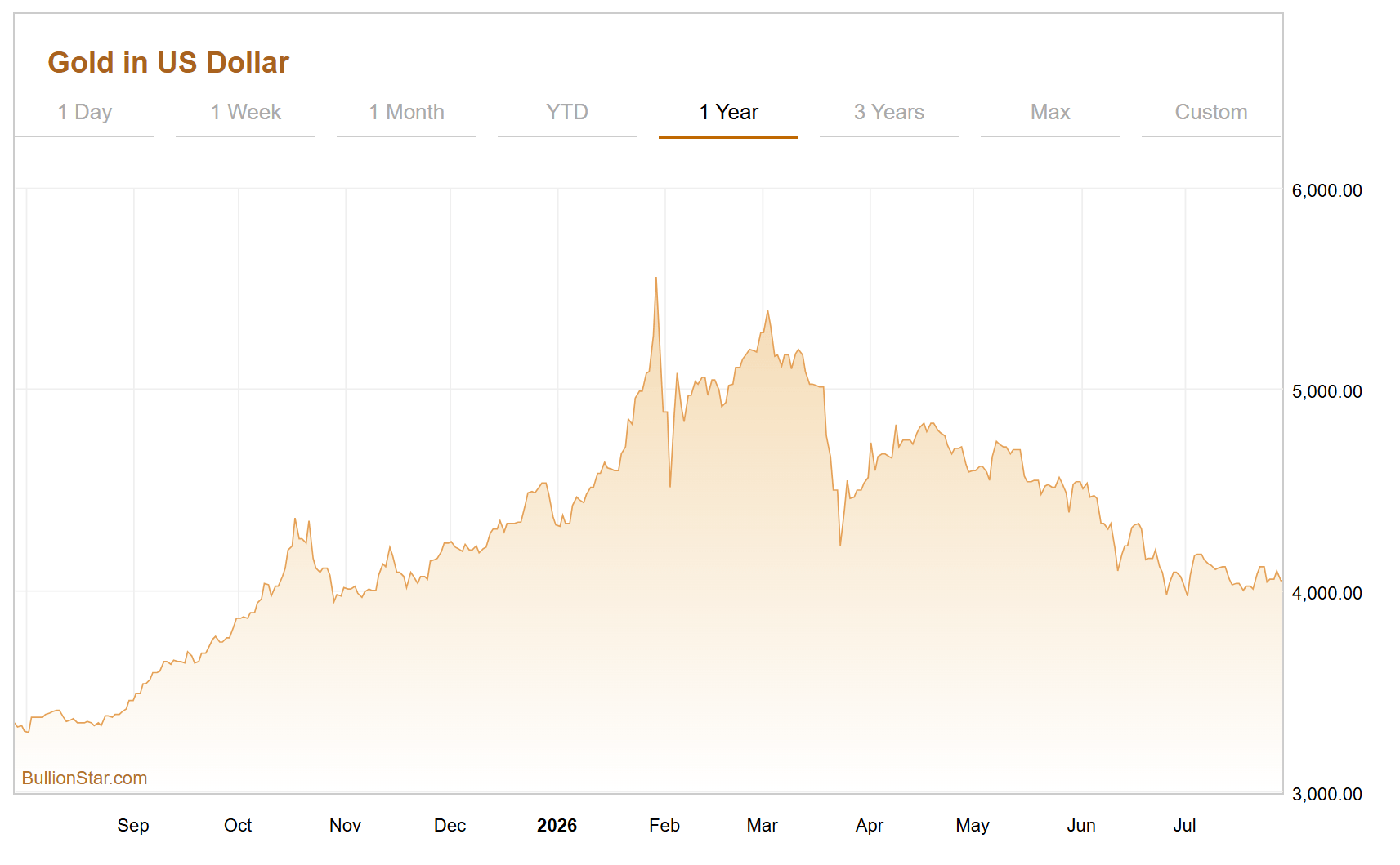
If you find that confusing, you are in good company: “why isn’t gold rallying?” has become the most common question in gold commentary. The answer is not that gold is broken. It is that most observers are watching the wrong channel. Understanding the right one reveals something most investors overlook: there is not one gold market, but two, both sharing the same quoted price.
War Reaches Gold Through the Wrong Channel
The intuition says: conflict means fear, and fear means gold. But geopolitics does not act on gold directly. It acts through markets, and this conflict is reaching gold through a channel that works against it.
The chain runs like this. Strikes around the Strait of Hormuz push oil prices up, with Brent touching US$100 at the time of writing. Expensive energy feeds inflation, which reached 4.2 per cent year-on-year in May before June’s cooler 3.5 per cent reading, keeping inflation above the Federal Reserve’s 2 per cent target for a fifth consecutive year. Persistent inflation keeps the Fed leaning hawkish rather than cutting: at the time of writing, markets expect a hold at the 28–29 July meeting but price a strong chance of a hike by September. Higher rates lift bond yields, with the 10-year Treasury around 4.5 per cent, and higher yields raise the opportunity cost of holding an asset that pays no interest.
So, the war is bullish for gold in the textbook sense, but in practice it has firmed up the single force that matters most for gold’s short-term price: real interest rates, meaning bond yields after inflation. When real yields rise, gold falls, and no volume of frightening headlines reliably overrides that in the short term. This is not new. The same mechanism pushed gold down through the 2013 taper episode and turbocharged it in 2020 when rates went to zero. The correlation is a tendency, though, not a law: gold roughly doubled through 2024 and 2025 despite firmly positive real yields, as relentless central bank buying overwhelmed rate-driven selling.
Hold that thought, because it is a first glimpse of the two markets this article is about. The lesson is not that gold has stopped responding to danger. It is that over weeks and months, gold trades on the price of money. Only over years does it trade on the trustworthiness of money. And trust is precisely what has been draining away. When the West froze Russia’s central bank reserves and cut its banks out of the SWIFT payment system in 2022, every reserve manager in the world learned that Treasuries and dollar deposits can be switched off by someone else’s government. Gold in a vault at home cannot. A meaningful share of the central bank buying that has reshaped the gold market since then dates from exactly that lesson.
One Price, Two Markets
The paradox begins to make sense once you realise there are effectively two very different markets sharing a single price.
The first is the paper market. Here, hedge funds, commodity trading advisers (CTAs), macro funds and other leveraged investors buy and sell futures contracts, ETFs and derivatives. Their investment horizon is measured in days, weeks or months. They react to inflation reports, central bank speeches, employment data and shifts in bond yields. When real interest rates rise, many of these participants reduce exposure almost mechanically, regardless of whether geopolitical risks have increased.
The second is the physical market. Its participants are not trying to predict the next Federal Reserve meeting. They are central banks, sovereign institutions, family offices and long-term savers steadily exchanging paper claims for tangible monetary reserves. Their investment horizon is measured not in quarters, but in decades. Their concerns are monetary sovereignty, reserve diversification, counterparty risk and preserving purchasing power across generations.
The obvious question is: if physical demand is so strong, why doesn’t it simply push prices higher? The answer lies in how gold is priced. The benchmark price is discovered primarily in futures markets, where traders can buy or sell claims representing many times more gold than they could ever afford to purchase physically. Those markets are exceptionally liquid and highly responsive to changes in interest rates and investor sentiment, meaning short-term financial flows often outweigh physical buying when it comes to setting today’s price.
Both markets feed into the same quoted price, but they operate at very different speeds. Paper positions can be opened or closed in seconds, often with significant leverage, allowing sentiment to shift almost instantly. Physical bullion moves much more slowly. Bars must be refined, transported, vaulted and paid for in full. As a result, short-term price movements often reflect changes in financial positioning more than changes in underlying physical demand.
That is why a flat or falling gold price does not necessarily signal weakening demand. Sometimes it simply reflects that the fastest money is selling while the most patient money continues buying. If the paper market tells us how investors are positioned today, the physical market tells us how long-term owners are preparing for tomorrow.
The Buyers Who Are Not Watching the Fed
While financial television debates whether the Federal Reserve cuts rates in September or December, a very different conversation is taking place behind the doors of central bank vaults.
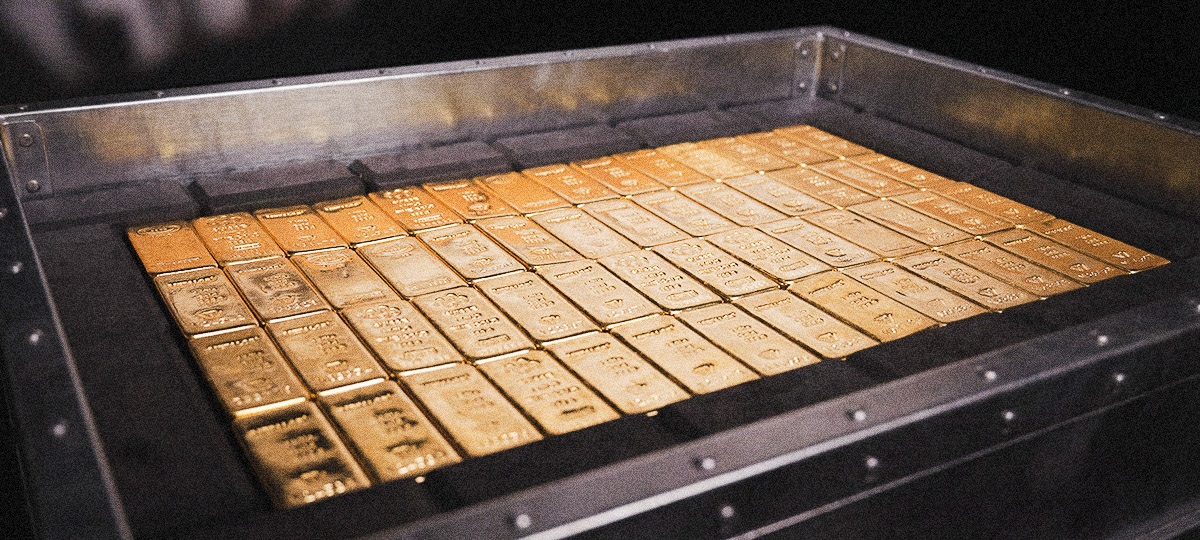
In May alone, central banks added another 41 tonnes of gold to their reserves. Total purchases for 2026 are projected to reach around 850 tonnes, close to the record pace established over the past several years. The World Gold Council’s latest survey found a record 45 per cent of central banks expect to increase their gold holdings, the highest reading since the survey began. The People’s Bank of China has now added to its reserves for twenty consecutive months, while countries including France have continued repatriating portions of their bullion from overseas vaults.
What is striking is not simply that central banks are buying, but what they are not doing.
They are not reducing their purchases because the Fed might raise interest rates. They are not selling after a 30 per cent correction. They are not attempting to trade the next quarter. Instead, while traders watch bond yields flicker across their screens, central banks continue taking delivery of physical bullion into vaults.
Their behaviour reflects a fundamentally different objective. Central banks are not trying to maximise next quarter’s returns. They are trying to ensure their reserves remain valuable through the next decade, and perhaps the next monetary system. Around 90 per cent cite gold’s performance during periods of crisis, its lack of counterparty risk and its role as a long-term store of value. In other words, they are treating gold exactly as monetary insurance should be treated: something to accumulate patiently rather than trade opportunistically.
For investors, this distinction matters. If the institutions with the longest time horizons and the deepest understanding of sovereign risk continue accumulating through both rallies and corrections, then short-term price weakness may tell us more about positioning in the paper market than about confidence in gold itself.
Corrections Are the Toll, Not the Verdict
A 30 per cent fall feels like a verdict. History says it is a toll, collected regularly on the road of every long gold bull market. In the middle of the great 1970s bull run, gold fell roughly 45 per cent between late 1974 and mid-1976, then rose more than eightfold to its January 1980 peak. In 2008 gold fell about 30 per cent peak-to-trough, then nearly tripled over the following three years. In both cases the fundamental drivers, inflation, negative real rates and monetary distrust, had not gone anywhere.
That is happening again on a large scale. As we cover in our article on China’s paper-gold shutdown, millions of leveraged retail positions were forcibly unwound into the 24 July deadline, and margin-driven selling has been a steady weight on the price for weeks. Leverage is how a correction becomes a wipeout: the margin call decides your exit for you, invariably at the worst price. The fully paid physical owner faces the identical price and receives no such call. Whether gold’s next thousand dollars comes in six months or in three years is a question that ruins traders and barely concerns holders.
What the Forecasts Are Really Telling You
Analysts remain divided over where gold goes next. Bank of America believes 2026 could prove a frustrating year, while others argue the correction has strengthened the long-term case. Yet beneath the differing forecasts lies a striking consensus. Few dispute the structural drivers that have supported gold over the past decade: record public debt, reserve diversification, persistent inflationary pressures and sustained central-bank buying. The disagreement is overwhelmingly about timing, not direction.
When bulls and bears disagree about timing but agree about direction, the rational response is not to out-guess the timing. It is to hold the asset in a form that cannot be shaken out of your hands while the timing argument resolves itself.
Time in the Metal, Not Timing the Metal
That form is physical: allocated, fully paid, held in your own legal ownership, and stored in a jurisdiction where property rights are strong and the metal can move freely.
This is precisely why the distinction between owning gold and merely gaining exposure to its price matters. Central banks do not build their reserves through leveraged futures contracts or synthetic products. They accumulate physical bullion held in secure custody because their objective is resilience, not quarterly performance. Investors seeking the same protection naturally arrive at many of the same conclusions. Fully allocated ownership, clear legal title and secure storage matter just as much as the metal itself.
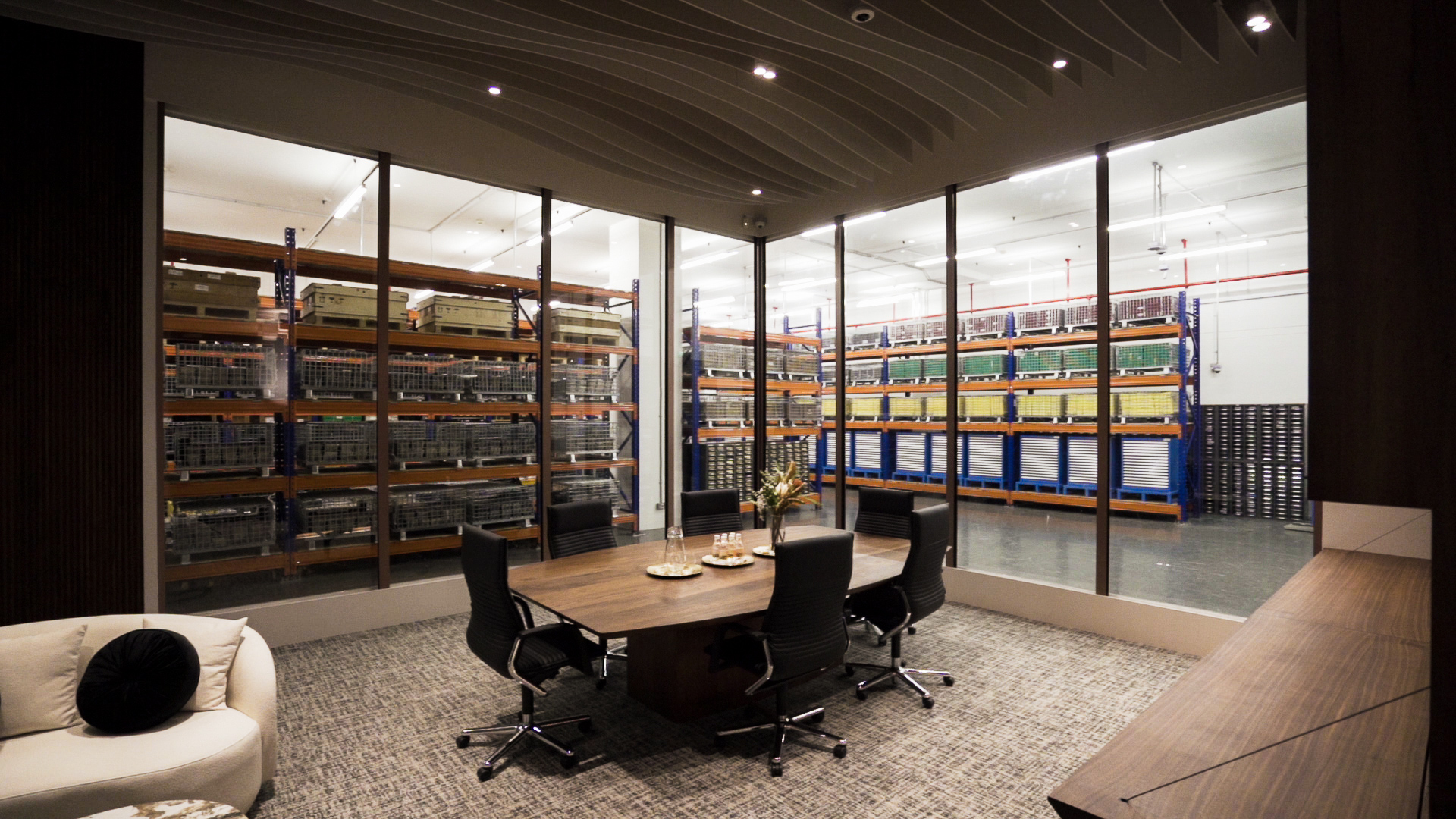
These same principles underpin BullionStar’s vaulting model in Singapore. Clients own fully allocated bullion in their own legal ownership, with no leverage anywhere in the chain, in one of the world’s strongest jurisdictions for property rights and with no GST on investment-grade precious metals. Rather than providing exposure to gold, the objective is to provide direct ownership of gold.
A stuck price is what accumulation often looks like while it is happening. The same US$4,000 that frustrates the trader represents a better entry point than January’s US$5,600 for the long-term saver. The world’s central banks have already made that choice, twenty months and counting in China’s case.
The paradox at US$4,000 is only a paradox if you assume today’s gold price reflects only today’s news. In reality, it reflects short-term interest rates, leveraged positioning, long-term reserve diversification and decades of monetary change all at once. Traders naturally focus on the first. Central banks increasingly focus on the latter. Own the metal, and let time, not headlines, do the work.
Popular Blog Posts by BullionStar
 How Much Gold is in the FIFA World Cup Trophy?
 Essentials of China's Gold Market
 Singapore Rated the World’s Safest & Most Secure Nation
 Infographic: Gold Exchange-Traded Fund (ETF) Mechanics
 BullionStar Financials FY 2020 – Year in Review
 Jim Rogers on Why He’ll Never Sell His Gold and Silver, the Fate of the Dollar, and the Complacency That Worries Him
 Why Gold & Silver Jumped Overnight
 The Gold Paradox: One Price, Two Markets
 Deep Dive: China’s Exit from Retail Paper Gold Trading — Why Beijing Is Curtailing Leverage, Not Gold Ownership
 Doug Casey on Gold Becoming Money Again, Political Risk, and Why He’s More Bullish on Silver