 Contact
 Help
Help





Digital Gold vs Physical Gold: What Every Investor Should Know
 Gold & Silver 101



Digital gold is attracting growing attention. Banks, fintech platforms and blockchain projects are all offering new ways to gain gold exposure without ever holding a bar or coin. Singapore’s DBS Bank recently became one of the first major retail banks in the world to offer tokenised physical gold directly to customers — a signal that this market is becoming mainstream.
But digital gold is not the same as owning gold. The differences in ownership structure, counterparty risk, costs and legal protections are significant, and they matter. Especially for investors who hold gold as a long-term store of value or a hedge against financial uncertainty.
This guide explains what tokenised gold is, how it works, how it compares to physical gold bullion across the factors that matter most, and what to consider before deciding which approach is right for you.
Please note that BullionStar does not provide investment or financial advice. The information below is for informational purposes only.

What Is Digital Gold? (And How Is It Different from Physical Gold?)
“Digital gold" is an umbrella term for any financial instrument that gives investors exposure to the gold price without requiring them to hold physical metal. It covers a wide range of products, from blockchain-based tokens to exchange-traded funds to gold savings apps, and the differences between them are substantial.
For the purposes of this guide, we focus on tokenised gold: blockchain-based tokens that are directly backed by physical gold held in a vault. This is the format attracting the most attention from banks and institutional players.
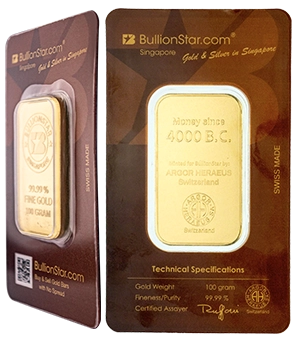
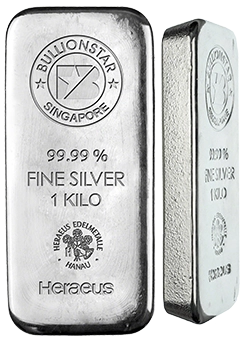
Physical gold bars and gold coins remain the benchmark against which all these alternatives are measured. It means owning the metal directly, with no token, fund or platform between you and the asset. BullionStar’s full range of physical gold products, from 1 gram bars to larger allocated holdings, is covered in the final section of this guide.
Tokenised Gold Explained
Tokenised gold works by issuing a digital token on a blockchain (typically Ethereum) where each token represents a fixed quantity of physical gold, usually one troy ounce or a fraction of one. The gold itself is held in an audited vault by a custodian, and token holders have a contractual claim on that gold.
The most established tokenised gold products currently available are:
- PAX Gold (PAXG) — issued by Paxos, regulated by the New York Department of Financial Services. Each token represents one fine troy ounce of gold held in LBMA-accredited vaults in London.
- Tether Gold (XAUt) — issued by Tether. Each token represents one troy ounce on a specific gold bar held in Swiss vaults.
- DBS Tokenised Gold — offered directly through DBS’s digital banking platform for retail customers in Singapore, providing a regulated, bank-backed entry point to tokenised gold.
Token holders can, in theory, verify their holding against vault records and redeem for physical gold. In practice, minimum redemption thresholds and logistics costs make physical delivery difficult for most retail investors.

Gold ETFs and Digital Gold Savings Apps
Gold ETFs are exchange-listed funds that track the gold price, trading like shares through a standard brokerage account. Gold savings apps, popular particularly in India through platforms like Google Pay and Paytm, allow users to buy fractional gram amounts of gold that are held on their behalf by an operator.
Both are well-established formats, but they are distinct from tokenised gold in important ways: ETFs operate within regulated securities frameworks, while savings apps are closer to a gold account than a token. Neither involves ownership of a blockchain-based asset.
Key Differences: Tokenised Gold vs Physical Gold
The table below summarises the key differences. The sections that follow go into each factor in more detail.
| Factor | Tokenised Gold | Physical Gold |
|---|---|---|
| Ownership | Contractual claim via token; custodian holds the metal | Direct, outright ownership of the metal itself |
| Counterparty Risk | Custodian, token issuer and platform all required | None (if allocated or self-stored) |
| Storage | Managed by custodian; no action required | Personal storage or professional vaulting |
| Liquidity | 24/7 trading on crypto exchanges | 24/7 online trading via BullionStar’s BSP; instant buyback on all products |
| Fees | Custody fees (e.g. PAXG 0.15%/yr), gas fees, exchange spreads | BSP storage from 0.09%/yr for gold; dealer premium on bars and coins |
| Singapore GST | Not exempt (9% GST applies) | Exempt for qualifying IPM products |
| Regulation | Varies — MAS-regulated to unregulated, depending on product | Well-established legal framework globally |
| Physical Redemption | Possible in theory; high minimums in practice | You already own the physical metal; BSP grams convert to bars free of charge |
Ownership, Custody and Storage
This is the most fundamental difference between the two formats, and for many investors it is the deciding factor.
When you buy physical gold, you own the metal outright. A gold bar in your hands or in allocated storage at BullionStar’s vault is yours — not part of any institution’s balance sheet, not available to be lent out, and not dependent on any third party remaining solvent. Your ownership is as straightforward as it gets.
When you hold tokenised gold, you own a token. The token represents a contractual claim on gold held by a custodian. That distinction matters: if the custodian faces financial difficulty, becomes insolvent, or is subject to regulatory action, your access to the underlying gold may be at risk — even if the vault audit shows the gold is physically present.
This is what is meant by counterparty risk. With physical bullion in allocated storage, there is none. With tokenised gold, you are exposed to the financial and operational health of at minimum the token issuer, the vault custodian, and the platform itself. The quality of disclosure from tokenised gold providers varies significantly; reputable operators such as Paxos publish regular attestation reports, but this is not universal.
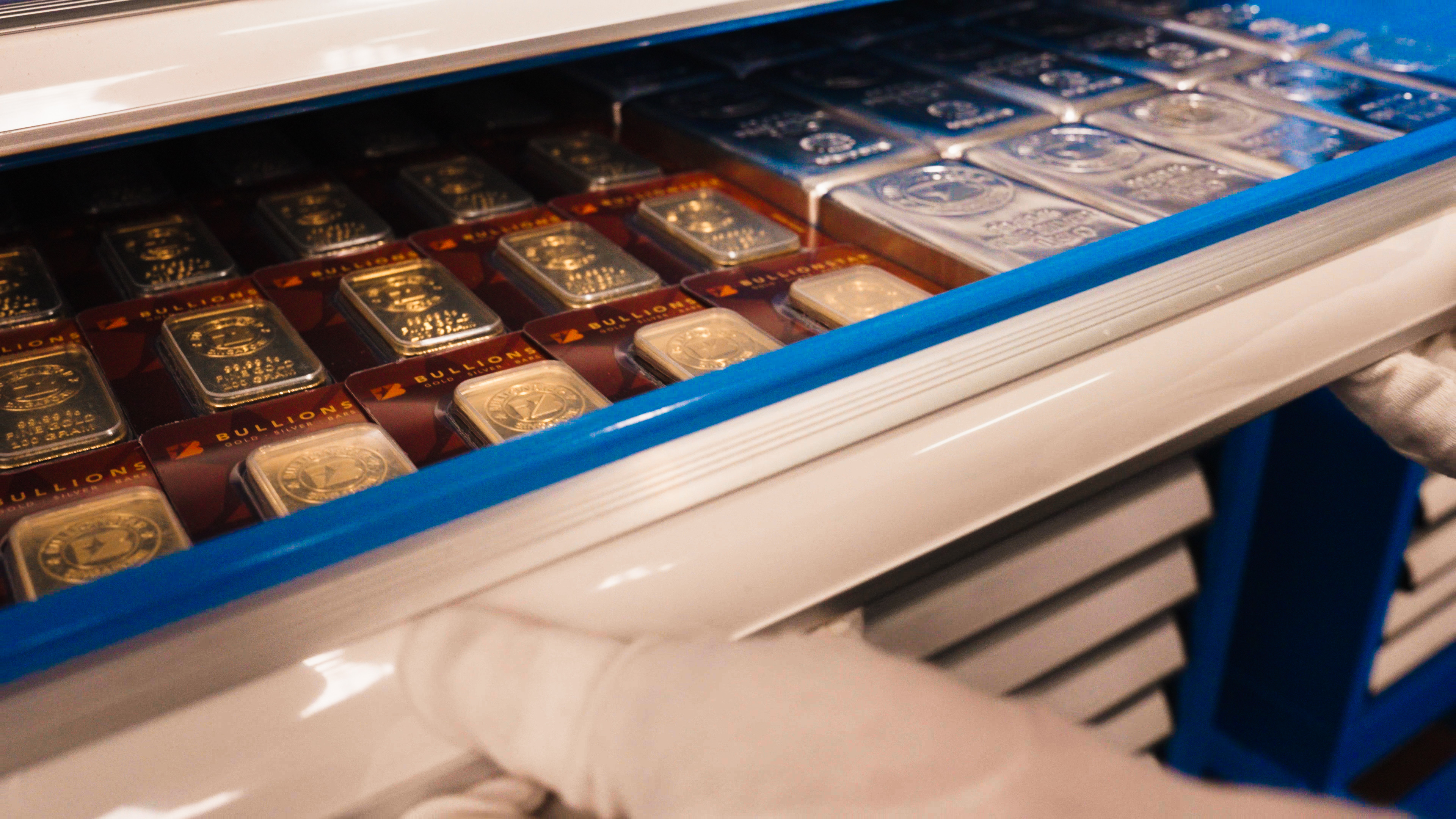
BullionStar’s vault storage at Le Freeport is fully allocated and fully insured, with a live audit report available to all customers at any time. Customers can visit the vault in person to inspect their holdings.
Liquidity and Tradability
Tokenised gold trades around the clock on global cryptocurrency exchanges. It can be bought and sold in fractional amounts (as little as 0.001 oz in some cases) and settlement is near-instant. For investors who want to trade actively around the gold price, this flexibility has traditionally been seen as a key advantage over physical bullion.
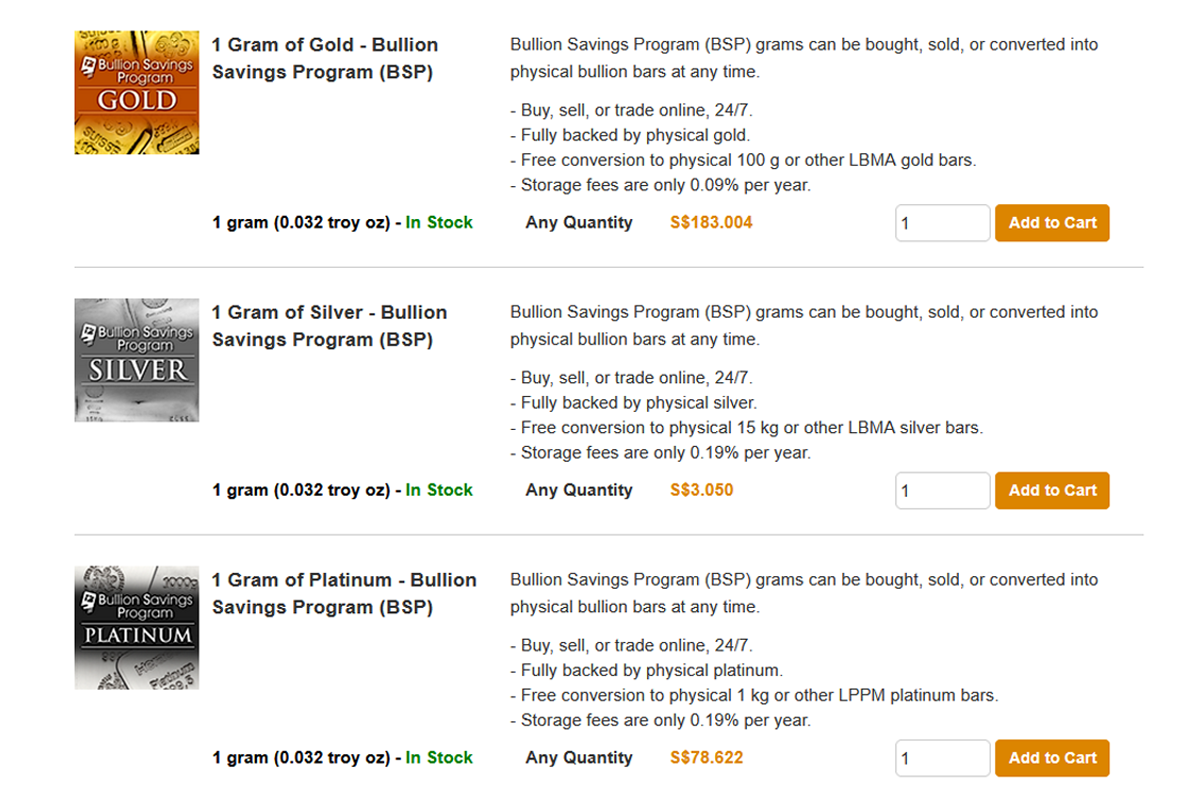
BullionStar’s Bullion Savings Program (BSP) closes much of that gap. BSP gold grams can be bought, sold and traded online 24 hours a day, seven days a week, in increments from 1 gram upwards — with no crypto wallet required and no gas fees. For investors who want fractional access and round-the-clock flexibility without the complexity of blockchain infrastructure, the BSP offers a physically backed alternative that operates on familiar terms.
For physical bars and coins, BullionStar offers live transparent pricing and an active buyback programme, meaning you can sell quickly at a known price without needing to find a private buyer.
It is also worth noting that the liquidity of tokenised gold on crypto exchanges is not without its own risks. These markets are thinner than major currency or equity markets, and spreads can widen materially during periods of market stress — precisely when you might want to sell.
Fees and Total Cost of Ownership
The cost comparison between tokenised and physical gold is less straightforward than it might appear, and physical gold is more competitive than is often assumed.
Tokenised gold products typically charge an annual custody fee: PAX Gold charges 0.15% per year. On top of this, transferring tokens on the Ethereum network incurs gas fees, which fluctuate with network congestion and can be disproportionately high for smaller transactions. Buying and selling on a crypto exchange also involves a spread or trading fee.
BullionStar’s Bullion Savings Program charges a storage fee of just 0.09% per year for gold grams. This is lower than the custody fee on the most established tokenised gold product on the market, with no gas fees, and no crypto infrastructure required. Grams can be converted to physical bars free of charge at any time once the conversion threshold is met.
For physical bars and coins purchased outright, a dealer premium over spot applies at the point of purchase, along with a storage fee if you use professional vaulting. These costs are generally modest however relative to the value of a meaningful long-term holding.
For Singapore investors, the 9% GST that applies to tokenised gold at the point of purchase represents an immediate structural cost that does not apply to qualifying physical gold products — a gap that grows more significant the larger the position.
Regulation and Legal Protections
The regulatory landscape for tokenised gold varies significantly depending on the product and jurisdiction.
At the stronger end, DBS’s tokenised gold product operates under MAS oversight, offering Singapore investors the protections that come with a regulated financial institution. PAX Gold is regulated by the New York Department of Financial Services. These products sit within established financial regulatory frameworks.
At the other end of the market, many gold tokens are issued by entities with limited regulatory oversight, offering holders little formal recourse if something goes wrong.
Physical gold, by contrast, operates within a clear and long-established legal framework in virtually every jurisdiction. Ownership is unambiguous, legal protections are well defined, and there is no regulatory uncertainty about what you own.
The tax treatment of tokenised gold is also still evolving. In some jurisdictions, blockchain-based gold tokens may be classified as crypto assets rather than commodities, which can affect capital gains treatment. In Singapore, physical Investment Precious Metals remain capital gains tax-free and GST-exempt — a position that has been established in law since 2012.
Which Is the Better Investment? How to Decide
For long-term investors looking to preserve wealth, physical gold offers the obvious advantage, but the right choice depends on what you are trying to achieve, your appetite for complexity, and how you think about ownership. The questions below are designed to help you identify which approach fits your situation.
Consider Tokenised Gold If…
Tokenised gold may suit you if you are primarily interested in short-term trading around the gold price and want to do so around the clock on a crypto exchange. It may also appeal if you want to use gold as collateral within decentralised finance (DeFi) applications, or if you are already active in crypto markets and comfortable navigating wallets, gas fees and exchange platforms.
For most investors whose primary goal is to build and preserve wealth in gold, however, the benefits of tokenised gold’s format are largely replicated by other means — without the counterparty exposure or technical complexity.
Consider Physical Gold If…
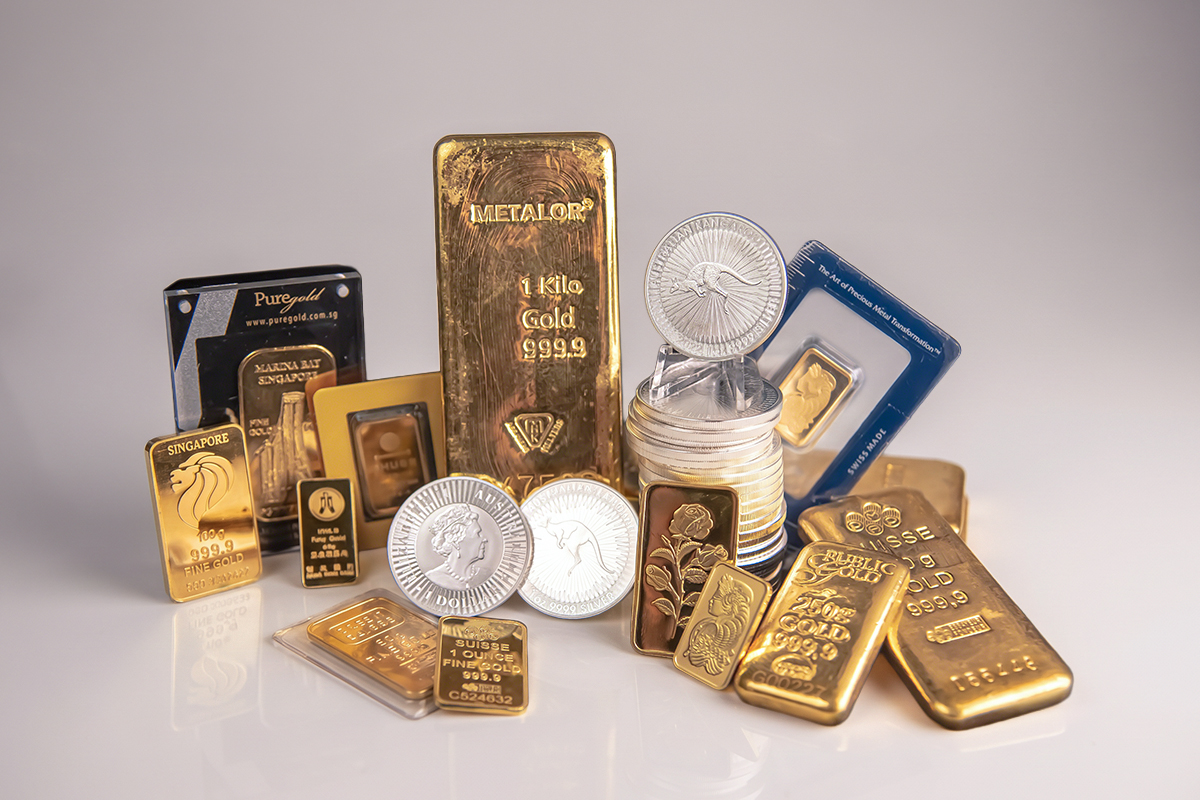
Physical gold is the stronger choice for investors who want outright ownership of the metal itself, and no dependency on any platform remaining operational. It is particularly well suited to long-term wealth preservation, inflation hedging, and holding an asset that functions independently of any financial or technological infrastructure.
For investors attracted to tokenised gold primarily because of its low entry point, fractional flexibility, or 24/7 accessibility, BullionStar’s Bullion Savings Program addresses all three directly. BSP gold grams can be purchased from 1 gram upwards, traded online around the clock, and are fully backed by physical metal held in an allocated vault in Singapore — at a storage cost of just 0.09% per year, lower than the custody fee charged by the most widely held tokenised gold product.
For Singapore-based investors in particular, the IPM GST exemption on qualifying physical gold products represents a 9% structural cost advantage from day one, one that compounds meaningfully over time and across larger positions.
Can You Hold Both?
Some investors choose to hold a combination: physical gold as the core long-term position, and a smaller allocation to tokenised gold for active trading or DeFi use cases. This may be a reasonable approach for investors who understand both formats and have a clear purpose for each.
That said, it is worth understanding what each allocation is doing. Physical gold is doing the work of wealth preservation: it is allocated, insured, and owned outright. A tokenised gold position is doing something different: it is a financial instrument that tracks the gold price, with the conveniences and risks that entails.
For most investors, the BSP removes the practical reasons to hold tokenised gold alongside physical. The combination that makes most sense for BullionStar customers is typically a core physical holding in allocated vault storage, with BSP grams providing the liquidity, fractional flexibility and online accessibility that might otherwise attract someone to tokenised alternatives.
Buying Physical Gold with BullionStar
BullionStar has been helping customers buy, store and sell physical precious metals since 2012. Whether you are starting with a small regular saving or building a larger allocated position, there is a straightforward route in.
The Bullion Savings Program: Physical Gold from 1 Gram
For investors who want to start small, build gradually, or simply prefer the flexibility of gram-level purchases, the Bullion Savings Program is the most direct alternative to tokenised gold — without any of its structural drawbacks.
BSP gold grams are fully backed by physical gold held in BullionStar’s Singapore vault — with backing maintained at over 100% at all times. The live backing report is published daily and publicly available, so you can verify the physical gold underpinning your holding at any time. You can buy, sell and trade online 24 hours a day, seven days a week. Storage costs just 0.09% per year. There are no gas fees, no crypto wallet, and no minimum beyond 1 gram.
When your holding reaches the conversion threshold, BSP grams convert into physical LBMA-accredited gold bars (PAMP or Heraeus) free of charge. At that point you can take delivery, continue storing in the vault, or sell back to BullionStar at any time.
Gold Bars and Coins: Direct Ownership from the World’s Leading Mints and Refiners
For investors buying larger positions outright, BullionStar stocks a wide range of gold bars and coins from internationally recognised producers, including PAMP Suisse, Heraeus, Perth Mint, and The Royal Mint. Products range from 1 gram bars to 1 kilogram and above, with transparent live pricing.
All qualifying gold products are Investment Precious Metals (IPM) exempt from Singapore’s 9% GST, and there is no capital gains tax on physical precious metals in Singapore.
Vault Storage and Delivery
Purchased gold can be held in BullionStar’s allocated vault storage in Singapore, shipped directly to you, or collected in person at BullionStar’s Bullion Centre at 45 New Bridge Road. Vault storage is fully allocated and fully insured, with an independently verifiable live audit report available to all customers at any time.
How to Place an Order
Orders can be placed online 24/7 at bullionstar.com, by phone using our contact number, or in person at the Bullion Centre. There is no minimum or maximum order size. A detailed step-by-step buying guide is available if you would like to walk through the process before committing. Payment options include bank transfer, PayNow, cash, NETS, card, and major cryptocurrencies.

Frequently Asked Questions
Is tokenised gold the same as physical gold?
No. Tokenised gold is a digital token backed by physical gold held in a vault by a third-party custodian. You hold the token, not the gold itself. Physical gold gives you direct ownership of the metal with no intermediary.
Can I redeem tokenised gold for physical gold?
Some tokenised gold products allow physical redemption in theory, but minimum thresholds (often 1 fine troy ounce or more) and logistics costs make it impractical for small holders. Always check the redemption terms of the specific product before investing.
Is digital gold a safe investment?
Digital gold carries risks specific to its format: custodian failure, smart contract vulnerabilities (for blockchain tokens), and regulatory uncertainty. Physical gold avoids these counterparty risks.
What is the difference between a gold ETF and tokenised gold?
Gold ETFs are regulated financial instruments listed on stock exchanges, with established investor protections. Tokenised gold is a blockchain-based token that trades on crypto exchanges and may offer DeFi utility, but typically carries less regulatory protection. Both are paper claims on gold rather than the metal itself, and both carry counterparty risk.
How is tokenised gold taxed?
In Singapore, physical IPMs are exempt from GST and are not subject to capital gains tax — a position established in law since 2012. Tokenised gold does not qualify for the IPM GST exemption, meaning a 9% GST applies at the point of purchase. If you are making a significant investment decision based on tax treatment, consult a qualified tax adviser.
Where can I buy physical gold in Singapore?
BullionStar offers a full range of gold bars and coins with transparent live pricing, secure vault storage in Singapore, and an established buyback programme. Customers can buy online 24/7, or visit our Bullion Showroom at 45 New Bridge Road.
Buy Physical Gold With BullionStar
Tokenised gold and physical gold both give you exposure to the gold price — but they are not the same thing, and the difference matters.
Tokenised gold is simply a financial instrument, while physical gold is the asset itself. Owned outright, stored in allocated vaulting, it sits outside the financial system in a way that no token can replicate. That is not a minor distinction — it is the reason gold has served as a reliable store of value across every monetary system, financial crisis and technological shift of the past five millennia.
For investors who want the accessibility and low entry point that tokenised gold offers, BullionStar’s Bullion Savings Program delivers the same practical benefits, backed by physical metal you own, in an allocated vault you can audit, with the option to convert to physical bars.
The choice, ultimately, is between holding gold and holding a claim on gold. For long-term investors, that distinction is worth getting right.
Browse BullionStar’s gold range or learn more about the Bullion Savings Program to get started.
Popular Blog Posts by Gold & Silver 101
 An Introduction to Gold & Silver Investing
 Should I Invest in Gold, Silver, or Platinum Bullion?
 Gold Coins vs Gold Bars: Which Is Better?
 How Is Gold Taxed in Singapore? The IPM GST Exemption Explained
 Storing Precious Metals, Gold, and Silver Bullion
 Gold & Silver Bullion Investing FAQs
 Gold Savings Account vs Bullion Savings
 Silver Purity: The Complete Guide
 How to Invest in Silver: A Complete Guide
 Buying Your First Gold Bar: A Beginner’s Guide