 Contact
 Help
Help





How Is Gold Taxed in Singapore? The IPM GST Exemption Explained
 Gold & Silver 101



How is gold taxed in Singapore? For anyone buying bullion here, it’s one of the first questions worth answering, and the answer is unusually favourable. It’s the single biggest reason Singapore has become a hub for precious metals investment rather than simply a place where precious metals are sold.
In short, investment-grade gold in Singapore isn’t taxed. Qualifying gold, silver and platinum bullion has been exempt from Goods and Services Tax since 1 October 2012 under the Investment Precious Metals (IPM) exemption, so you pay no GST when you buy. Singapore also has no Capital Gains Tax (CGT), so any increase in the value of your gold isn’t taxed when you sell it. Estate duty was abolished in 2008, so it isn’t taxed when it passes to someone else either. For most private investors, that means a gold bar bought in Singapore is taxed at no point in its life.
The exemption isn’t unconditional, though, and that’s where most of the confusion sits. It applies only to metals meeting the Inland Revenue Authority of Singapore’s (IRAS) definition of IPM, which sets minimum purity levels and restricts the form the metal takes. Gold jewellery, collectible and numismatic coins, and anything falling below the purity threshold all still attract GST at the standard 9% rate. And while there’s no capital gains tax on gold, income tax can apply if you’re buying and selling as a business rather than holding as an investment.
This guide works through each of those in turn: which taxes apply to gold in Singapore and which don’t, exactly what qualifies as IPM, which coins make the list and which don’t, what still attracts GST, what happens when you sell, and how Singapore’s treatment compares with other jurisdictions.
Please note that BullionStar does not provide investment, financial or tax advice. The information below is for informational purposes only, and reflects our understanding of the rules set out in the IRAS e-Tax Guide GST: Guide on Exemption of Investment Precious Metals (Twentieth Edition, 30 January 2026). Tax treatment can change, and your own circumstances, residency and objectives will always be the most important factors in any investment decision. For guidance specific to your situation, or for the definitive position, consult a qualified tax professional or refer directly to IRAS.
How Is Gold Taxed in Singapore?
Gold in Singapore is potentially exposed to several different taxes, and it’s worth separating them out, because the phrase “tax-free gold" gets used loosely and distracts from some important distinctions. In practice, only one of these taxes bites, and only on gold that doesn’t qualify as an investment metal.
| Tax | Applies to investment gold in Singapore? | Detail |
|---|---|---|
| Goods and Services Tax (GST) | No, if the metal qualifies as IPM | The standard GST rate is 9%. Qualifying gold, silver and platinum bullion is exempt under the IPM exemption introduced on 1 October 2012. Gold that doesn’t qualify, including jewellery, is taxed at 9%. |
| Capital Gains Tax (CGT) | No | Singapore doesn’t levy capital gains tax. If your gold rises in value and you sell at a profit, that gain isn’t taxed. |
| Income tax | Only if you’re trading as a business | Gains treated as trading income rather than investment returns are taxable at prevailing income tax rates. Frequency of transactions, holding period and intention all count towards how they’re viewed. |
| Estate duty | No | Estate duty was abolished for deaths on or after 15 February 2008, so gold passes to beneficiaries without a duty charge. |
| Import duty and GST on import | No | Singapore levies no customs duty on gold, and qualifying IPM is exempt from GST when imported. |
| Wealth tax | No | Singapore has no wealth tax on gold or on holdings of other assets. |
How Much GST Is Charged on Gold in Singapore?
The GST rate in Singapore is currently 9%, and that’s the rate that applies to gold falling outside the IPM definition. On gold that does qualify, the rate is effectively zero, and no GST is charged at any point in the transaction.
This is the part that trips some people up, because both answers are correct depending on what you’re buying. A 1oz gold bullion bar from an accredited refiner is GST-exempt. A 24k gold necklace of identical weight bought on the same day is taxed at 9%, even though the metal itself is close to indistinguishable in value terms. The difference has nothing to do with the gold and everything to do with the form it takes, which is covered in full in the qualification criteria below.
The Taxes Gold Isn’t Subject to in Singapore
The GST exemption gets most of the attention, but for a long-term holder the absence of capital gains tax is arguably worth more. In jurisdictions that do tax gains on precious metals, the tax lands on exactly the outcome you were hoping for, which is the metal appreciating over the years you held it. Singapore doesn’t tax that gain at all, however long you hold and however much the gold rises. There’s more on the sell side, including where income tax can apply instead, further down this page.
Nor does Singapore charge estate duty, wealth tax, or customs duty on gold. Taken together with the IPM exemption, that’s why a gold bar bought and held here can genuinely be untaxed across its whole life, from purchase through to eventual sale or transfer, provided it qualifies as IPM in the first place.
Which raises the obvious question: what exactly qualifies?
What Qualifies as Investment Precious Metals (IPM)?
Singapore’s gold tax advantage rests on a single piece of legislation. On 1 October 2012, the government exempted Investment Precious Metals from GST, removing the tax from both the local supply and the import of qualifying bullion. The policy intent was explicit: Singapore wanted to build a precious metals trading and storage hub, and taxing investors 7% (as the rate then stood) on every purchase made that impossible.
The exemption is administered by IRAS for local sales and by Singapore Customs at the border, and it isn’t restricted by residency. A visitor buying a gold bar in Singapore benefits from it exactly as a Singaporean resident does, which is part of why so much internationally-owned bullion is stored here.
What the exemption doesn’t do is cover all gold. IPM is a precisely defined category, and metal falling outside it is taxed at the standard 9% rate.
The IPM Qualifying Criteria
To qualify as IPM under IRAS’ e-Tax Guide on the exemption of Investment Precious Metals, a bar, ingot or wafer must satisfy every one of the following:
- It must be gold, silver or platinum. No other metal qualifies, at any purity.
- It must meet the minimum purity for that metal: gold at least 99.5%, silver at least 99.9%, platinum at least 99%.
- It must be capable of being traded on the international bullion market. This means produced by a refiner on the current or former LBMA Good Delivery list for gold and silver, or the LPPM equivalent for platinum. A refiner intending to join either list and endorsed by Enterprise Singapore also qualifies.
- It must bear a mark or characteristic internationally accepted as guaranteeing its quality, such as an LBMA or LPPM refiner’s hallmark alongside the stated weight and purity.
- It must not be a decorative or collector’s bar, ingot or wafer.
| Metal | Minimum purity to qualify | Qualifying forms |
|---|---|---|
| Gold | 99.5% | Bars, ingots and wafers, plus qualifying coins |
| Silver | 99.9% | Bars, ingots and wafers, plus qualifying coins |
| Platinum | 99% | Bars, ingots and wafers, plus qualifying coins |
| Palladium, rhodium and all other metals | Not eligible at any purity | None |
The palladium point catches people out. Palladium and rhodium are precious metals in every ordinary sense, and both trade as investment metals internationally, but neither is included in Singapore’s IPM definition. A palladium bar bought here attracts GST at 9% despite being, in every other respect, the same kind of asset as the platinum bar beside it.
What Doesn’t Qualify as IPM
A bar, ingot or wafer failing any one of those criteria is treated as non-IPM, and both its import and its sale remain taxable at 9%. The principle underneath the exclusions is consistent: the exemption exists for metal bought as a store of value and priced on its bullion content. As soon as an item is bought for its craftsmanship, its rarity, its shape or its wearability, Singapore treats it as a consumer good and taxes it as one.
Common examples of non-IPM include:
- Jewellery, in gold, silver or platinum, whatever its purity
- Precious metals produced by refiners that are not on the LBMA or LPPM Good Delivery list, and are not endorsed by Enterprise Singapore
- Scrap precious metals sent for refining
- Bars with a hanger or a hole, made to be worn as a pendant
- Odd-shaped bars, such as boat, animal or heart shapes
- Decorative and collector’s bars, where the price reflects design or rarity rather than metal content
- Proof, numismatic and commemorative versions of coins that would otherwise qualify
- Gold below 99.5% purity, silver below 99.9% and platinum below 99%
- Palladium, rhodium and every other precious metal outside the three named above
Which Coins Qualify (and Which Don’t)
Coins work differently from bars. A bar qualifies on its properties: purity, refiner accreditation, hallmark and form. A coin has to satisfy those tests and appear on a specific list maintained by IRAS. Meeting the purity threshold isn’t enough on its own.
How a Coin Qualifies
To be exempt from GST, a coin must meet the minimum purity for its metal, must be or have been legal tender in its country of origin, and must appear on the qualifying coin list in the IRAS e-Tax Guide. Proof, numismatic and collector’s versions of listed coins are specifically excluded, because those are priced for their rarity and finish rather than their metal content.
That last point has a practical consequence worth knowing before you buy. A bullion Canadian Maple Leaf is GST-exempt. A proof Maple Leaf of identical weight and purity isn’t, because it’s sold as a collector’s piece. The coin’s name on the list doesn’t carry the exemption across to every version of it.
The list is also closed rather than illustrative. If a coin isn’t on it, it attracts GST at 9% even where it looks equivalent to something that is. IRAS adds to the list over time, so the version below reflects the Twentieth Edition of the guide, dated 30 January 2026.
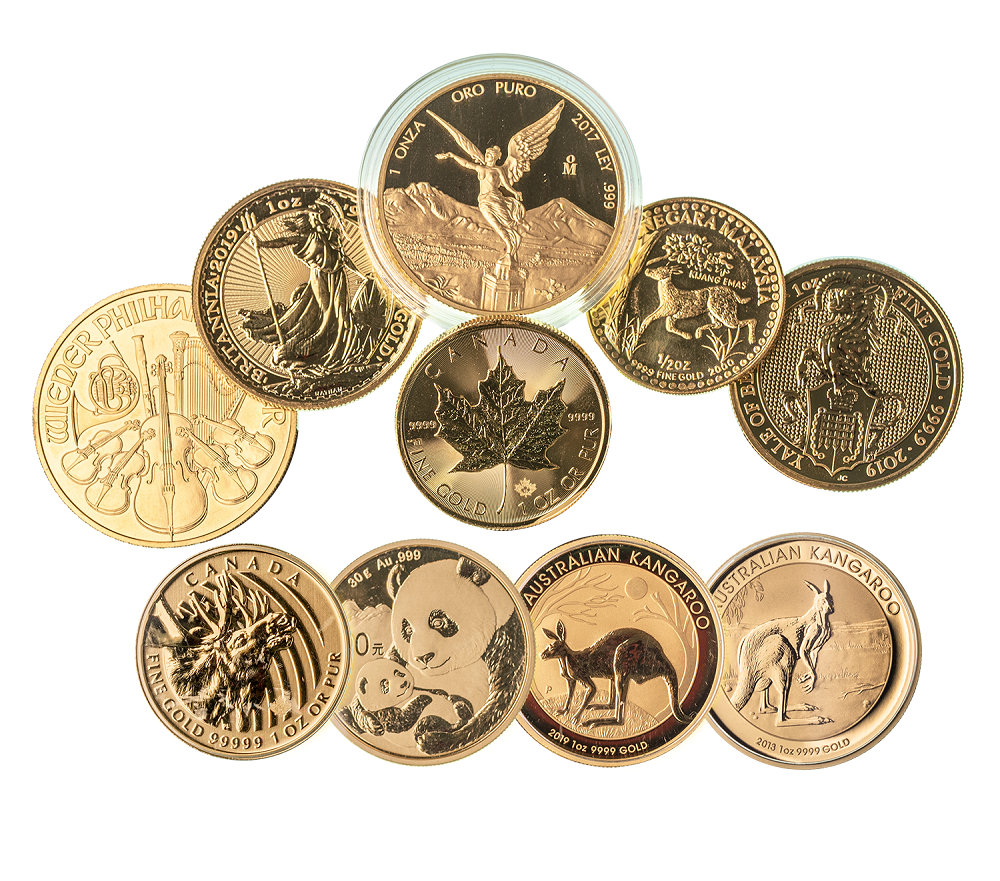
Qualifying IPM Gold Coins
- America Buffalo
- Australia Kangaroo Nugget
- Australia RAM Kangaroo
- Australia Lunar
- Australia Dragon Rectangular
- Austria Philharmonic
- Canada Maple Leaf
- Canada Call of the Wild series
- China Panda
- Malaysia Kijang Emas
- Mexico Libertad
- Singapore Lion
- UK Britannia
- UK Lunar
- UK Royal Arms
- UK The Queen’s Beasts series
- UK Myths and Legends series
- UK The Royal Tudor Beasts series
Qualifying IPM Silver Coins
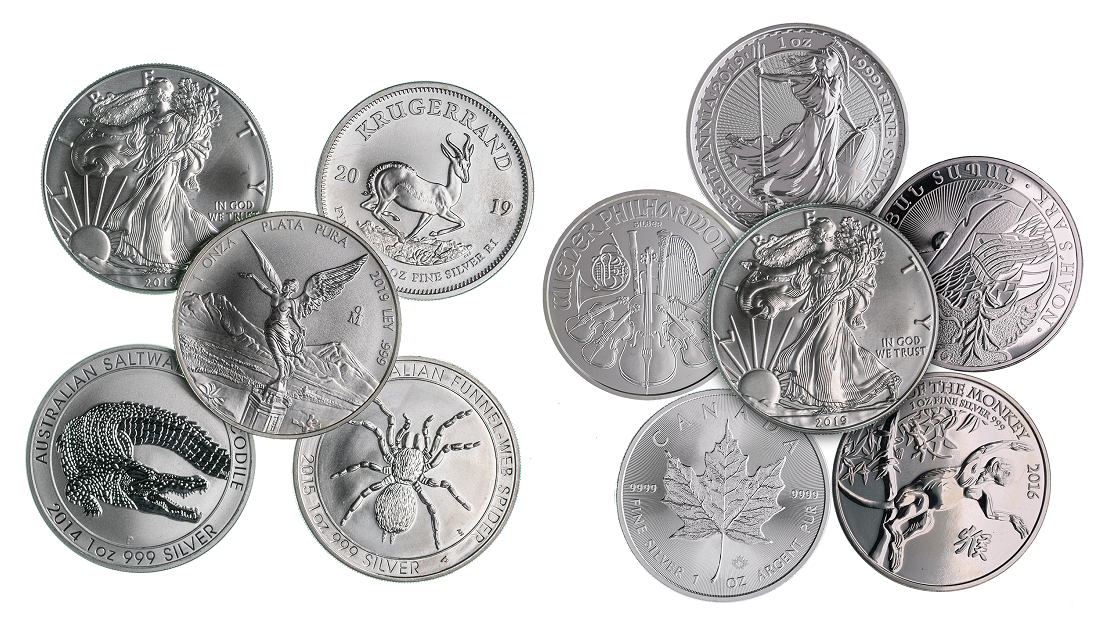
- America Eagle
- Armenia Noah’s Ark
- Australia Kookaburra
- Australia Koala
- Australia Kangaroo
- Australia Lunar
- Australia Saltwater Crocodile
- Australia Funnel-Web Spider
- Australia Dragon Rectangular
- Austria Philharmonic
- Canada Maple Leaf
- Canada Birds of Prey series
- Canada Wildlife series
- Canada Creatures of the North series
- Canada Goose
- Canada Tree of Life
- Canada Superman™ S-Shield
- China Panda
- Mexico Libertad
- South Africa Krugerrand
- UK Britannia
- UK Lunar
- UK Royal Arms
- UK The Queen’s Beasts series
- UK Myths and Legends series
- UK The Royal Tudor Beasts series
Qualifying IPM Platinum Coins
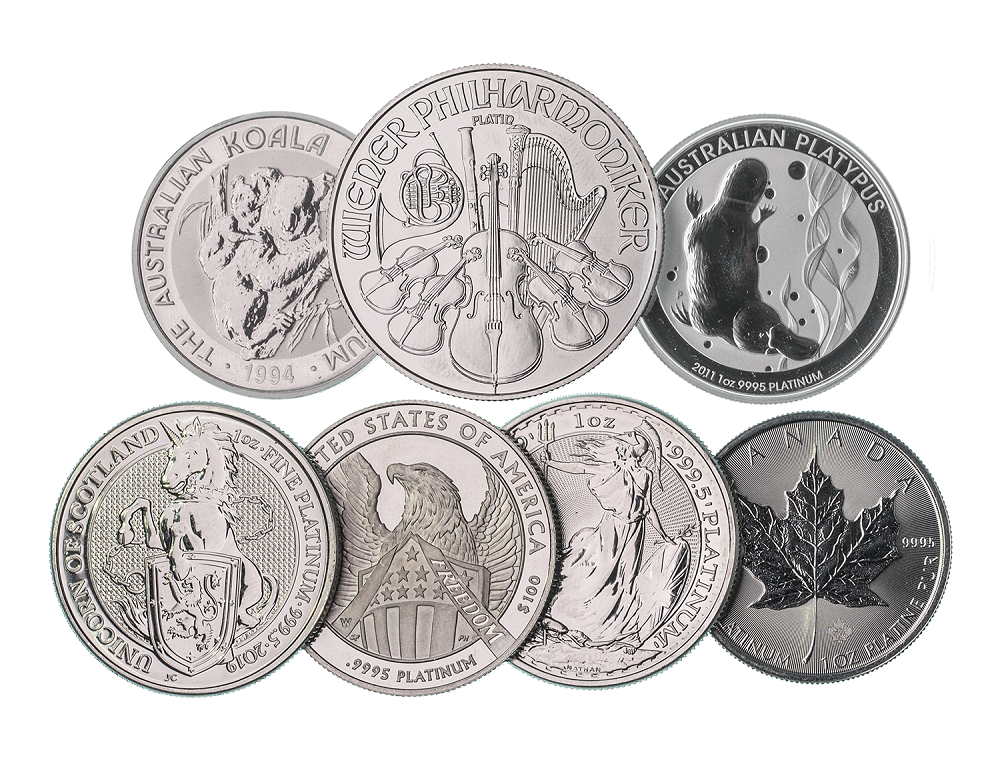
- America Eagle
- Australia Koala
- Australia Platypus
- Australia Kangaroo
- Australia Lunar
- Austria Philharmonic
- Canada Maple Leaf
- South Africa Big Five series
- UK Britannia
- UK Lunar
- UK Royal Arms
- UK The Queen’s Beasts series
- UK The Royal Tudor Beasts series
The Coins That Catch People Out
Read the three lists side by side and a few notable absences stand out, all of them among the most recognisable gold coins in the world.
The American Gold Eagle isn’t on the gold list, though the Silver Eagle and Platinum Eagle both are. The reason is purity: the Gold Eagle is struck in 22 karat gold at 91.67% fineness, which falls below the 99.5% threshold for gold. It contains a full troy ounce of gold, and it’s legal tender in the United States, but the alloy takes it outside the IPM definition entirely.
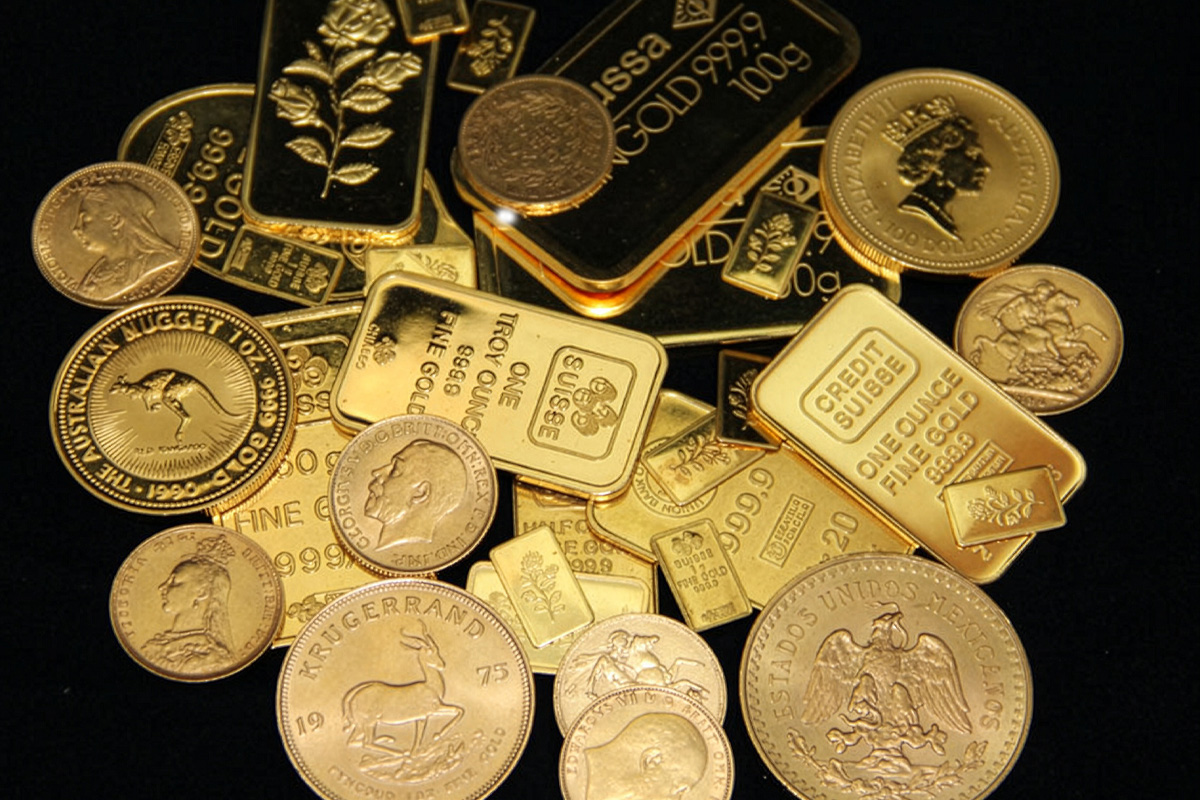
The gold Krugerrand is absent for exactly the same reason, at the same 91.67% fineness, while the silver Krugerrand appears on the silver list.
Despite several ranges from The Royal Mint appearing on all three lists, the gold Sovereign is absent. Once again, the Sovereign is struck in 22 karat gold, disqualifying it from the list, despite the series being one of the most widely traded bullion coins in the world.
Their exclusion isn’t an oversight. Singapore’s exemption is built around a purity test, and these coins were designed long before that test existed, in an era when a harder alloy made for a more durable circulating coin. If GST efficiency matters to your buying decision, the practical takeaway is to check purity before recognition. A 99.99% Maple Leaf, Britannia or Buffalo qualifies. A 22 karat classic doesn’t, however famous it is.
GST on Gold Jewellery and Non-IPM Precious Metals
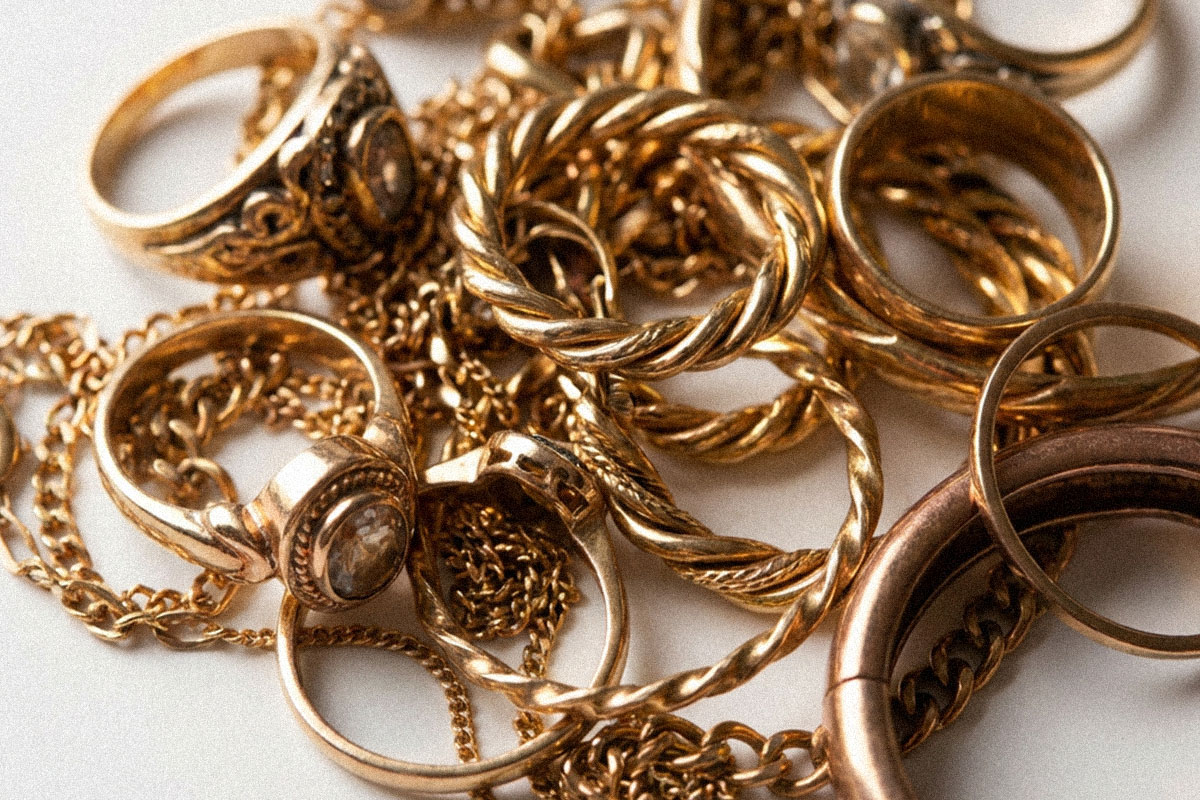
Gold that falls outside the IPM definition is taxed at the standard 9% rate, and gold jewellery is by far the most common case. A 916 gold chain fails the purity test at 91.6% fineness. A 999 gold pendant passes on purity but fails on form, because it’s made to be worn rather than held as bullion. Either way, GST applies.
Two mechanisms reduce that in specific circumstances, and both are worth knowing before assuming 9% of the sticker price is what you’ll pay.
The Gross Margin Scheme
Under Singapore’s Gross Margin Scheme, a GST-registered dealer selling eligible second-hand goods accounts for GST on its gross margin, the difference between what it sells an item for and what it paid for it, rather than on the full selling price.
The scheme applies where no input tax was claimed when the goods were bought, which is typically the position when a dealer buys from a private individual rather than another registered business. The practical effect for a buyer is that the GST built into the price of a qualifying second-hand item is a small fraction of 9% of its full value, because it’s calculated only on the dealer’s margin. BullionStar applies the scheme where products are eligible, so some GST-applicable items can be bought without GST charged on the full purchase price.
Trading In Old Gold Jewellery
Separately, IRAS grants an administrative concession for gold jewellery trade-ins. Where a jeweller applies it, GST is charged only on the difference between the value of the new piece and the value of the old piece traded in, rather than on the full price of the new item. On a $1,500 new piece against a $1,200 trade-in, GST is charged on $300.
Two limits matter. The concession covers gold jewellery only, so it doesn’t extend to trading in gold bars, even where a bar is traded for jewellery, and it doesn’t cover other materials such as gemstones within the same transaction. And since 1 January 2025 it applies only where the customer isn’t GST-registered at the time of supply.
For a private individual, that 2025 change makes no practical difference, and the concession applies as it did before. It’s GST-registered businesses on both sides of a trade-in that now follow the normal rules instead, issuing tax invoices on the full values. Applying the concession is optional for the jeweller in any case, so it’s worth asking rather than assuming.
Do You Pay Tax When You Sell Gold in Singapore?
No. Singapore has no capital gains tax on gold, so if you sell for more than you paid for it, the gain isn’t taxed. That isn’t a concession specific to precious metals: Singapore doesn’t levy capital gains tax on any asset. There’s no holding period to satisfy, no annual allowance to track, and no rate to calculate. This is the single biggest difference between selling gold in Singapore and selling it in most other developed markets.
It’s also why the question many investors arrive with, how to avoid capital gains tax on gold, doesn’t really apply here. There’s nothing to plan around. For international investors it’s worth noting that gains on metal sold in Singapore may still be liable for CGT (or an equivalent) in your country of residence. We’d recommend checking with local tax authorities to ensure you have the full picture of how gains may be treated for you.
When Income Tax Can Apply Instead
The one exception is where buying and selling precious metals looks less like investing and more like running a business. In that case the profits can be treated as trading income and taxed accordingly, rather than being an untaxed capital gain.
There’s no single threshold that decides this. IRAS looks at the substance of what you’re doing: how frequently you transact, how long you hold, how the purchases are financed, and what your evident intention was at the point of buying. Someone accumulating bullion over years and selling a portion to fund a purchase is in a different position from someone turning over stock weekly for profit. If your activity sits anywhere near that line, it’s worth taking professional advice on your specific circumstances rather than assuming either treatment.
Selling Bullion Back
There’s no GST to account for when selling qualifying IPM, in either direction. A local sale of IPM is an exempt supply, so the exemption isn’t something that reverses when you come to sell. Where you sell matters more than what you’ll owe: a dealer with a standing buy-back programme will quote against the live spot price, and you can check current rates on our sell gold and silver page before deciding.
Singapore vs Other Jurisdictions
Singapore isn’t the only place that exempts investment gold from sales tax, and it isn’t the only place without capital gains tax.
| Jurisdiction | Tax on buying investment gold | Tax on gains when you sell |
|---|---|---|
| Singapore | None on qualifying IPM | None, as Singapore has no capital gains tax |
| Hong Kong | None | None |
| United Kingdom | None, as investment gold is VAT-exempt | Capital gains tax applies, though UK legal tender coins such as Britannias and Sovereigns are exempt for UK residents |
| Australia | None on investment-grade bullion | Capital gains tax applies |
| United States | Varies by state, with some exempting bullion from sales tax | Federal tax on gains, with bullion taxed as a collectible at a higher rate than shares |
| India | GST applies on purchase | Capital gains tax applies on disposal |
Most countries offer at least some tax benefits on investment gold, but rarely do both sides of the transaction remain tax-free. The UK removes tax on the purchase but can tax the gain. India taxes both. Among major markets, Hong Kong is really the only close comparison to Singapore on both counts.
That’s the honest answer to the wider question of where gold and silver can be bought and sold tax-free. It isn’t a technique, it’s a matter of jurisdiction, and where you buy and store determines the outcome far more than how you structure the purchase.
Rules across the region differ more than most investors expect, and often change. Our guide to gold tax and VAT in China and across Asia covers the regional picture in detail.
Frequently Asked Questions
Is gold GST-free in Singapore?
Yes, if it qualifies as Investment Precious Metals. Gold bullion of at least 99.5% purity, produced by an accredited refiner in bar, ingot, wafer or qualifying coin form, has been exempt from GST since 1 October 2012. Gold that doesn’t meet those conditions, including all jewellery, is taxed at 9%.
What qualifies as Investment Precious Metal in Singapore?
Gold of at least 99.5% purity, silver of at least 99.9% and platinum of at least 99%, in bar, ingot or wafer form from a refiner on the current or former LBMA or LPPM Good Delivery list, or a coin on IRAS’ qualifying list. Decorative and collector’s pieces are excluded, as are palladium, rhodium and all other metals.
Do I pay GST on gold jewellery in Singapore?
Yes. Gold jewellery is taxed at 9% whatever its purity, because it’s made to be worn rather than held as bullion. That applies to 916 and 999 jewellery alike, and the tax is charged on the full price including workmanship.
Which gold coins are GST-exempt in Singapore?
Only coins on IRAS’ qualifying list, which includes the Canadian Maple Leaf, UK Britannia, American Buffalo, Austrian Philharmonic, Australian Kangaroo and Singapore Lion. Notably the American Gold Eagle and gold Krugerrand are not exempt, as both are 91.67% pure and fall below the 99.5% gold threshold. Proof and collector’s versions of listed coins are excluded too.
Is silver GST-exempt in Singapore?
Yes, where it meets the IPM criteria: silver of at least 99.9% purity in bar, ingot or wafer form from an accredited refiner, or a coin on IRAS’ qualifying silver list. Silver jewellery and collector’s pieces are taxed at 9%.
Do I pay tax when I sell gold in Singapore?
No. Singapore has no capital gains tax, so a profit on selling gold isn’t taxed, whatever the size of the gain or how long you held it. Selling qualifying bullion carries no GST either. The exception is where buying and selling amounts to a trade or business, in which case profits can be taxed as income.
Buy GST-Exempt Bullion in Singapore
Singapore’s treatment of investment gold is about as straightforward as tax gets. Qualifying bullion carries no GST on purchase, no capital gains tax on sale, and no estate duty on transfer. What determines whether you get that treatment isn’t where you live or how much you buy, it’s whether the metal itself qualifies: the right purity, the right form, and an accredited refiner behind it.
Where you keep it matters too. The exemption applies to IPM bought and held in Singapore, so storing your metal here keeps it inside the jurisdiction that grants it. For investors outside Singapore, that’s the appeal of offshore gold storage here: the metal stays in a jurisdiction that taxes neither the purchase nor the gain, while sitting outside your home country’s banking system.
When you’re ready, browse our range of gold, silver and platinum, all sold GST-exempt where they qualify as Investment Precious Metals. If you’d rather see the metal before you buy, you’re welcome at our Bullion Center at 45 New Bridge Road.
Popular Blog Posts by Gold & Silver 101
 An Introduction to Gold & Silver Investing
 Should I Invest in Gold, Silver, or Platinum Bullion?
 Gold Coins vs Gold Bars: Which Is Better?
 How Is Gold Taxed in Singapore? The IPM GST Exemption Explained
 Storing Precious Metals, Gold, and Silver Bullion
 Gold & Silver Bullion Investing FAQs
 Karat vs Carat: What’s the Difference?
 Gold Purity: The Complete Guide
 How Much Gold Is There in the World?
 Junk Silver: What It Is and What It’s Worth