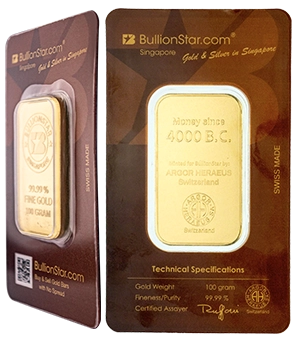
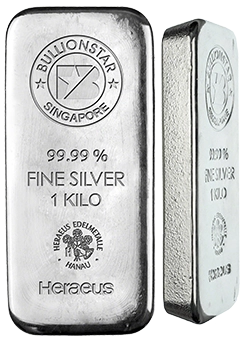
 Contact
 Help
Help





Gold Coins vs Gold Bars: Which Is Better?
 Gold & Silver 101



Every gold buyer eventually faces the same question: bars or coins? Both are widely available in a similar range of purities and sizes, and both let you own physical gold outright, but the two products differ in premium, divisibility, recognisability, and legal status in ways that can meaningfully affect which one suits you.
This guide compares gold bars and gold coins head-to-head, covering premiums, storage and resale, and a straightforward framework for which one fits different types of buyer.
The same tradeoffs apply just as much to silver and platinum. If you’re buying either of those metals, the same premium, divisibility, and recognisability logic holds when weighing up coins vs bars. Browse our silver bars and silver coins, or our platinum bars and platinum coins range.
Please note that BullionStar does not provide investment or financial advice. The information below is for informational purposes only. Your individual circumstances and goals will always be the most important factors in any investment decision.
Key Differences Between Gold Bars and Gold Coins
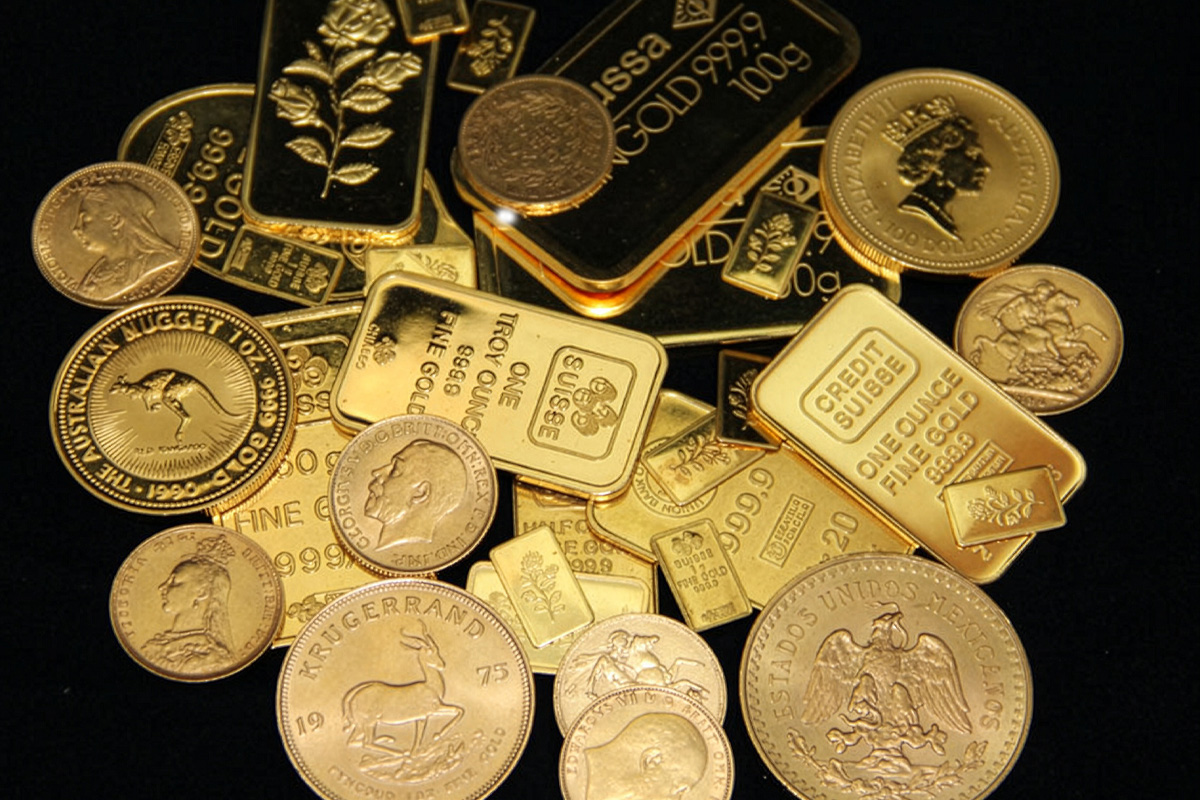
Gold bars and gold coins are typically minted from the same purities, usually 999 or 9999 fineness (24 karat gold), and both are widely available from reputable dealers. What actually decides which one suits you comes down to a handful of practical factors.
| Factor | Gold Bars | Gold Coins |
|---|---|---|
| Premium over spot | Generally lower, especially at larger sizes | Generally higher, reflecting more intricate minting |
| Divisibility | Part of a large bar can’t be sold, smaller bars available | Naturally divisible into smaller units at the point of purchase |
| Legal tender status | None | Often legal tender in their country of origin, which can carry tax benefits |
| Recognisability | Recognised by dealers; less familiar to casual buyers | Widely recognised by both dealers and the general public |
| Storage | Stacks efficiently, especially at larger sizes | Can also stack efficiently, especially in tubes |
Which Refiner Should You Choose?
Within either category, the refiner matters less than its accreditation. A gold bar or coin from an LBMA Good Delivery-listed refiner, whether that’s PAMP, Metalor, the Royal Mint, or Perth Mint, holds the same value to a bullion dealer regardless of brand. Our Buying Your First Gold Bar: A Beginner’s Guide covers how the major refiners compare in more detail.
Why Buy Gold Bars?
Gold bars generally have lower premiums than gold coins, particularly at larger sizes, making them the most cost-efficient way to hold a large amount of gold. That premium advantage comes down to production: bars normally require simpler minting with no legal tender design work and no collector finishing, so more of what you pay goes toward the metal itself rather than the fabrication.
The bigger the bar, the wider that gap typically becomes. A small gold bar can carry a premium in the tens of percent over spot, while a large bar’s premium often shrinks to low single digits, since the fixed costs of fabrication get spread across far more grams.
Bars themselves come in two fabrication styles: minted bars, which have a polished, high-lustre finish, and cast or poured bars, which have a more natural, traditional appearance. Cast bars are typically simpler and cheaper to produce, which can translate into a slightly lower premium, while minted bars tend to present more uniformly. Neither style affects the underlying value, a gram of gold is a gram of gold regardless of finish.
The Collector Premium
Although it’s uncommon, some gold bars can carry intricate, ornate designs. PAMP or Perth Mint for example are famous for producing desirable designs in low mintages, giving them an additional aesthetic or collectible appeal.
Generally speaking however, gold bars are normally bought for their plain design, with little more than the refiner’s logo, the bar’s weight and purity, and a serial number. This makes their pricing especially simple; a 100 gram gold bar is priced for the 100 grams of gold and nothing else. That’s a key distinction from coins, where design and mintage can factor into the price a lot more.
For investors prioritising cost efficiency over flexibility, particularly those buying in bulk or holding for the long term, gold bars are usually the more capital-efficient choice. Browse our range of gold bars.

Why Buy Gold Coins?
Gold coins trade a lower premium efficiency for a different set of advantages: legal tender status, sovereign mint backing, and more flexibility when it comes time to sell. They are normally produced in smaller sizes, and although gold bullion coins above one troy ounce do exist, they are much rarer.
In recent years, coins have closed the premium gap for equivalent sized bars in some markets. Competition for low premiums, and high mintage figures for fractional coins have both helped push prices down. For 1 oz or lower, it can be worth comparing the two carefully.
Because gold coins are issued as legal tender by a national mint, such as the UK Gold Britannia, Canadian Gold Maple Leaf or the Australian Gold Kangaroo, they carry government backing behind their weight and purity in a way privately refined bars don’t. In several countries, that legal tender status also comes with tax advantages bars don’t share. Investors are always advised to check their local tax rules to see if there are any benefits in buying their national coins.
The smaller, commonly produced sizes of gold coins also make them naturally divisible. Rather than committing to one large purchase, buying several smaller coins lets you build a holding gradually, and sell off individual coins later without needing to liquidate an entire position at once.
The Collector Premium
Design plays a much bigger role in coin pricing than it does for bars. Mintage limits and commemorative designs can add a collector premium on top of the gold content, giving coins more upside for buyers interested in numismatics. Although investing on emotion isn’t advised, having a coin that means something to you and is pleasant to hold and view is a big part of buying gold coins for many investors.
This means their pricing is less purely tied to the spot price of gold. For most investors buying purely for gold content, that collector premium can be a cost rather than a benefit. The advantage, however, is that well-chosen coins (and even surprise performers) can hold appeal beyond their metal value alone.
Browse our full range of gold coins from globally-recognised mints.
Which Is Better for Your Goals?
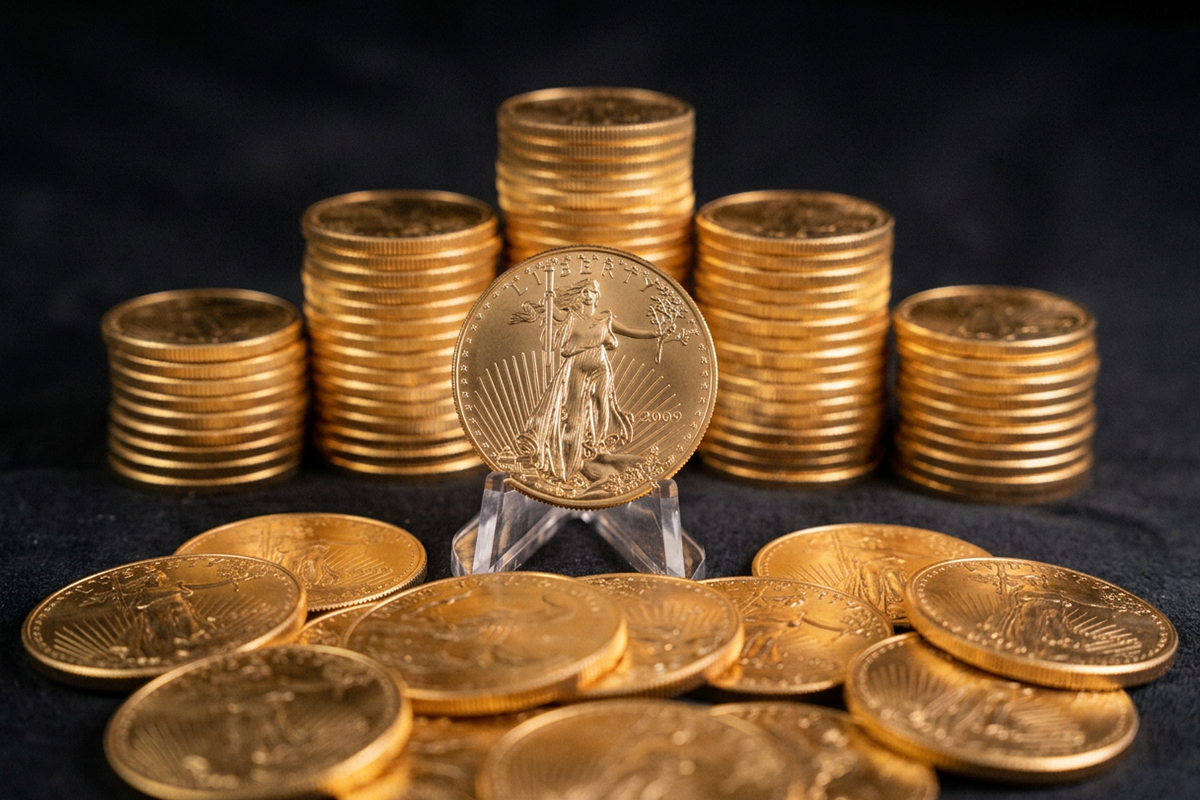
If you’re comparing a gold coin investment to bullion bars, bars generally carry a lower premium and greater cost efficiency, while coins offer more flexibility, legal tender status, and potential collectible value. The table below covers some of the things to consider, and which option best suits those goals.
| If you’re… | Consider… | Because… |
|---|---|---|
| Prioritising the lowest possible premium over spot | Gold bars | Bars carry the lowest premiums of any bullion product, especially at larger sizes |
| Wanting the flexibility to sell in smaller increments later | Gold coins | Individual coins can be sold one at a time, rather than needing to liquidate an entire large bar |
| After the most cost-efficient way to hold gold in bulk or for the long term | Gold bars | Large bars carry the smallest premiums of any bullion product |
| Interested in legal tender status, government backing, or potential tax benefits | Gold coins | Coins are issued as legal tender by national mints |
| Drawn to design, mintage, or collectible appeal alongside the investment case | Gold coins | Collector premium can add value beyond the metal content for well-chosen products |
For most investors buying purely for gold content, the premium advantage makes bars the more capital-efficient choice, particularly at larger sizes. Investors who value flexibility, government backing, or the option of design and collectibility often lean toward coins instead. Plenty of holdings end up mixing both, bars for the bulk of a position, coins for smaller, more flexible reserves.
If divisibility is a concern but the lower premium of bars still appeals, consider buying several smaller bars rather than one large one. For example, ten 100 gram bars instead of a single 1 kilogram bar. You still benefit from a lower premium than an equivalent coin purchase, while keeping the option to sell off part of your holding later without liquidating the whole position.
Storing and Selling Bars vs Coins
Both gold bars and gold coins store easily, just slightly differently. Bars typically come sealed in tamper-evident assay packaging, while larger sizes are loose and can be easily stacked. Coins are usually supplied in protective capsules, tubes, or original mint packaging. Either way, that original packaging is worth keeping intact, it helps verify authenticity and makes reselling privately more straightforward.
When it comes to selling, it’s a common assumption that bars and coins carry a fixed buy-back spread difference, but in practice it’s more variable than that. A 1oz gold bar and a 1oz gold coin will often fetch a very similar price when selling back to a dealer, and which one comes out ahead can shift with current market demand.
Rather than assuming one product type will always sell for more, it’s worth checking live buy-back prices for the specific products you’re considering at the time you buy. BullionStar publish live buy-back prices at all times on our sell gold page, and customers can lock in a sale 24/7 via their online account.
Frequently Asked Questions
Are gold coins a good investment?
Yes, gold coins can be a good investment. They combine gold’s store-of-value properties with legal tender status, government backing, and easy divisibility.
Are gold bars a good investment?
Yes, gold bars can be a good investment. They carry the lowest premiums of any bullion product, especially at larger sizes, making them a cost-efficient way to hold gold.
Is it better to buy bars or coins for beginners?
For beginners, gold coins are often easier to start with. Smaller, widely recognised sizes make coins simple to buy and later sell in smaller increments, though gold bars are worth considering too if cost efficiency matters more than flexibility.
Are gold bars cheaper than gold coins?
Gold bars are usually cheaper per gram than gold coins over 1 troy ounce, since bars carry lower premiums over the spot price. That gap is largest at larger sizes and narrows, or can even reverse, for smaller fractional coins.
Are gold coins legal tender?
Yes, many gold bullion coins are legal tender, issued by national mints such as the Royal Mint, the Royal Canadian Mint, or the Perth Mint. Gold bars are very rarely legal tender, since they’re produced by private refiners rather than governments.
How should I store gold bars and coins safely?
Store gold bars and coins in their original packaging where possible, keeping any certificates and mint capsules intact, since they help verify authenticity when selling. Beyond that, secure options include a home safe, a bank safety deposit box, or third-party vault storage, such as BullionStar’s vault storage in Singapore, the US, and New Zealand.
Bars or Coins — Make Your Choice
Gold bars and gold coins both offer the same core case for owning gold, no counterparty risk and a global market to buy and sell. The right choice between them comes down to what you’re optimising for: bars for the lowest possible premium and cost efficiency, coins for divisibility, legal tender status, and the option of collectible value alongside the investment case. Many investors hold both, bars for the bulk of a position, coins for smaller, more flexible reserves.
Ready to buy? Browse our full range of gold bars and gold coins side by side. If cost efficiency is your priority, our no-spread 100g gold bar (produced by Argor-Heraeus or Metalor Singapore) is worth a look. Whichever you choose, secure vault storage is available, as well as secure international shipping, and collection from our Bullion Center in Singapore.

Popular Blog Posts by Gold & Silver 101
 An Introduction to Gold & Silver Investing
 Should I Invest in Gold, Silver, or Platinum Bullion?
 Gold Coins vs Gold Bars: Which Is Better?
 How Is Gold Taxed in Singapore? The IPM GST Exemption Explained
 Storing Precious Metals, Gold, and Silver Bullion
 Gold & Silver Bullion Investing FAQs
 Karat vs Carat: What’s the Difference?
 Gold Purity: The Complete Guide
 How Much Gold Is There in the World?
 Junk Silver: What It Is and What It’s Worth