 Contact
 Help
Help





24K Gold: Purity, Investment Value & Buyers Guide
 Gold & Silver 101



24K gold is the purest form of gold available, with a fineness of 99.9% or higher. It is the benchmark used by global financial markets and the standard for investment-grade bullion worldwide.
For investors, 24K gold is the most desirable purity. It is straightforward to value, easy to trade, and in countries like Singapore qualifies for full GST exemption as an Investment Precious Metal. When the spot price of gold is quoted, it refers to gold of this purity.
Beyond investment, 24K gold carries deep cultural significance, particularly across Asia, and its rich, warm yellow colour is what most people picture when they think of gold. At BullionStar, we stock a wide range of 24 karat gold products, from investment bars and coins by the world’s leading refiners, to 24K gold jewelry in standardised weights, giving us a close working knowledge of this market.
In this guide, we cover everything you need to know about 24K gold: what the purity means, how it compares to 22K and 18K, the best bars and coins for investors, and its use in jewelry.
What Is 24K Gold?
24K gold, also written as 24 carat gold in the UK and Commonwealth countries, is the purest form of gold commercially produced. The “K" stands for karat, a traditional system for measuring gold purity that divides it into 24 parts. 24K gold contains 24 of those 24 parts as gold, making it, in theory, 100% pure.
In practice, refining gold to absolute 100% purity is technically impossible. Trace amounts of other elements will always be present. The accepted standard for 24K gold is therefore 99.9% purity (expressed as 999 fineness) or 99.99% purity (999.9 fineness). Both are considered 24 karat in global markets.
These two systems, karats and millesimal fineness, are used interchangeably across the bullion industry. If you see a bar or coin stamped “999.9 FINE GOLD," it is 24K gold.
24K Gold vs Other Karats
Pure gold’s softness makes it impractical for everyday use, which is why gold alloys exist. By mixing gold with other metals (typically copper, silver, or palladium) manufacturers can increase hardness while retaining the metal’s appearance and value. The karat indicates how much of the alloy is gold.
| Karat | Purity | Uses | Colour | Durability |
| 24K Gold | 99.9%+ | Investment bullion | Rich yellow | Low |
| 22K Gold | 91.67% | Bullion & investment coins | Yellow/reddish gold | Medium |
| 18K Gold | 75% | Fine & high-quality jewelry | Yellow/rose/white | High |
| 14K Gold | 58.3% | Everyday jewelry | Yellow/rose/white | Very High |
| 9K Gold | 37.5% | Budget jewelry | Yellow/rose/white | Very High |
24K vs 22K Gold
The key difference between 24K and 22K gold is durability. Adding 8.33% of another metal (typically copper) considerably increases hardness without significantly affecting gold content. This made 22K gold the traditional choice for circulating coins like the British Sovereign, and was later adopted by the South African Krugerrand, and the American Gold Eagle. The Sovereign circulated across the British Empire, where durability under daily handling was essential.
The copper content gives 22K coins a subtle reddish warmth — less pronounced than rose gold, but noticeably different from the deeper yellow of 24K.
24K vs 18K Gold
18K gold is 75% pure, with 25% made up of other metals. The greater proportion of alloy metals makes it significantly more durable than 24K, and opens up a wider range of colours, including white gold (using palladium or nickel) and rose gold (using copper). This makes 18K the standard for fine jewelry, including engagement rings and high-end watches, where both appearance and longevity matter.
24K vs 14K Gold
14K gold contains 58.3% pure gold, with the remaining 41.7% made up of alloy metals such as copper, silver, or zinc. It sits between 18K and 9K in terms of purity, and is particularly popular in the United States, where it is the most widely sold karat for everyday jewelry. In the millesimal fineness system it is stamped as 585.
Compared to 24K gold, 14K offers considerably greater durability and a lower price point per piece, making it a practical choice for items worn daily, such as wedding bands and everyday rings. However, its gold content is little more than half that of 24K, which means it holds limited value as an investment. For buyers prioritising gold content and long-term value retention, 24K remains the superior choice.
24K vs 9K Gold
9K gold is the lowest karat widely used in jewelry, containing just 37.5% gold — stamped as 375 in the millesimal fineness system. The remaining 62.5% is made up of other metals, typically copper, silver, or zinc, which makes 9K gold the most durable of the common karats and resistant to everyday wear and scratching.
The trade-off is gold content. A 9K piece contains less than half the gold of an 18K equivalent of the same weight, and a fraction of a 24K item. This makes 9K unsuitable for investment purposes, and its value is tied more to craftsmanship than metal content. It is, however, a popular and affordable entry point for everyday jewelry, particularly in the UK and Australia where 9K is the most common karat found on the high street.
In terms of colour, 9K gold tends to look slightly paler or more muted than higher karats in yellow gold, and can be prone to tarnishing over time as the base metals react to moisture and skin contact.
24K Gold for Investment: Bars and Coins
When buying physical gold for investment, 24K is the standard choice. Owning pure gold makes valuation and resale straightforward, as you know exactly how much gold you hold without adjusting for alloy content.
24K gold also carries tax advantages in several countries. In Singapore, gold that qualifies as an Investment Precious Metal (IPM) is exempt from Goods and Services Tax (GST). To qualify, bullion must meet a minimum purity of 99.5% and be in the form of a bar, wafer, or qualifying coin, conditions that 24K gold bullion meets by definition. For investors based in Singapore, or international buyers purchasing through Singapore, this exemption makes a meaningful difference to the overall cost of ownership.
24K Gold Bars
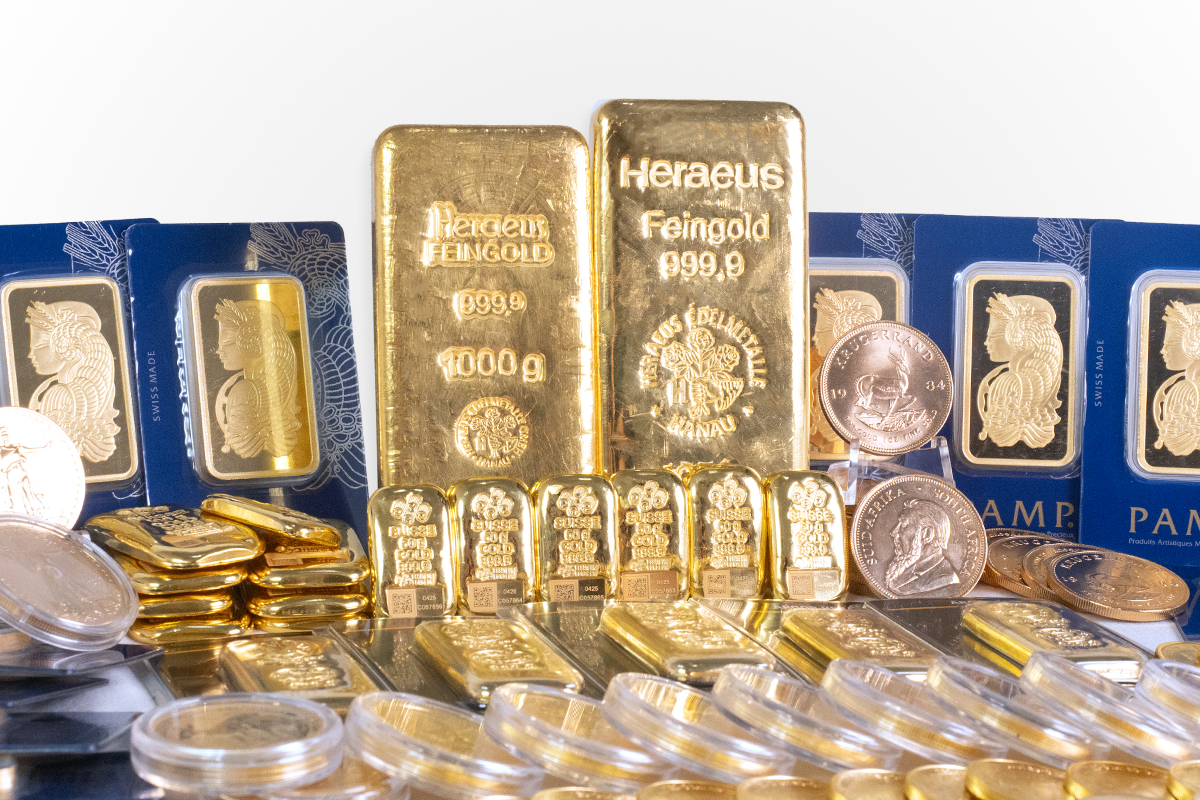
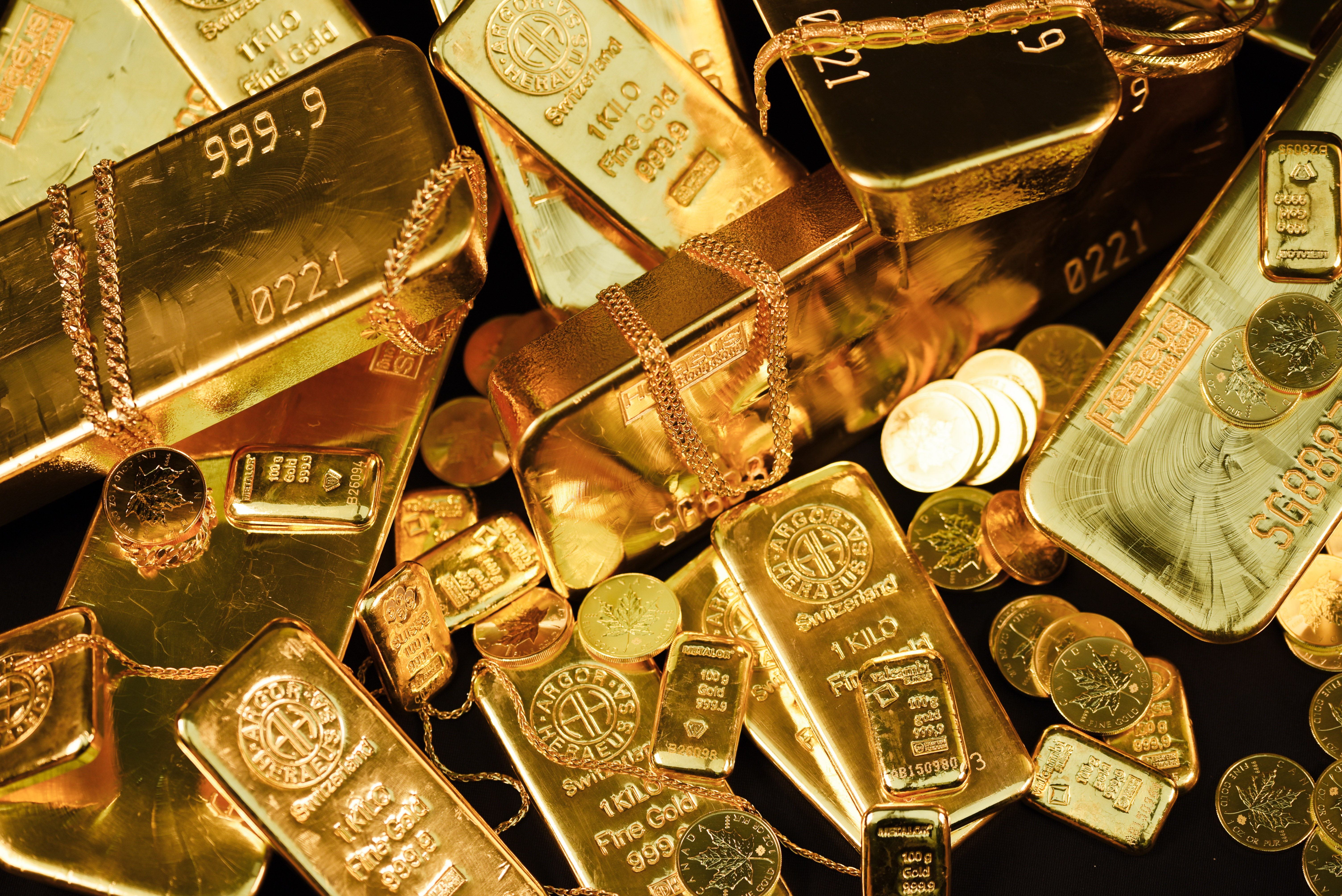
The vast majority of gold bars produced for retail investors are 24K. As an investment product intended to be stored rather than handled daily, durability is rarely a concern, making pure gold the logical choice. Bars are produced in a wide range of sizes, from 1 gram up to the 400 troy oz Good Delivery bar used in institutional markets, giving investors flexibility at every budget level.
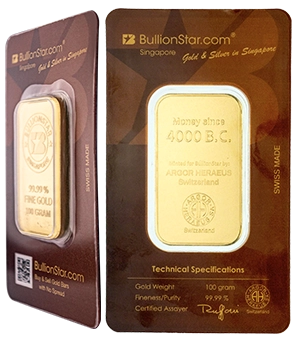
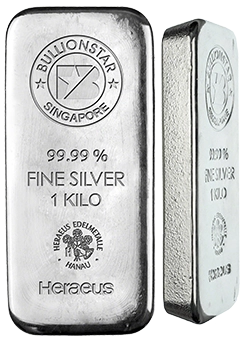
BullionStar stocks an extensive range of 24K gold bars from the world’s leading refiners, including PAMP, Metalor, and Valcambi. We also offer our own BullionStar 24K gold bars, available with zero spread between the buying and selling price.
24K Gold Coins
Gold was largely withdrawn from circulating coinage in the early 20th century, and the bullion coins produced since serve a different purpose: they are investment vehicles, held in coin capsules rather than spent. Free from the wear and handling demands of circulation, mints have been able to produce coins at full 24K purity.
The most widely traded 24K gold coins include the Canadian Gold Maple Leaf — available in a standard 999.9 fineness, with a limited annual issue in 999.99 (five-nines) — the UK Gold Britannia, Australia’s Gold Kangaroo from the Perth Mint, and the Austrian gold Philharmonic. All are available in multiple sizes, and all qualify for Singapore’s GST exemption, with their purity typically stamped directly into the coin design as “999.9 FINE GOLD."
24K Gold Jewelry: Rings, Necklaces & Investment Pieces
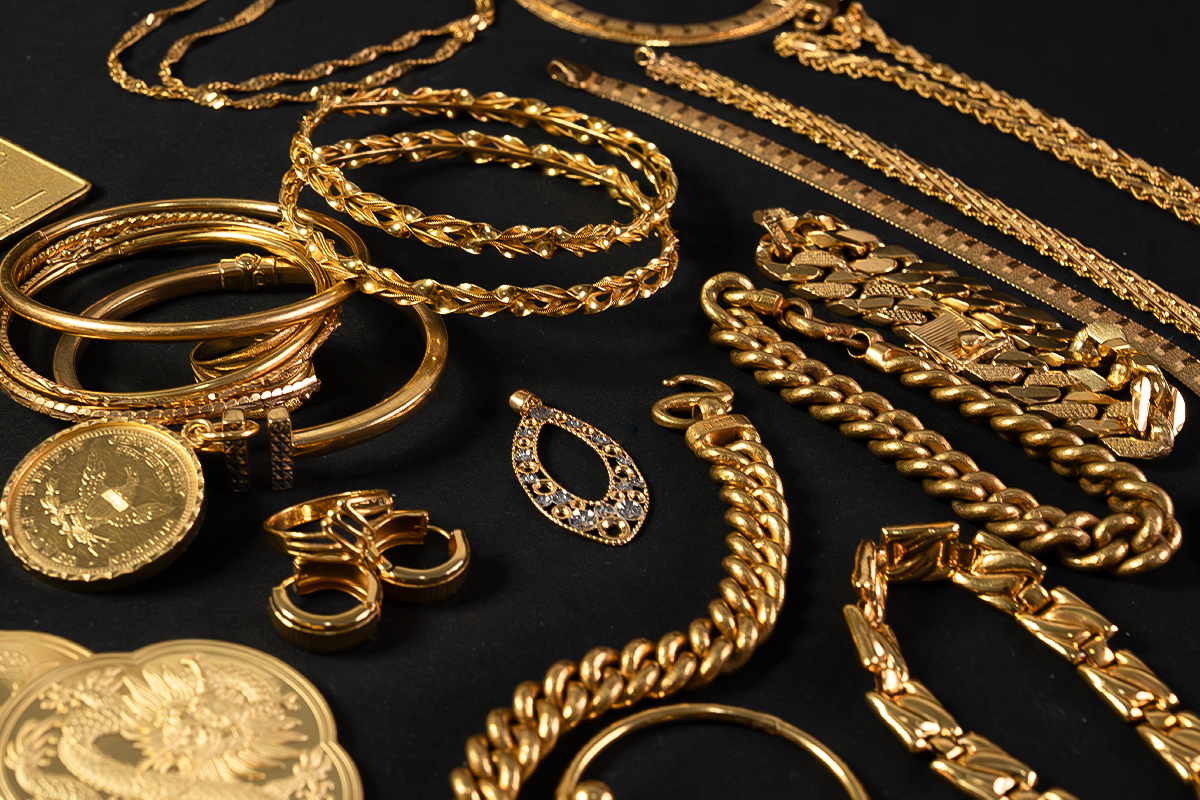
24K gold is less common in Western jewelry markets due to its softness — it scratches and bends more easily than 18K or 22K alloys. Across Asia, however, 24K gold jewelry has deep cultural and religious significance. In Chinese, Indian, and Malay traditions, pure gold jewelry plays an important role in weddings, festivals such as Chinese New Year and Diwali, and as a form of gift-giving and inherited wealth.
Beyond cultural significance, 24K gold jewelry serves a practical investment purpose. Unlike fashion jewelry, where craftsmanship, branding, and design drive most of the price, investment-grade 24K jewelry is valued primarily by its gold weight. This makes it straightforward to price, easy to resell, and a portable way to hold physical gold.
Because of its softness, 24K gold jewelry is best suited to pieces that see limited daily contact. Necklaces and earrings are more appropriate for regular wear than rings, which are exposed to more knocks and abrasion. Items should be stored separately to avoid surface scratching.
At BullionStar, our 24K gold jewelry is produced in standardised weights with minimalist designs, ensuring the value is in the gold itself rather than craftsmanship premiums. Our range includes a 10 gram 24K gold ring, a 20 gram necklace and 100 gram gold necklace, all carrying the 999 hallmark of the Singapore Assay Office. For buyers seeking a substantial gold holding in wearable form, the 100 gram necklace in particular offers significant gold content with the flexibility of being worn or stored.
Frequently Asked Questions
Does 24K gold tarnish?
No, pure gold is chemically inert. It does not react with oxygen, moisture, or most environmental elements, which means it will not tarnish, rust, or corrode. This is one of gold’s most valued properties, and a well-stored 24K gold item will maintain its appearance virtually indefinitely. Learn more about why gold doesn’t rust.
Can you wear 24K gold every day?
It depends on the item. 24K gold is soft and can scratch or bend under regular physical contact. Rings, which are exposed to constant knocks and abrasion, are not well-suited to daily wear. Necklaces and earrings, which are more protected, can generally be worn daily with reasonable care. Storing 24K jewelry separately from other pieces will help prevent surface scratching.
Is 24K gold pure gold?
Yes, 24K gold is the purest form of gold commercially available. The karat system divides gold purity into 24 parts; 24K means all 24 parts are gold. In the millesimal fineness system used on hallmarks and bullion, this is expressed as 999 or 999.9 (99.9% or 99.99% pure). Refining beyond this point is technically possible but prohibitively expensive, so 999.9 fineness is the accepted ceiling in global markets.
What sizes do 24K gold bars come in?
24K gold bars are produced in a wide range of sizes, from 1 gram up to the 400 troy oz (approximately 12.5kg) Good Delivery bar used in institutional and central bank markets. Retail investors most commonly buy bars between 1 gram and 1 kilogram. The weight and purity are stamped on the bar itself — a bar marked “999.9 FINE GOLD 1g" contains 1 gram of 24K gold.
Why is 24K gold soft?
Gold atoms are arranged in a highly uniform, ordered structure. This regularity means the atoms can slide past one another relatively easily when force is applied, making gold malleable — easy to shape, bend, and scratch. Because 24K gold is almost entirely gold atoms with no harder metals mixed in, it is softer than lower-karat alloys.
What is 24K gold worth?
The value of 24K gold is based on the live spot price of gold, which fluctuates continuously on global markets. Because 24K gold is pure, its value is straightforward to calculate: spot price × weight. BullionStar displays live buy and sell prices for all 24K gold products.
What does 999 mean on gold?
999 is the millesimal fineness hallmark for 24K gold, indicating the metal is 99.9% pure. You may also see 999.9 (99.99% pure) on higher-refinement bullion. Both are considered 24 karat. This hallmark is stamped on bars, coins, and jewelry by accredited assay offices as a guarantee of purity.
What is the difference between 24K gold and gold-plated?
Solid 24K gold is pure gold throughout. Gold-plated items are a base metal (typically brass or copper) with a thin layer of gold deposited on the surface. The gold content in a plated item is negligible, and the plating will wear away over time. Gold-plated jewelry has no meaningful investment value. When buying gold for investment, always look for an official hallmark from an accredited assay office.
Buy 24K Gold at BullionStar
24K gold remains the benchmark for investors and the gold standard, in every sense, for purity. Whether you are buying bars for long-term storage, coins for a diversified bullion portfolio, or jewelry that doubles as a wearable store of wealth, 24K gold offers transparency of value that lower-karat alloys cannot match.
BullionStar stocks one of the most comprehensive ranges of 24K gold products in Singapore, including bars from PAMP, Metalor, and Valcambi, leading investment coins such as the Canadian Gold Maple Leaf, Gold Britannia, and Gold Kangaroo, and our own range of 24K gold jewelry in standardised weights.
Popular Blog Posts by Gold & Silver 101
 An Introduction to Gold & Silver Investing
 Should I Invest in Gold, Silver, or Platinum Bullion?
 Gold Coins vs Gold Bars: Which Is Better?
 How Is Gold Taxed in Singapore? The IPM GST Exemption Explained
 Storing Precious Metals, Gold, and Silver Bullion
 Gold & Silver Bullion Investing FAQs
 Gold Hallmarks: A Guide to Marks, Stamps, and Standards
 Karat vs Carat: What’s the Difference?
 Gold Purity: The Complete Guide
 How Much Gold Is There in the World?