 Contact
 Help
Help






Precious Metal Refiners: The Complete Guide



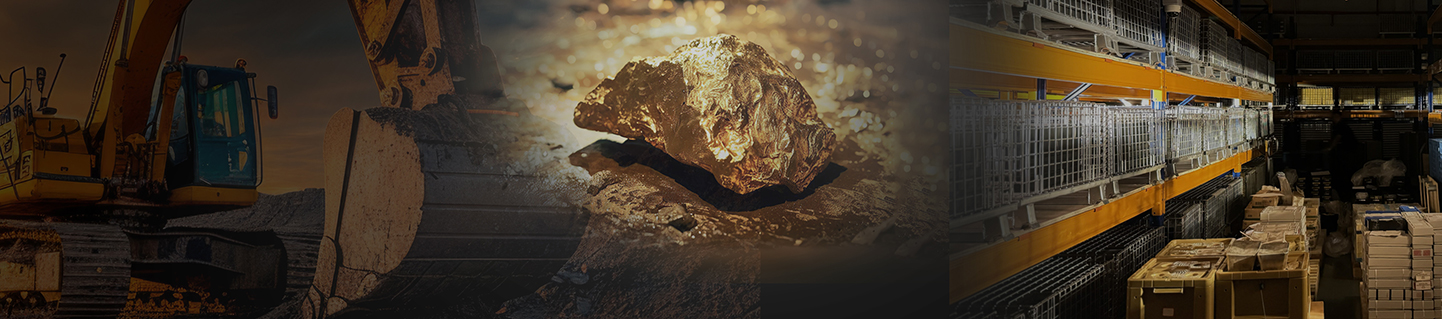
Every gold bar, silver bar and bullion coin begins at a refinery. Gold comes out of a mine mixed with silver, copper and other metals. Recycled jewellery and electronics contain gold alloyed with other metals too. Refiners are the companies that turn that raw material into metal of 99.99% purity, then cast it into the bars that trade between banks, dealers and investors. Mints strike coins and dealers sell them, but refiners stand between the mine and the market, and they set its standards.
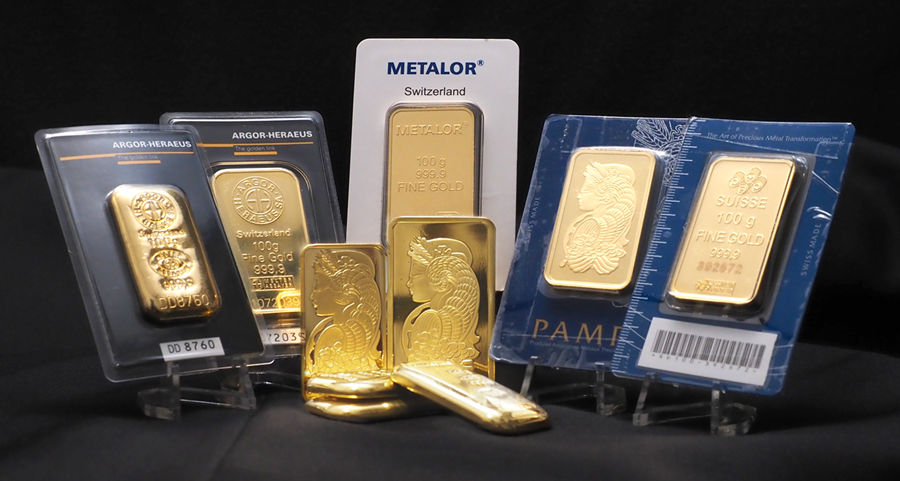
It is a smaller industry than most people expect. Only 67 gold refiners and 86 silver refiners worldwide currently meet the standards of the London Bullion Market Association, the body that sets the rules for the global wholesale market. A handful of groups handle a large share of the world’s gold. Three of the best known, PAMP, Valcambi and Argor-Heraeus, sit within a few kilometres of each other in the Swiss canton of Ticino. The others are spread across Switzerland, Germany, South Africa and Japan: Metalor, Heraeus, Rand Refinery and Tanaka.
This guide explains what gold refiners do and how they differ from mints and dealers. It covers how gold is refined to 99.99% purity, which refineries are the largest in the world, what LBMA Good Delivery accreditation means for anyone buying a bar, and what actually matters when choosing between refiners’ bars.
Highlights
- Precious metal refiners purify gold and silver from mines and scrap to 99.99% purity. Only 67 refiners worldwide are accredited to the LBMA’s gold Good Delivery List, and 86 to its silver list.
- Most large refiners use two stages: the Miller process, which removes impurities with chlorine to about 99.5%, and the Wohlwill process, which uses electrolysis to reach 99.99% or higher.
- Around a third of the world’s gold is refined in Switzerland. Valcambi, PAMP, Argor-Heraeus and Metalor are among the largest refiners anywhere.
- Seven refiners act as LBMA Good Delivery referees, testing other refiners’ bars: Argor-Heraeus, Metalor, PAMP, Rand Refinery, Tanaka, the Perth Mint and Agosi.
- Dealers generally buy back LBMA-accredited bars of the same weight at the same price, whoever made them. Bar size affects the premium far more than the brand does.
What Precious Metal Refiners Do
A gold refiner takes impure gold and makes it pure. Most of that metal arrives as doré, the rough bars poured at mine sites, which are typically 60% to 90% gold with the rest mostly silver. The remainder of a refiner’s intake is scrap: old jewellery, dental alloys, industrial waste and electronics. The refiner separates the gold from everything else, confirms its purity by assay, and returns it as a bar of known weight and fineness.
Most of this work is done for a fee. A mining company sends its doré to a refiner, which refines it and returns the pure metal to the miner’s account, or sells it on the miner’s behalf. This is known as toll refining, and it is the backbone of the business. The largest international precious metal refiners also make products of their own. These include the 400 oz Good Delivery bars traded between banks, the kilo bars favoured in Asia, and the small cast and minted bars sold to investors. Some also supply coin blanks, the plain discs a mint strikes into coins.
Many refiners have large industrial businesses as well. Heraeus, Tanaka and Metalor all supply precious metals to the electronics, automotive, medical and chemical industries, and recover metal from those industries’ waste. For them, investment bars are one product line among many.
Refiners, Mints and Dealers
Refiners, mints and dealers are easy to confuse, and some organisations are more than one of the three. The distinction matters, because it tells you who is standing behind the metal you buy.
| What it does | Examples | |
|---|---|---|
| Refiner | Purifies raw gold and silver and casts it into bars | PAMP, Valcambi, Metalor, Rand Refinery |
| Mint | Strikes coins, often legal tender, from refined metal | The Royal Mint, the Austrian Mint, the US Mint |
| Dealer | Buys and sells finished bars and coins to the public | BullionStar |
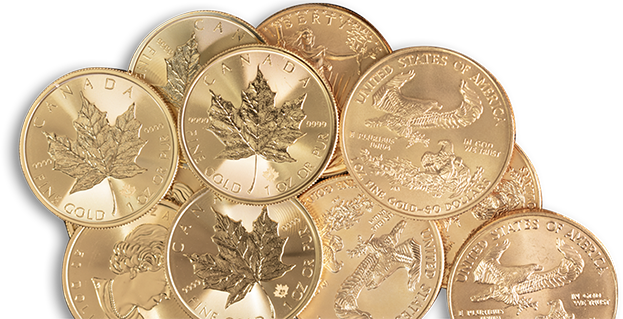
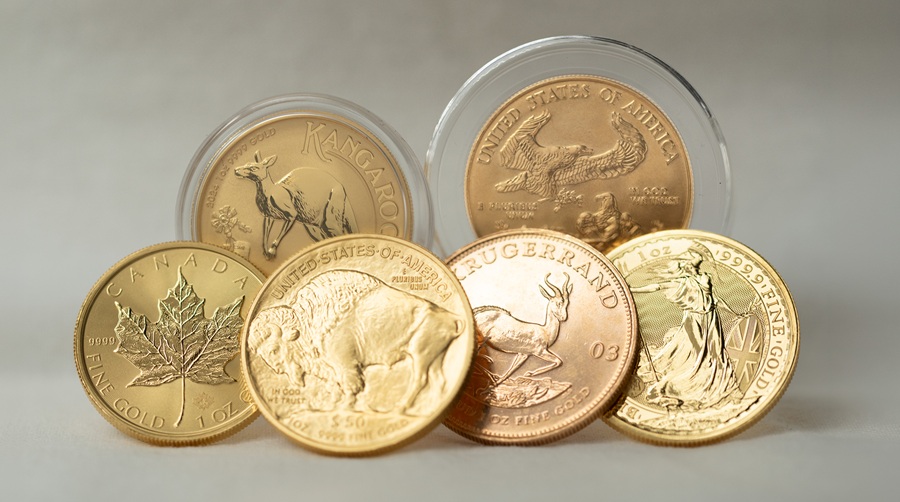
A mint’s job begins after refining is done. The Royal Mint, the Austrian Mint and the US Mint don’t refine at all. They buy metal or blanks that are already refined and strike them into coins. The Austrian Mint doesn’t even make its own gold bars; they’re manufactured for it by Argor-Heraeus and PAMP.
A few national mints do both jobs. The Perth Mint and the Royal Canadian Mint each run a large refinery alongside their minting operations, and both are LBMA-accredited refiners. The Perth Mint refines most of the gold mined in Australia. Going the other way, Rand Refinery makes the gold blanks for the Krugerrand, but the coin itself is struck by the South African Mint.
How Gold Refining Works
Gold refining is the process of removing everything that isn’t gold, and it usually happens in stages. The metal arrives impure, whether as doré from a mine or as scrap from jewellers and industry. It is melted, sampled and assayed so that everyone knows what it contains. Most of the impurities are then removed with chlorine gas, and the metal is finished to 99.99% purity by electrolysis. Each stage has a different job, and together they make up the gold refining process used by most large refiners.
From Mine to Doré
Refining starts at the mine. Gold ore is crushed and the gold extracted, most often by dissolving it in a cyanide solution and recovering it onto activated carbon. The recovered gold is then smelted on site into doré bars. Doré is typically 60% to 90% gold, with most of the rest silver and smaller amounts of copper, iron and other metals.
When doré reaches the refinery, the first step is to establish exactly what it contains, since that decides what the miner is paid. Each consignment is weighed, melted so that the metal is evenly mixed, and sampled while molten. The samples are assayed, and the result is agreed with the miner before any refining begins. Scrap goes through the same process, which is why refiners are cautious about jewellery and electronic waste of uncertain content.
The Miller Process
The Miller process takes gold to around 99.5% purity quickly and cheaply. It was developed by Francis Bowyer Miller at the Sydney Mint in 1867. Chlorine gas is bubbled through molten gold, and the other metals react with it before the gold does. Silver, copper, zinc and iron all form chlorides that rise to the surface as slag, or escape as vapour, and can be skimmed off. Gold is the last metal to react, so when the gold itself begins to react with the chlorine, the process stops.
Its strengths are speed and scale. A furnace load can be refined in a matter of hours, and the silver recovered as silver chloride becomes feedstock for silver refining. Its weakness is that it leaves behind the platinum group metals, and it can’t take gold much beyond 99.5%. Metal at that purity meets the minimum fineness for London Good Delivery bars, which is 99.5%. However, most investment bars today are sold at 99.99%, so Miller gold usually goes on to a second stage.
The Wohlwill Process
The Wohlwill process finishes the job, taking gold to 99.99% and sometimes 99.999%. It was invented by Emil Wohlwill in Hamburg in 1874, and it works by electrolysis. Impure gold, often Miller-refined, is cast into anodes and hung in cells filled with an electrolyte of gold chloride in hydrochloric acid, alongside cathodes. When a current is passed through the cells, gold dissolves from the anodes and is deposited on the cathodes as almost pure metal. Remaining impurities either fall to the bottom of the cell or stay in the solution, where the platinum group metals can later be recovered.
The drawback is time and cost. Electrolysis is much slower than chlorination, and a large amount of gold is tied up in the electrolyte while the cells run, which costs the refiner money. That’s why most large refiners use the two processes together: Miller for bulk purification, then Wohlwill to finish.
| Method | Purity achieved | Speed | Typical use |
|---|---|---|---|
| Miller (chlorination) | About 99.5% | Hours | First stage for doré, large volumes |
| Wohlwill (electrolysis) | 99.99% to 99.999% | Days | Final stage for investment-grade gold |
| Aqua regia (chemical) | Up to 99.99% | Hours to days | Scrap, smaller refiners |
Smaller refiners, and refiners handling scrap, often use a chemical route instead. The gold is dissolved in aqua regia, a mixture of nitric and hydrochloric acids, and then precipitated back out of the solution as a fine, pure powder. Done carefully, this also reaches 99.99%, without the investment in electrolytic cells.
Assaying and Purity
Refined gold has to be proven pure, and that is the job of assaying. The traditional method is fire assay, in which a small sample is melted with lead and the lead is then driven off in a cupel, leaving a bead of precious metal to be weighed. Fire assay remains the reference method for gold of Good Delivery standard. For 99.99% gold, the purity is so high that refiners measure the tiny remaining impurities directly, using spectrometry.
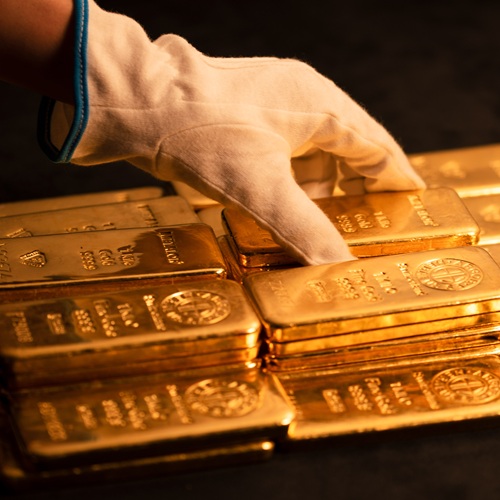
Once assayed, the refined gold is cast or formed into its final shape. That might be 400 oz bars for the London market, kilo bars for Asia, grain for jewellers, or the blanks from which small minted bars are stamped. Every bar is marked with the refiner’s name, its weight and its fineness. That is why the name on the bar matters: it certifies that the metal inside is what the bar says it is.
Refining Silver and Platinum
Silver follows a similar path. Much of it comes from gold refining itself, as the silver chloride removed by the Miller process, and from silver-rich doré. It is refined electrolytically, in cells using a silver nitrate electrolyte, to 99.9% or 99.99% purity.
Platinum and palladium are harder. They occur together with rhodium, ruthenium, iridium and osmium, mostly in South Africa and Russia. Separating them takes a long sequence of chemical dissolution, solvent extraction and precipitation steps, which is why far fewer companies refine platinum group metals than refine gold.
The World’s Largest Precious Metal Refineries
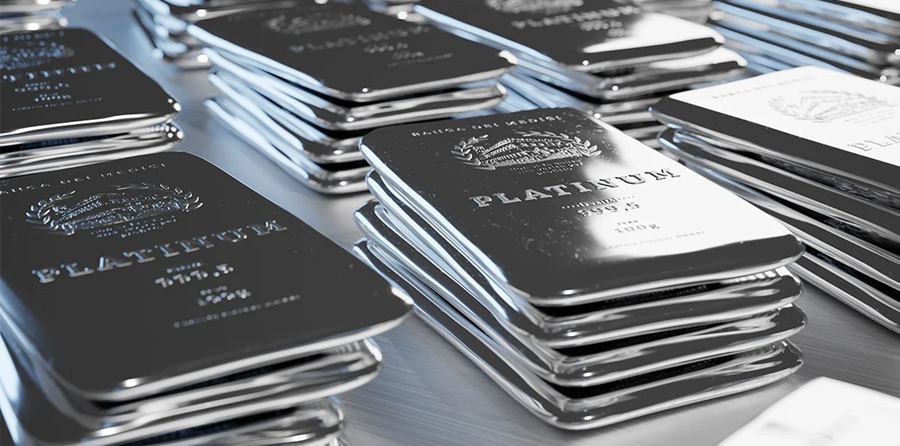
The world’s largest gold refineries are concentrated in a small number of countries, above all Switzerland. According to the Swiss precious metals industry association, around a third of the world’s gold is refined there, roughly 2,400 tonnes a year. Four of Switzerland’s refiners are among the largest anywhere. Germany, South Africa, Japan, Australia and Canada each have at least one refiner of global standing.
| Refiner | Main location | Published capacity | Latest published output |
|---|---|---|---|
| Valcambi | Balerna, Switzerland | About 2,000 t a year, all precious metals | Not published |
| PAMP | Castel San Pietro, Switzerland | More than 450 t gold, 600 t silver, 30 t PGMs | Not published |
| Metalor | Neuchâtel, Switzerland, plus four other sites | Not published | Not published |
| Argor-Heraeus | Mendrisio, Switzerland | Not published | Not published |
| Heraeus | Hanau, Germany | Not published | Not published |
| Rand Refinery | Germiston, South Africa | Not published | 217 t gold (year to August 2025) |
| Tanaka | Japan | Not published | Not published |
| Perth Mint | Perth, Australia | About 1,000 t a year, all precious metals | 195.8 t gold received (2025-26) |
| Royal Canadian Mint | Ottawa, Canada | Not published | Not published |
On published figures, Valcambi is the largest refinery in the world by capacity, which is how it describes itself. Its single site near the Italian border is rated at about 2,000 tonnes of precious metals a year. PAMP, a few kilometres away, publishes a gold capacity of more than 450 tonnes.
Capacity and Actual Output
Refining capacity and refining output are different things, and lists of the world’s biggest gold refiners often mix them up. Capacity is what a refinery could process if it ran at full stretch. Output is what it actually refines, which depends on how much doré and scrap its customers send. Most refineries run well below capacity.
Rand Refinery shows the gap clearly. It has long been described as having a capacity of around 600 tonnes a year, yet in the year to August 2025 it refined 217 tonnes of gold. The Perth Mint’s refinery is rated at about 1,000 tonnes of all precious metals, and it received 195.8 tonnes of gold in 2025-26.
For the refiners that don’t publish figures, older estimates are all that’s available. Around 2015, Metalor’s group capacity was put at more than 800 tonnes, Heraeus at 400 to 500 tonnes, Argor-Heraeus at 350 to 400 tonnes, and Tanaka’s main refinery at more than 500 tonnes. These give a sense of scale, but they shouldn’t be read as current rankings.
Other Major Refiners
Several large refiners operate outside the group covered in this guide.
Asahi Refining runs refineries in North America, including the business it bought from Johnson Matthey in 2015. It is one of the largest gold refiners in the Americas. Dubai is a major refining centre, and refiners such as Emirates Gold serve the Middle East and South Asian markets. China has a large domestic refining industry too, with groups such as Zijin Mining and China National Gold refining gold mined in China. They sell mainly through the Shanghai Gold Exchange rather than the London market.
In Germany, Agosi, based in Pforzheim and majority-owned by Umicore since 2003, is a refiner of long standing. It was founded in 1891 by local jewellery makers to recover precious metals from their waste. In March 2025 it was appointed one of the LBMA’s Good Delivery referees, alongside the Perth Mint. Its investment bars are sold mainly in Germany.
LBMA Good Delivery: What Accreditation Means
The London Bullion Market Association sets the standard that most of the world’s gold and silver refiners are measured against. Its Good Delivery List names the refiners whose bars are accepted, without further testing, in the London wholesale market, the largest gold market in the world. There are currently 67 refiners on the gold list and 86 on the silver list.
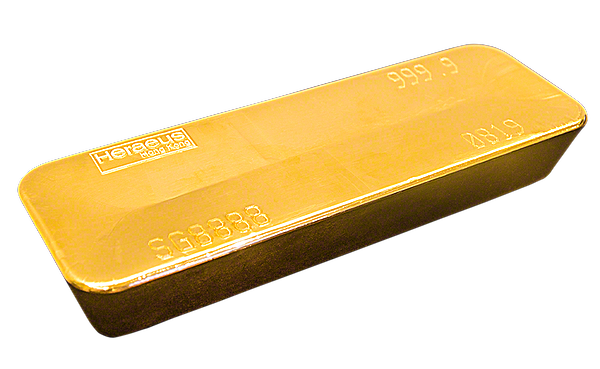
The standard itself is strict. A London Good Delivery gold bar must weigh between 350 and 430 troy ounces, usually close to 400, and must be at least 99.5% pure. It has to carry the refiner’s mark, its fineness, a serial number and its year of manufacture. Silver Good Delivery bars weigh around 1,000 ounces and must be at least 99.9% pure.
Getting on the list is demanding, and staying on it is harder. A refiner has to show it has produced enough metal over several years, meet financial requirements, and pass testing of its bars and its assaying. After that, the LBMA reviews every refiner regularly. Since 2012, every refiner has also had to pass an independent audit each year under the LBMA’s responsible sourcing rules, which cover where its metal comes from. A refiner that fails can be suspended or removed from the list, and some have been.
Why Accreditation Matters to a Buyer
The small bars that investors buy are not Good Delivery bars themselves, since those weigh hundreds of ounces. What accreditation provides is confidence in the refiner behind them. A 1 oz or 100 g bar from an LBMA-accredited refiner is made by a company whose refining, assaying and sourcing are independently checked. That is why dealers around the world accept such bars readily.
In Singapore, accreditation also affects tax. To qualify as an Investment Precious Metal, and so be exempt from GST, a gold, silver or platinum bar must meet minimum purity thresholds and be produced by a refiner on the LBMA or LPPM Good Delivery lists, or one approved by Enterprise Singapore. A bar of the same weight and purity from a refiner outside those lists would carry GST.
It also makes a bar easier to sell. Bars from accredited refiners are recognised by dealers, banks and exchanges in most major markets, including the COMEX futures market in New York, the Shanghai Gold Exchange and Dubai. A bar from an unknown or unaccredited refiner may be perfectly genuine, but a buyer will often want it tested before paying full value, and some buyers won’t take it at all.
The Good Delivery Referees
The LBMA gives seven refiners a further role, as referees: Argor-Heraeus, Metalor, PAMP, Rand Refinery, Tanaka, the Perth Mint and Agosi.
The Perth Mint and Agosi were added in March 2025. When a refiner applies to join the Good Delivery List, or is reviewed under it, samples of its bars are sent to the referees, who test them independently and report back to the LBMA. The referees effectively police the standard for everyone else, and they are held to a higher standard themselves.
Platinum and Palladium Refining
Platinum and palladium have their own equivalent. The London Platinum and Palladium Market keeps Good Delivery lists for both metals, with its own set of referee refiners. Tanaka and PAMP are among them.
Far fewer companies refine platinum group metals than refine gold. The metals come mainly from South Africa and Russia, and refining them is a longer and more complex process. Outside Russia and China, most platinum group metal refining capacity sits in two places. The first is South Africa, where the major platinum miners refine their own output. The second is a small group of international refiners and chemical companies, among them Johnson Matthey in the UK, Heraeus in Germany and Umicore in Belgium. Few of these businesses publish capacity figures. PAMP is an exception, with a stated platinum group metal capacity of 30 tonnes a year.
Which Refiner’s Bars Should You Buy?
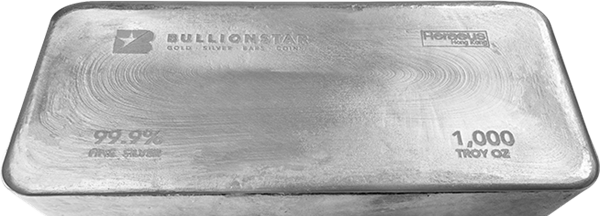
For most buyers, the refiner matters less than it seems. Every refiner in this guide is LBMA-accredited, and their bars all contain what they say they contain. The practical differences between them come down to a few things: the premium you pay, the security features and packaging, and how the bar will be treated when you sell it. Of those, the choice that affects the price most is not the brand at all but the size of the bar.
What the Premiums Show
The tables below compare gold bars from our range, priced at the same moment at the time of writing.
| 1 oz gold bar | Premium over spot |
|---|---|
| Royal Mint Britannia | 3.34% |
| Perth Mint | 3.34% |
| Royal Canadian Mint | 3.34% |
| PAMP Fortuna | 3.65% |
| Argor-Heraeus | 3.71% |
| Metalor | 3.71% |
| 100 g gold bar | Premium over spot |
|---|---|
| Heraeus | 2.11% |
| Perth Mint | 2.37% |
| Metalor | 2.37% |
| Argor-Heraeus | 2.37% |
| Royal Mint Britannia | 2.37% |
| PAMP | 2.61% |
| 1 kg gold bar | Premium over spot |
|---|---|
| Metalor | 1.30% |
| Perth Mint | 1.30% |
| PAMP | 1.42% |
The gap between brands is small, but the gap between sizes is far larger. Moving from a 1 oz bar to a 1 kg bar cuts the premium by around two percentage points. The cost of making and packaging a bar is spread over more metal as the bar gets bigger. For anyone buying a meaningful amount of gold, choosing a larger bar saves far more than choosing one refiner over another. Our guide to buying your first gold bar covers this trade-off in more detail.
What Happens When You Sell
We buy back LBMA-accredited bars of the same weight at the same price, whoever made them. A 100 g PAMP bar and a 100 g Heraeus bar sell back to us for exactly the same amount, even though the PAMP bar cost more to buy. Most established dealers work the same way. A higher premium paid for a particular brand is therefore generally not recovered when you sell.
Two things do reduce what a bar is worth on resale, and neither is the brand. The first is whether it qualifies as an Investment Precious Metal: bars that don’t, including bars from refiners outside the LBMA and LPPM lists, are bought back at a reduced price. The second is its condition, since a damaged bar is typically marked down by between 0.5% and 4%, depending on the damage.
The one place where brand can still matter is selling privately. A private buyer who can’t test a bar may pay more for a name they recognise, like PAMP, than for one they don’t. For anyone selling back to a dealer, recognition makes very little difference.
Security Features and Packaging
Where refiners do differ is in how easily you can check their bars.
| Refiner | How to check a bar |
|---|---|
| PAMP | Veriscan app reads the bar’s surface; sealed CertiPAMP packaging |
| Argor-Heraeus | Kinebar hologram on selected minted bars |
| Metalor | Metalor Check app; serialised packaging |
| Royal Mint Britannia bars | Latent image, surface animation and micro-text; CertiEye packaging |
| Perth Mint | Serial number check; sealed assay card |
| Heraeus | Hallmark, fineness and serial number; sealed assay card |
None of these features makes a bar more valuable, but they make it easier to trust. That’s worth something to anyone who plans to hold bars at home, or to sell them privately.
Taken together, for most buyers the best-value bar is the cheapest LBMA-accredited bar in the size they want. They should keep it in good condition, and choose features only if easy verification matters to them.
Frequently Asked Questions
What is the largest gold refinery in the world?
On published figures, Valcambi, at Balerna in southern Switzerland, is the largest precious metals refinery in the world. It has a stated capacity of about 2,000 tonnes of precious metals a year. Most major refiners don’t publish capacity figures, so rankings are hard to compare directly. Switzerland as a whole refines around a third of the world’s gold.
What is the difference between a refinery and a mint?
A refinery purifies raw gold and silver, from mines or scrap, into metal of 99.99% purity, and casts it into bars. A mint strikes refined metal into coins, which are often legal tender. Some organisations do both. The Perth Mint and the Royal Canadian Mint run their own refineries, while The Royal Mint, the Austrian Mint and the US Mint buy metal that is already refined.
How is gold refined to 99.99% purity?
Most large refiners use two stages. The Miller process bubbles chlorine gas through molten gold, removing silver and base metals and leaving gold of about 99.5% purity. The Wohlwill process then uses electrolysis, depositing almost pure gold onto cathodes to reach 99.99% or higher. Smaller refiners often use aqua regia, a mixture of nitric and hydrochloric acids, to dissolve and reprecipitate gold instead.
What does LBMA Good Delivery mean?
LBMA Good Delivery is the standard set by the London Bullion Market Association for gold and silver bars traded in the London wholesale market. Refiners on the Good Delivery List have had their refining, assaying and responsible sourcing independently checked, and they are reviewed regularly. There are currently 67 accredited gold refiners and 86 accredited silver refiners.
Does the refiner affect a gold bar’s resale value?
Generally not, when selling to a dealer. BullionStar buys back LBMA-accredited bars of the same weight at the same price, whoever made them, and most established dealers work the same way. What does reduce resale value is a bar that doesn’t qualify as an Investment Precious Metal, or one that is damaged.
Which refiner makes the cheapest gold bars?
Bar size affects the premium far more than the brand does. In a recent comparison of our range, premiums for 1 oz gold bars varied by less than 0.4 percentage points between refiners. Moving from a 1 oz bar to a 1 kg bar reduced the premium by around two percentage points. The cheapest option is usually the largest LBMA-accredited bar that suits your budget.
Buying and Selling Bullion Bars
A small number of refiners stand behind almost every bullion bar in the world. They take gold from mines and recycled scrap, refine it to 99.99% purity by chlorination and electrolysis, and cast it into the bars that trade between banks, dealers and investors. The best known are concentrated in Switzerland, with others of global standing in Germany, South Africa, Japan, Australia and Canada. LBMA Good Delivery accreditation, and the referees who police it, is what allows a bar made in Ticino to be trusted in Singapore, London or New York.
For a buyer, that shared standard is the most useful thing to understand. Every LBMA-accredited bar contains what it claims, and bars of the same weight sell back to us at the same price, whoever made them. The choices that actually change the cost are bar size and whether the bar qualifies as an Investment Precious Metal. In Singapore, bars from accredited refiners carry no GST, and Singapore levies no capital gains tax when you sell. Between brands, the differences are mostly design, packaging and how easily a bar can be verified.
Ready to choose? Browse our full range of gold bars, silver bars and platinum bars from the refiners in this guide, or our gold coins, silver coins and platinum coins from the world’s national mints. Our products can be shipped internationally, stored in our high-security vault, or collected from our Bullion Center in Singapore.
Subscribe to Gold University Articles
Copyright Information: BullionStar permits you to copy and publicize articles or information from the BullionStar Gold University provided that a link to the article's URL or to https://bullionstar.com is included in your introduction of the article or blog post together with the name BullionStar. The link must be target="_blank" without re="nofollow". All other rights are reserved. BullionStar reserves the right to withdraw the permission to copy content for any or all websites at any time.