 Contact
 Help
Help





14K Gold: Purity, Properties & Jewelry Guide
 Gold & Silver 101



14K gold is a gold alloy containing 58.3% pure gold, with the remaining 41.7% made up of other metals, typically copper, silver, or zinc. In the millesimal fineness system, where purity is expressed as a number out of 1000, 14K gold carries a fineness of 583.3, which is why hallmarked 14K pieces are stamped 585. It is the most widely sold karat in the United States and across much of Europe, where its balance of durability, appearance, and affordability has made it the default choice for everyday jewelry.
As an investment metal, 14K gold has limited appeal. Its purity sits well below the 99.5% threshold required for Singapore’s Investment Precious Metal (IPM) GST exemption, and at little more than half the gold content of 24K bullion, it is not a purity that gold investors typically seek out. The value of a 14K piece is driven primarily by craftsmanship rather than metal content.
If you hold 14K gold jewelry and are looking to sell, we buy 14K pieces at competitive rates based on the prevailing gold price. Visit our sell gold jewelry page for more information.
In this guide, we cover what 14K gold is, how it compares to other karats, its dominant role in Western jewelry markets, and answers to the most common questions about this purity.
What Is 14K Gold? Purity and Composition
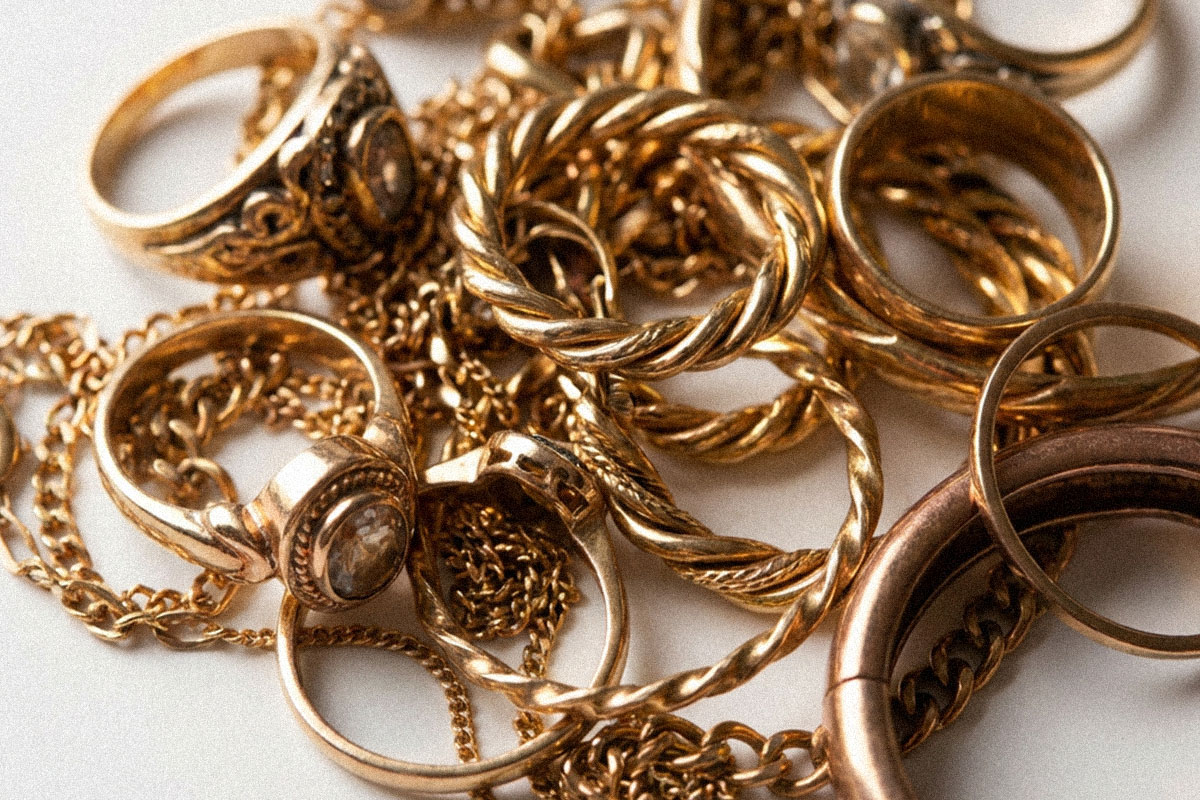
14K gold contains 58.3% pure gold, with the remaining 41.7% made up of other metals — typically copper, silver, and zinc. The “K" stands for karat, a traditional system that measures gold purity in parts of 24. 14K gold contains 14 of those 24 parts as pure gold.
The specific alloy mix varies by manufacturer, but the proportions of these metals determine both the physical properties and the colour of the finished alloy. Yellow 14K gold uses a balanced mix of copper and silver to approximate the warm tone of pure gold. Rose gold uses a higher proportion of copper, producing a warmer, pinkish hue. White gold replaces copper and silver with palladium or nickel, resulting in a silver-white finish that is typically enhanced with rhodium plating.
In the millesimal fineness system, where gold purity is expressed as a number out of 1000, 14K gold has a fineness of 583.3 — rounded up to 585 for hallmarking purposes. The 585 stamp is the standard mark of 14K gold on jewellery worldwide, and any reputable 14K piece should carry it.
14K vs Other Karats
Gold alloys exist because pure gold, while chemically stable and visually distinctive, is too soft for most everyday applications. By mixing gold with harder metals, manufacturers can produce alloys that hold their shape, resist scratching, and stand up to daily wear. The karat indicates how much of the alloy is pure gold. 14K sits in the middle of the scale — harder and more affordable than high-purity alloys, but with a meaningful gold content that lower-karat alternatives cannot match.
| Karat | Purity | Fineness stamp | Durability | Typical use |
|---|---|---|---|---|
| 24K | 99.9% | 999 / 999.9 | Low | Bullion bars, coins, investment jewelry |
| 22K | 91.67% | 916 | Moderate | Investment coins, Asian jewelry |
| 18K | 75% | 750 | Good | Fine jewelry, watches, engagement rings |
| 14K | 58.3% | 585 | Very good | Everyday jewelry, chains, rings |
| 10K | 41.7% | 417 | Excellent | Budget jewelry |
14K vs 24K Gold
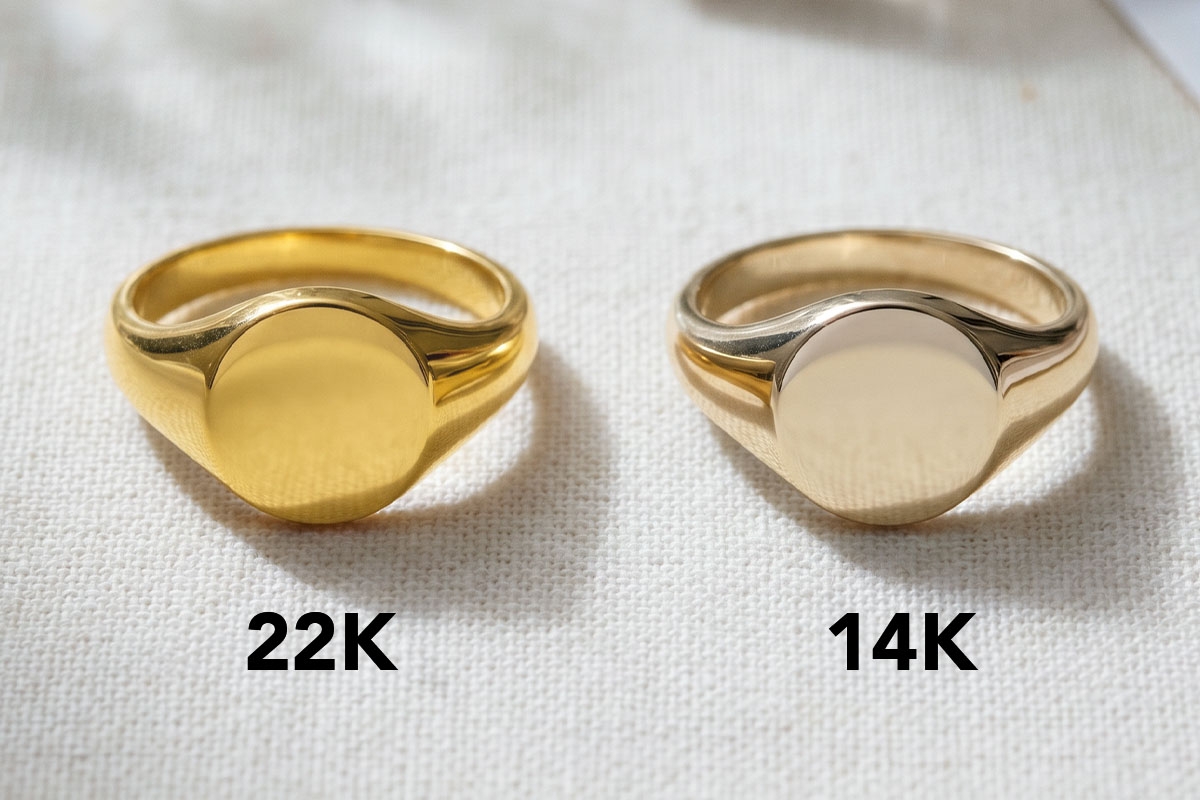
24K gold is 99.9% pure and the benchmark for investment-grade bullion. Against it, 14K contains less than two-thirds as much gold by weight, and the difference in purity is immediately visible in the colour — 24K has a richer, deeper yellow, while 14K’s higher alloy content produces a more muted tone.
For investment, the comparison is straightforward: 24K gold bullion qualifies for Singapore’s GST exemption as an Investment Precious Metal, holds its value transparently against the gold spot price, and is easy to resell. 14K does not meet the 99.5% purity threshold for the exemption and is not suited to investment.
The practical advantage 14K holds is durability — considerably harder than 24K, it is far more resistant to the scratching and deformation that pure gold is susceptible to under everyday handling.
14K vs 22K Gold
22K gold, at 91.67% pure, contains significantly more gold than 14K and is the traditional choice for high-purity jewelry across India, the Middle East, and Southeast Asia, as well as the purity used in some of the world’s most recognised investment coins, including the British gold Sovereign and the gold Krugerrand.
Against 14K, the tradeoff is durability and price: 22K is softer and commands a higher price per gram of finished jewelry. For buyers in Asian markets who value gold content above all, 22K is the natural choice. For buyers in Western markets prioritising wearability and affordability, 14K is the more practical option.
14K vs 18K Gold
This is the most common comparison for jewelry buyers, and the choice that most frequently comes down to personal priorities. 18K gold contains 75% pure gold (versus 58.3% for 14K gold) and carries the 750 hallmark. The higher gold content gives 18K a slightly richer yellow colour and a greater intrinsic metal value per gram. It is the standard for fine jewelry, including engagement rings, high-end watches, and designer pieces, where both appearance and provenance matter.
14K’s advantage is durability and value for money. The higher alloy content makes it harder and more resistant to scratching than 18K, and because there is less gold per gram, the price per finished piece is typically lower. This makes 14K the dominant choice for everyday jewelry in the United States: chains, wedding bands, rings worn daily, and pieces where longevity under regular wear matters more than purity. For buyers who want a quality piece they can wear without concern, 14K is a well-established and practical choice. For those investing in a statement piece or prioritising gold content, 18K offers more.
14K vs 10K Gold
10K gold is the minimum karat permitted to be sold as gold in the United States, containing 41.7% pure gold and stamped 417. It is harder and more scratch-resistant than 14K, and its lower gold content makes it the most affordable option per finished piece.
Against 10K, 14K holds a meaningful advantage in gold content: 58.3% versus 41.7% pure gold. This makes a 14K piece inherently worth more in metal terms, and for many buyers, the quality difference is also perceptible — 14K has a warmer, more distinctly gold appearance than 10K, which can look slightly paler due to its higher alloy content. For buyers on a strict budget, 10K is a serviceable option. For most, 14K represents the better balance of durability, appearance, and gold content.
14K Gold Jewelry: Chains, Rings, and Necklaces
14K gold is the dominant jewelry purity in the United States and across much of Western Europe. Its combination of durability, warm appearance, and relatively accessible price point has made it the default choice for mainstream jewelry retail — the karat most commonly found in high street jewellers, department stores, and online marketplaces.
While Asian markets favour higher purities like 22K and 24K for their gold content, Western buyers have largely settled on 14K as the practical standard for pieces intended to be worn regularly. For pieces worn close to the skin and handled regularly, 14K’s durability relative to higher-purity alloys is a practical advantage — it resists scratching and deformation better than 18K or 22K equivalents.
14K Gold Rings
14K gold rings represent one of the most common applications of this purity, particularly in the United States, where 14K is the standard for wedding bands and everyday rings. The higher alloy content makes it well suited to this use: rings are exposed to more knocks, abrasion, and contact with surfaces than most other jewelry, and 14K holds up considerably better under daily wear than softer, higher-purity alloys. Pricing varies widely depending on weight, design complexity, and whether gemstones are set, but in all cases, the price reflects a combination of gold content and craftsmanship rather than gold content alone.
14K Italian Gold
14K Italian gold is also a popular choice. Italy is a country with a long tradition of fine gold craftsmanship centred on production hubs such as Vicenza and Arezzo. Italian-made 14K gold jewelry is widely exported to the US and European markets and is known for its chain-making in particular — Italian manufacturers produce many of the chain styles that have become standard in the global jewelry trade. The 14K stamp and Italian hallmark are indicators of origin and purity rather than a different gold standard; Italian 14K gold is the same 58.3% purity as any other.
If you hold 14K gold jewelry — whether chains, rings, necklaces, or other pieces — and are looking to sell, BullionStar buys 14K gold at competitive rates based on the prevailing gold price and the gold content of your item. Visit our sell gold jewelry page for more information on how the process works.
Frequently Asked Questions
Is 14k gold real gold?
Yes. The karat system measures the proportion of gold in an alloy, not whether a metal qualifies as gold. 14K gold contains 14 parts gold out of 24 (58.3% pure gold) and is certified by the 585 hallmark stamped on reputable pieces. It is real gold, produced and traded to a defined and independently verified standard.
Does 14K gold tarnish?
14K gold contains 41.7% alloy metals, primarily copper, which can react slowly with moisture, oxygen, and chemicals over time. In practice, 14K is more tarnish-resistant than lower-karat alloys such as 9K, and well-maintained pieces are unlikely to show significant discolouration under normal conditions. Exposure to harsh chemicals, perfumes, and chlorinated water can accelerate surface dulling, and regular gentle cleaning will keep 14K jewelry looking its best.
Can 14K gold get wet?
Occasional water exposure, such as washing hands or light rain, is unlikely to cause any immediate damage to 14K gold. Prolonged or repeated exposure to chlorinated water, salt water, or cleaning products is more likely to affect the alloy metals over time, potentially dulling the surface finish.
Is 14K gold a good choice for everyday wear?
Yes. 14K gold is one of the most practical karats for daily wear precisely because of its higher alloy content. It is harder and more resistant to scratching and deformation than 18K, 22K, or 24K gold, which is why it has become the standard for everyday rings, chains, and bangles in many countries. For pieces that will be worn regularly and exposed to daily handling, 14K offers a durability advantage that higher-purity alloys cannot match.
What’s the difference between 14K and 18K gold?
The key differences are gold content and durability. 18K gold contains 75% pure gold against 14K’s 58.3%, giving it a slightly richer yellow colour and a higher intrinsic metal value per gram — reflected in a higher price per finished piece. 14K, with its greater alloy content, is harder and more resistant to scratching, making it better suited to items worn daily.
Are 14K gold bars a good investment?
No. 14K gold bars are rarely produced and are not a practical investment. Their purity falls well below the 99.5% threshold required for Singapore’s Investment Precious Metal GST exemption, and at 58.3% pure gold, they contain little more than half the gold of an equivalent 24K gold bar, with less transparent pricing and limited resale liquidity. Investors looking to hold gold in bar form should consider 24K gold bars, which qualify for the GST exemption, are produced in standardised weights by leading refiners, and are straightforward to value and resell.
How much is 14k gold worth?
14K gold is worth 58.3% of the prevailing spot price of pure gold. To calculate the intrinsic value of a 14K item, multiply the current gold spot price by 0.583, then multiply by the weight of the piece. For jewelry, the retail price will also reflect craftsmanship and design, but this premium is generally not recovered on resale — the selling value of a 14K piece is based on its gold content alone. BullionStar’s live sell gold calculator lets you select your purity and enter the weight for an indicative value — visit our sell gold jewelry page to try it.
Sell Your 14K Gold at BullionStar
14K gold occupies a well-defined place in the gold market. It is not an investment metal — its purity is too low to qualify for Singapore’s GST exemption, and its value is tied more to craftsmanship than gold content. But as the dominant jewelry purity across the United States and Western Europe, it has earned that position on its own merits: durable, practical, and available in the chains, rings, and necklaces that form the backbone of everyday jewelry retail.
If you hold 14K gold jewelry and are looking to sell, BullionStar buys 14K gold at competitive rates based on the prevailing gold price and the fine gold content of your item. The process is straightforward — the 585 hallmark tells us exactly what we need to know about purity, and we price accordingly. Visit our sell gold jewelry page to find out how to sell your gold at BullionStar.
For those looking to buy gold for investment, 24K gold remains the benchmark — GST-exempt in Singapore, straightforward to value, and available in a wide range of gold bars and gold coins from the world’s leading refiners.
Popular Blog Posts by Gold & Silver 101
 An Introduction to Gold & Silver Investing
 Should I Invest in Gold, Silver, or Platinum Bullion?
 Gold Coins vs Gold Bars: Which Is Better?
 How Is Gold Taxed in Singapore? The IPM GST Exemption Explained
 Storing Precious Metals, Gold, and Silver Bullion
 Gold & Silver Bullion Investing FAQs
 How Much Gold Is There in the World?
 Junk Silver: What It Is and What It’s Worth
 999 Fine Silver: Investment-Grade Silver Explained
 Gold Savings Account vs Bullion Savings