Contact
 Help



Gold and Silver on Deepavali: Why They’re Bought for Dhanteras and Diwali
 Gold & Silver 101


Deepavali, or Diwali, is the festival of lights. It is celebrated by Hindus, Sikhs and Jains in India, Singapore and other Indian communities around the world. Deepavali is usually in October or November, and the name comes from the Sanskrit for “row of lamps”. Homes are lit with oil lamps and decorated with rangoli, families wear new clothes and share sweets, and prayers are offered for prosperity in the year ahead. For many families, it is also one of the most important times of year to buy gold and silver.
The tradition is strongest on Dhanteras, which precedes Deepavali itself. The buying of even a single small coin is considered auspicious, particularly amongst Northern & Western Indian cultures. Gold and silver also have a place in Lakshmi Puja on Deepavali night, in the new account books of trading communities, and in the jewellery and heirlooms that families pass down through generations.
See how we celebrated Deepavali and Dhanteras at BullionStar, and what gold and silver mean to our customers during the festival in our video below.
We take a deeper look at the meaning behind these traditions, the legends linked to them, how practices vary by region, and what to consider when buying gold or silver for the festival.
Deepavali and Diwali: One Festival, Many Traditions
“Deepavali” and “Diwali” are two names for the same festival. Deepavali is the fuller Sanskrit form and the name most used in South India, Singapore and Malaysia. Diwali is the shortened form common in North India and much of the diaspora. The festival follows the Hindu lunar calendar and centres on the new moon (Amavasya) in October or November.
In North and West India, Diwali spans five days, each with its own customs:
| Day | Name | What happens |
|---|---|---|
| 1 | Dhanteras | The main day for buying gold, silver and new utensils. Prayers to Dhanvantari, Lakshmi and Kubera, and a lamp lit for Yama at dusk. |
| 2 | Deepavali (Naraka Chaturdashi) | Marks Krishna’s defeat of the demon Narakasura. Early-morning oil bath, new clothes and lamps. This is the day Deepavali is celebrated in Singapore and South India. In North India, it is known as Choti Diwali. |
| 3 | Lakshmi Puja | The main night of the festival in North and West India, where it is called Diwali. Falls on the new moon. Lakshmi Puja is performed, homes are filled with lamps, and fireworks follow. |
| 4 | Govardhan Puja | Honours Krishna lifting Govardhan Hill. For many Gujarati families it is also New Year’s Day. |
| 5 | Bhai Dooj | Celebrates the bond between brothers and sisters. |
The story behind the festival differs by region. In the north, Diwali marks Lord Rama’s return to Ayodhya after defeating Ravana, while in the south the focus is Krishna’s victory over Narakasura. In Bengal, the new-moon night is dedicated to Kali Puja. Sikhs mark the same period as Bandi Chhor Divas, and Jains as the anniversary of Mahavira’s nirvana.
Deepavali in Singapore
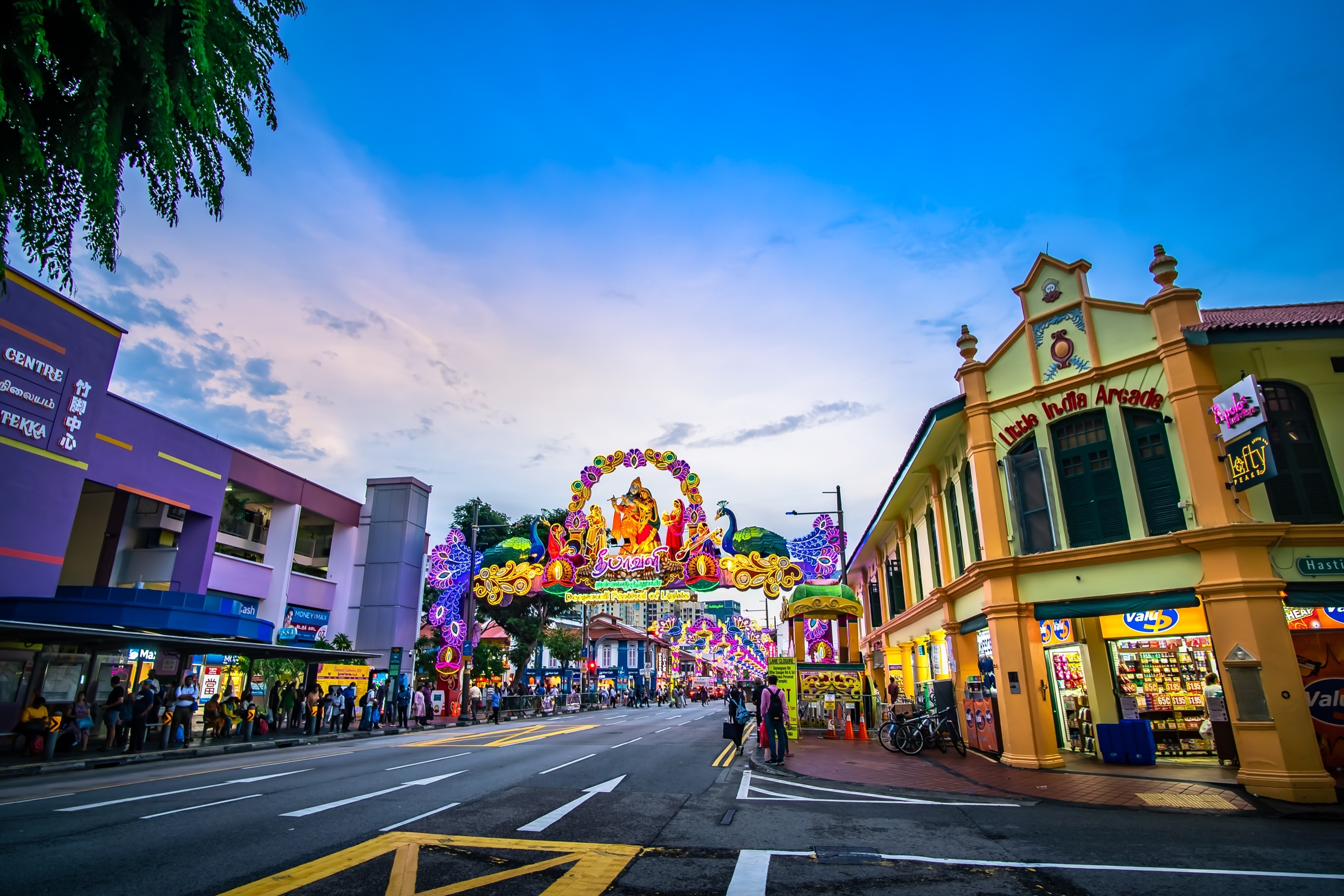
Most of Singapore’s Indian community is of Tamil heritage, so Deepavali here follows the South Indian tradition. The day begins before dawn with an oil bath, followed by new clothes, prayers at the temple and visits to family and friends. Dhanteras is observed by North Indian families and others who follow that tradition, rather than as a universal part of the festival. Deepavali is a public holiday in Singapore, and the weeks before it bring street light-ups, bazaars and festive shopping to Little India.
What Is Dhanteras?
Dhanteras is the most important day of the year for buying gold and silver. The name joins two words: dhan, meaning wealth, and teras, meaning thirteenth. It falls on the thirteenth lunar day (Trayodashi) of the waning moon, two days before Lakshmi Puja. This is why it is also known as Dhantrayodashi.
The day’s origins lie in the story of the Samudra Manthan, the churning of the cosmic ocean by the gods and demons in search of amrit, the nectar of immortality. Many treasures rose from the ocean during the churning, including the goddess Lakshmi. On the thirteenth day, Dhanvantari, the physician of the gods, emerged carrying a pot of amrit. Dhanteras marks his appearance and is also celebrated as Dhanvantari Jayanti, which ties the festival to health as well as wealth.
In the evening, families pray to Lakshmi, the goddess of wealth, and Kubera, the treasurer of the gods, and light lamps at the entrance to welcome Lakshmi into the home.
Why Gold and Silver Are Bought on Dhanteras
Buying new metal on Dhanteras is traditionally believed to welcome Lakshmi into the home and to bring prosperity for the year ahead. Gold and silver are the most popular choices because of their long association with Lakshmi and with lasting wealth.
The tradition values the act of buying over the amount spent. A single small gold coin or a silver coin is considered just as auspicious as a larger purchase, which keeps the custom open to every household. Many families buy at a muhurat (auspicious time) set by the lunar calendar. Coins bought on Dhanteras are often set aside to be placed on the altar during Lakshmi Puja two days later.
The Legend of King Hima’s Son
One of the best-known stories behind the custom is the legend of King Hima’s son. A prophecy foretold that the prince would die of a snakebite on the fourth night of his marriage. That night, his wife heaped her gold and silver ornaments at the entrance to their chamber, lit lamps all around and kept him awake with stories and songs. When Yama, the god of death, arrived as a serpent, he was dazzled by the glitter and could not enter. He listened to the songs through the night and left at dawn, sparing the prince’s life.
The story lives on in the Yamadeepdaan ritual, in which many families light a lamp facing south, the direction associated with Yama, on Dhanteras night.
Gold and Silver Coins in Lakshmi Puja
Lakshmi Puja is performed on the evening of the new moon. In North and West India it is the main event of Diwali. Families gather in front of an altar with images or idols of Lakshmi and Ganesha. Ganesha, the remover of obstacles, is honoured first, and then prayers are offered to Lakshmi for wealth and prosperity in the year ahead.
Gold and silver coins hold a special place on the altar. They are usually placed on a plate or beside a kalash (a sacred pot) with flowers, rice, sweets and lamps. Many families use coins stamped with Lakshmi, or with Lakshmi and Ganesha together, and the coins bought on Dhanteras often join the altar for the first time on this night.
Before the puja, the coins are commonly washed in panchamrit, a mixture of milk, yoghurt, honey, ghee and sugar, then rinsed with water, wiped dry and marked with turmeric or kumkum. Some families bring out the same set of coins every year, sometimes including old silver rupees handed down through generations, and add a new coin each Diwali. After the festival, the coins are often kept in the family safe, cash box or prayer room, so that Lakshmi’s blessing stays with the household’s wealth.
Account Books and Muhurat Trading
For many Gujarati and Marwari business families, Diwali marks the start of a new financial year. On Lakshmi Puja day, merchants perform Chopda Pujan, the worship of new account books. The red cloth-bound ledgers are marked with a swastika and the words Shubh (auspicious) and Labh (profit), and are often placed alongside coins or bullion as the first entries of the new year are blessed.
The same idea carries into India’s stock markets. Every Diwali, the National Stock Exchange and BSE hold a special one-hour Muhurat trading session, when many investors place small, symbolic trades to start the new year.
What to Buy on Dhanteras and Deepavali
Precious metals top most families’ Dhanteras lists, and each metal bought during the festival carries its own meaning:
| Metal | What it symbolises | Typical festive purchases |
|---|---|---|
| Gold | Lakshmi, prosperity, purity and divine light | Coins and bars stamped with Lakshmi or Ganesha, jewellery |
| Silver | The moon, purity and calm | Coins, small bars, idols, diyas, thalis and puja utensils |
| Brass and copper | Health and well-being, linked to Dhanvantari and Ayurveda | Diyas, kalash pots and water vessels |
| Steel | Everyday prosperity for the household | Cooking pots and utensils |
Gold’s place at the top comes from its association with Lakshmi. Because it never tarnishes, a coin bought today will look the same when it is passed on generations later. Our guide to why gold is valuable explains why it has held its worth across cultures. Silver is the more affordable choice for gifts and puja items, while brass and copper reflect the health side of Dhanteras.
Some families also buy a new broom (to sweep away poverty), whole coriander seeds or larger items such as a car or appliance. As far as the tradition is concerned, though, a single small gold or silver coin is enough.
Gold Coins and Bars or Gold Jewellery?
Gold jewellery has always been a big part of Deepavali shopping, but more buyers now choose coins and bars, especially when gold prices are high. The two serve different purposes.
| Gold jewellery | Gold coins and bars | |
|---|---|---|
| Typical purity | 22 karat (91.6%), often stamped 916 | 24 karat (99.99%) |
| Price | Gold value plus making charges | Gold value plus a smaller premium |
| Resale | Usually valued on gold content only, so making charges are lost | Valued close to the gold price |
| GST in Singapore | GST applies | GST-exempt as Investment Precious Metals |
| Best for | Wearing, weddings and gifting | Puja, saving and passing down |
Jewellery is made in 22 karat because pure gold is too soft for intricate designs. Coins and bars can be made in almost pure gold. For buyers who want to honour the tradition and also hold gold as savings, a coin or bar offers both: it can sit on the Lakshmi Puja altar each year and keep close to its full gold value. Our guide to gold purity explains the differences between grades in more detail. For something in between, BullionStar also offers gold bullion jewellery made from investment-grade gold.
Lakshmi and Ganesha Coins and Bars
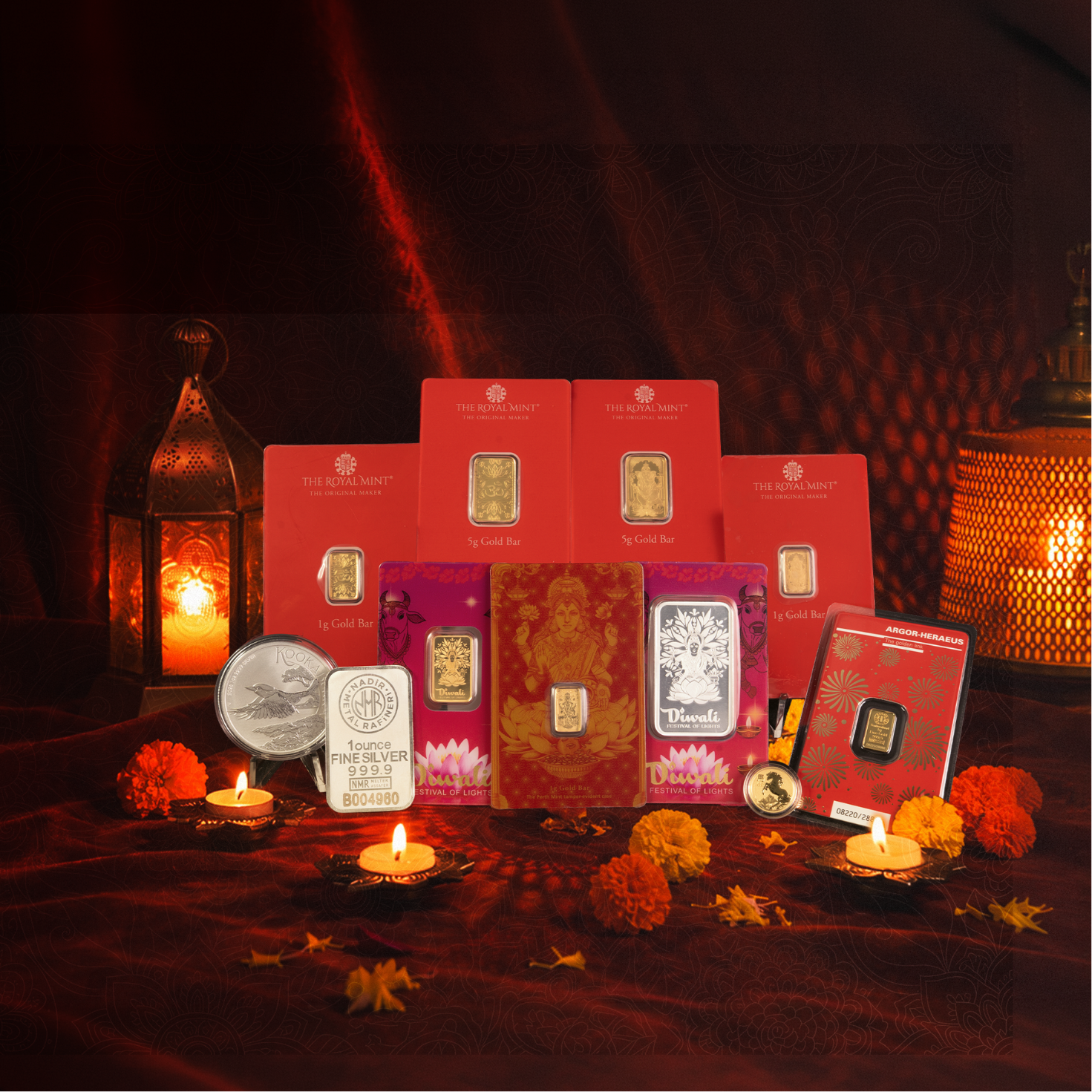
Each year, several of the world’s leading mints and refiners release special gold and silver designs for Diwali. They combine religious imagery with investment-grade purity, so the same piece works for both puja and saving. BullionStar’s range includes:
- Perth Mint Diwali Lakshmi gold bars in 1 gram and 5 grams
- PAMP Diwali Lakshmi and Rangoli gold bar in 5 grams, and its 1 oz silver counterpart
- PAMP Faith Series Lakshmi gold bar in 10 grams
- Royal Canadian Mint Diwali gold bar in 1 oz
- Happy Diwali 1 gram gold coin
Smaller sizes such as 1 g and 5 g are the usual choices for Dhanteras and gifting, while larger bars suit buyers adding to long-term savings. If you’re weighing up the two formats, see our guide to gold coins vs gold bars.
Silver as a First Festive Purchase
Silver is often the first precious metal people buy for Deepavali, and its lower price makes it well suited to Diwali gifts for family, friends and colleagues. Investment coins and bars are usually 999 fine silver and qualify as Investment Precious Metals in Singapore. Silver diyas, thalis and jewellery are typically sterling silver (92.5%) or lower, and their price includes craftsmanship. Decorative silver suits the home and the altar, while coins and bars suit savings that can be added to each year.
Gold as Family Wealth: Stridhan, Heirlooms and the Wedding Season
For generations, gold has been the backbone of household savings in Indian families. It is portable, easy to sell and trusted in places where banking came late. Indian households are estimated to hold tens of thousands of tonnes of gold, more than the official reserves of any central bank, and much of it was bought a little at a time during festivals like Dhanteras. Our page on India’s gold reserves compares this private gold with the Reserve Bank of India’s holdings.
Gold given to a woman, especially at her wedding, is traditionally regarded as stridhan, or “woman’s wealth”. It belongs to her alone, and Indian law recognises it as her property, which is why gold gifts to daughters carry such weight. Many families keep their Deepavali coins and jewellery for decades, so a coin from a grandparent’s first Dhanteras may still sit on the Lakshmi Puja altar today.
Timing plays a part too. The Hindu wedding season begins after Tulsi Vivah, about two weeks after Diwali, so festive buying often doubles as early wedding preparation.
Deepavali at BullionStar
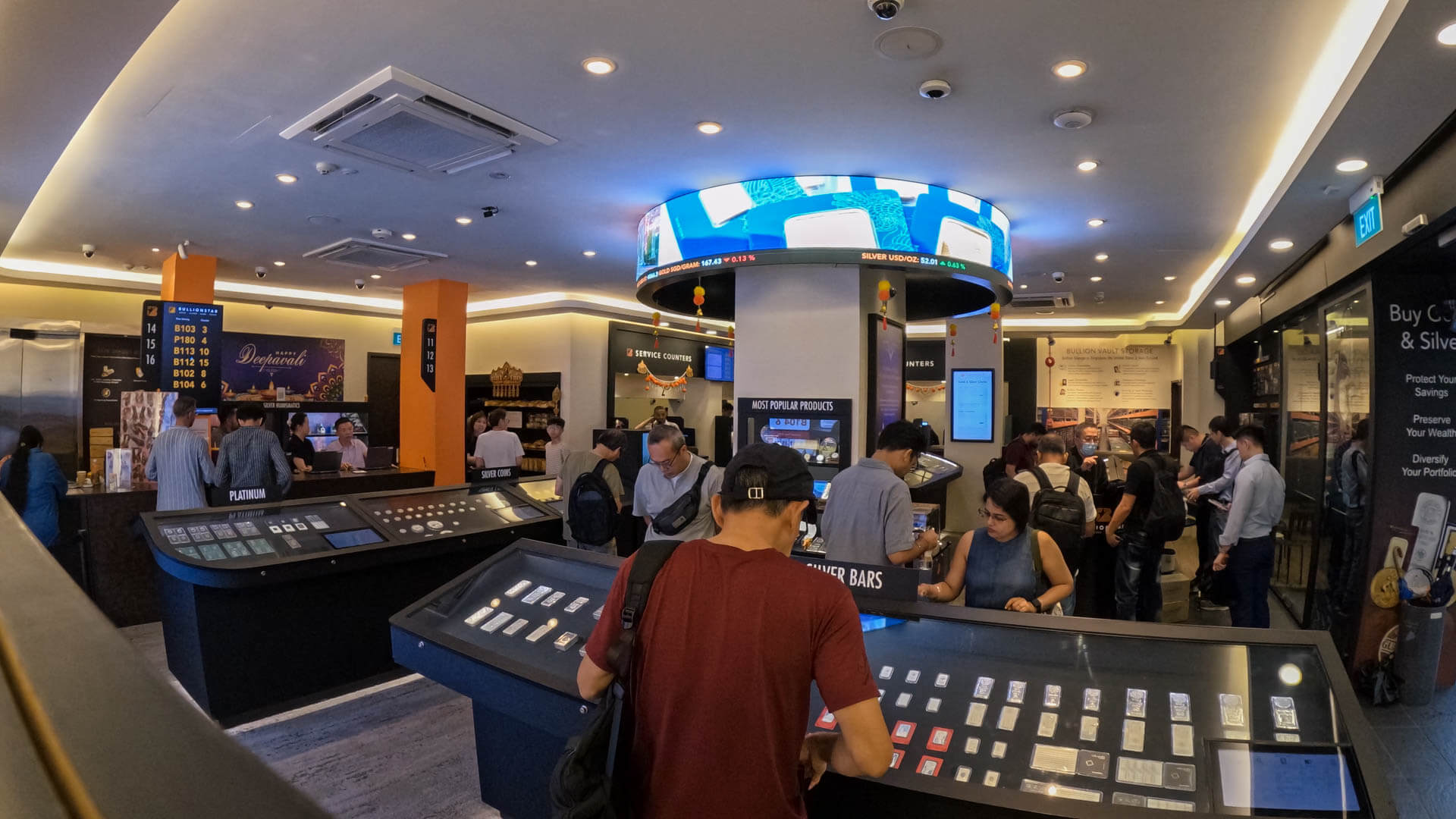
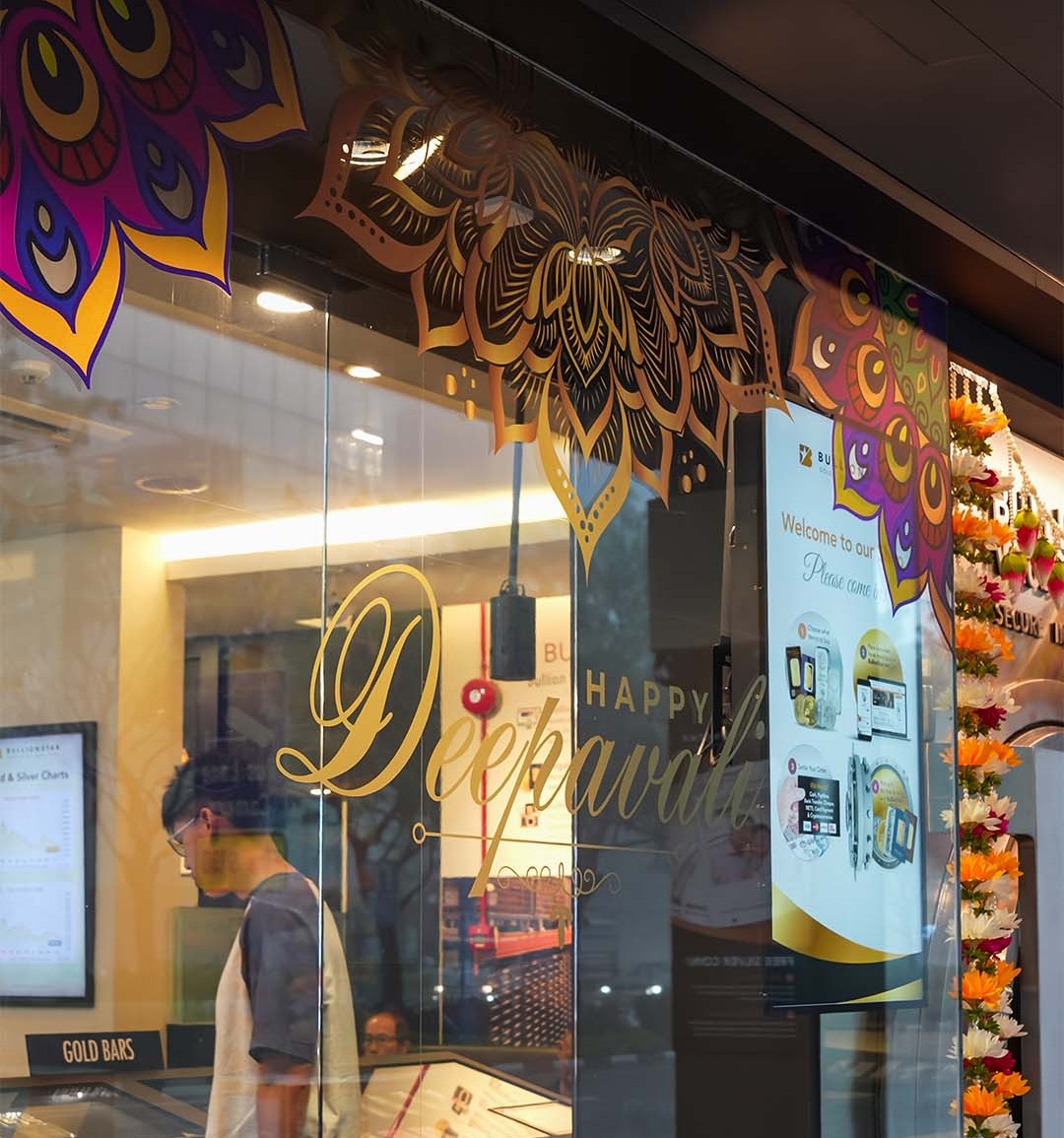
Every year, the Deepavali weekend is one of the busiest times at our Singapore showroom. For the customers that do celebrate it, they come in to buy coins and bars for Dhanteras, for the Lakshmi Puja altar, as gifts, or to add to savings built up over many festivals. Whether you’re buying a single coin or adding to your family’s gold, BullionStar offers a range of gold coins, gold bars, silver coins and silver bars, including special Lakshmi and Diwali designs from leading mints and refiners.
Frequently Asked Questions
What is Dhanteras?
Dhanteras is the first day of the five-day Diwali festival, celebrated two days before Lakshmi Puja. The name comes from dhan (wealth) and teras (thirteenth), because it falls on the thirteenth lunar day of the waning moon. It honours Dhanvantari, the physician of the gods, along with Lakshmi and Kubera, and is the most auspicious day of the year for buying gold and silver.
Why is gold bought on Dhanteras?
Gold is bought on Dhanteras to welcome Lakshmi, the goddess of wealth, into the home and to bring prosperity for the year ahead. Gold’s purity, and the fact that it never tarnishes, make it a symbol of lasting wealth. The legend of King Hima’s son, in which gold and silver dazzled Yama and saved the prince’s life, is also linked to the custom.
Is it good to buy silver on Dhanteras?
Yes. Silver is considered just as auspicious as gold on Dhanteras and is widely bought during the festival. It is associated with the moon, purity and calm, and silver coins, small bars, diyas and puja utensils are all popular choices, especially as gifts.
How much gold should you buy on Dhanteras?
There is no set amount. The tradition values the act of buying over the amount spent, so a single 1 gram gold coin or a silver coin is considered just as auspicious as a larger purchase. Many families buy a small coin each year and build up a collection over time.
Is it better to buy gold coins or gold jewellery for Deepavali?
It depends on the purpose. Gold jewellery, usually 22 karat, is ideal for wearing and weddings but includes making charges that are lost on resale. Gold coins and bars are typically 24 karat (99.99%), carry lower premiums and keep closer to the gold price, which makes them better for puja and long-term savings.
Are Deepavali and Diwali the same festival?
Yes. Deepavali is the fuller Sanskrit name, meaning “row of lamps”, and is most used in South India, Singapore and Malaysia. Diwali is the shortened form common in North India and much of the diaspora. Customs vary by region, but both names refer to the same festival of lights.
Popular Blog Posts by Gold & Silver 101
 An Introduction to Gold & Silver Investing
 Should I Invest in Gold, Silver, or Platinum Bullion?
 Gold Coins vs Gold Bars: Which Is Better?
 How Is Gold Taxed in Singapore? The IPM GST Exemption Explained
 Storing Precious Metals, Gold, and Silver Bullion
 Gold & Silver Bullion Investing FAQs
 Gold and Silver on Deepavali: Why They’re Bought for Dhanteras and Diwali
 Gold Hallmarks: A Guide to Marks, Stamps, and Standards
 Karat vs Carat: What’s the Difference?
 Gold Purity: The Complete Guide