 Contact
 Help




LPPM: The London Platinum and Palladium Market


The London Platinum and Palladium Market (LPPM) is the trade association for the wholesale platinum and palladium market in London and Zurich. Its members are the banks, refiners, traders and transport and vaulting firms that deal in the two metals. The LPPM is not an exchange and does not trade metal itself. Its job is to set the standards the market runs on, above all through its Good Delivery Lists, which name the refiners whose platinum and palladium bars are accepted between members without further testing.
The market behind it is older than the association. London dealers began quoting a platinum price in 1973, and agreed common bar standards with their Zurich counterparts in 1979. The LPPM itself was formalised in 1987. It works alongside the London Bullion Market Association (LBMA), its sister body for gold and silver. The two are often confused, and are sometimes wrongly described as having merged, but they remain separate associations. The LBMA owns the benchmark platinum and palladium prices, while the LPPM keeps the lists of accredited refiners.
For investors in Singapore, the LPPM matters more directly than its low profile suggests. Platinum qualifies as an Investment Precious Metal, and is therefore exempt from GST, only if it is produced by a refiner that is or has been on the LPPM’s platinum Good Delivery List. Palladium does not qualify for the exemption, whoever made it.
This guide covers what the LPPM is, how the London and Zurich platinum and palladium market works, and how the twice-daily price benchmarks are set. It then compares the LPPM with the LBMA and NYMEX, the futures exchange that sits alongside COMEX, and explains what LPPM accreditation means when you buy platinum or palladium bars.
Highlights
- The London Platinum and Palladium Market (LPPM) is the trade association for the wholesale platinum and palladium market in London and Zurich. It was formalised in 1987.
- The LPPM maintains the London/Zurich Good Delivery Lists, which name the refiners whose platinum and palladium bars are accepted between members without further testing. Listed refiners are retested roughly every three years.
- The LPPM and the LBMA are separate sister associations that have never merged. The LPPM keeps the platinum and palladium refiner lists, while the LBMA owns the Platinum and Palladium Prices.
- The LBMA Platinum and Palladium Prices are set twice daily in London. ICE Benchmark Administration has run the auctions since July 2026, taking over from the London Metal Exchange.
- In Singapore, platinum is exempt from GST only if it comes from a refiner that is or has been on the LPPM’s platinum Good Delivery List. Palladium is not exempt, whoever makes it.
What Is the LPPM?
The LPPM is a trade association that oversees and promotes the trading of platinum and palladium in London and Zurich, the two clearing centres for the wholesale market. In practice it does for platinum and palladium much of what the LBMA does for gold and silver. It sets the standards for the bars that change hands between members, accredits the refiners that make them, and acts as the market’s point of contact with regulators and tax authorities, such as HMRC in the UK.
It is a members’ association rather than a marketplace. Trading takes place directly between member firms, over the counter (OTC), and the LPPM itself neither buys nor sells metal, holds vaults or publishes prices.
Platinum and palladium are the two most widely traded of the platinum group metals, or PGMs, a family of six closely related elements that also includes rhodium, ruthenium, iridium and osmium. The six are usually mined together, mainly in South Africa and Russia.
Who the LPPM’s Members Are
As of October 2026, the LPPM has 116 members across 21 countries, in four categories.
| Category | Number | Who it covers |
|---|---|---|
| Full Members | 18 | Banks, refiners and trading firms active in the London and Zurich market, sponsored by two existing Full Members |
| Associate Members | 47 | UK-based companies involved in the platinum and palladium trade |
| Affiliates | 48 | Firms outside the UK, including refiners, traders and logistics companies |
| Affiliated Exchanges | 3 | CME Group, ICE Benchmark Administration and Japan’s Osaka Exchange, which can use the LPPM Good Delivery List as a delivery standard |
The Full Members are a mix of the major bullion banks, among them HSBC, JP Morgan, UBS, Goldman Sachs and Standard Chartered, and the leading platinum refiners. The refiners include several covered elsewhere in our Gold University: Heraeus, Metalor, PAMP, Tanaka and Valcambi, alongside Johnson Matthey, which was one of the LPPM’s founding members in 1987.
What the LPPM Does
The LPPM’s central function is its Good Delivery Lists for platinum and for palladium, formally the London/Zurich Good Delivery Lists. As of October 2026, 39 refiners are listed for platinum and 33 for palladium. Each refiner is tested on a rolling three-year programme of proactive monitoring, so a place on the list has to be kept, not just earned once. Refiners that close, merge or fail to meet the standard are moved to a Former List. The next section explains what the lists require.
Alongside the bar lists, the LPPM keeps separate accreditation lists for platinum, palladium and rhodium sponge, the powdered form in which much of the metal is traded industrially. Since January 2019 it has also run a responsible sourcing programme, aligned with the OECD’s guidance for supply chains from conflict-affected and high-risk areas, which accredited refiners must follow. The latest version of that guidance was published in July 2026, and reporting under it is mandatory from January 2027.
From the London Platinum Quotation to the LPPM
London’s platinum market predates the association by more than a decade. Dealers introduced the London Platinum Quotation in 1973, and in 1979 the leading London and Zurich dealers agreed common specifications for platinum and palladium bars. That agreement is the origin of today’s Good Delivery Lists.
The LPPM itself was formalised in May 1987 by a Deed of Establishment, largely so that the London platinum and palladium market could be added to the UK’s VAT (Terminal Markets) Order. That gives trades between members the same VAT treatment as trades in gold and silver. Its six founding members were Samuel Montagu, Ayrton Metals, Sharps Pixley, Mase Westpac, Johnson Matthey and Engelhard. From 1989 the market also had twice-daily platinum and palladium fixings. These were replaced in December 2014 by the LBMA Platinum and Palladium Prices, which are covered in the next section.
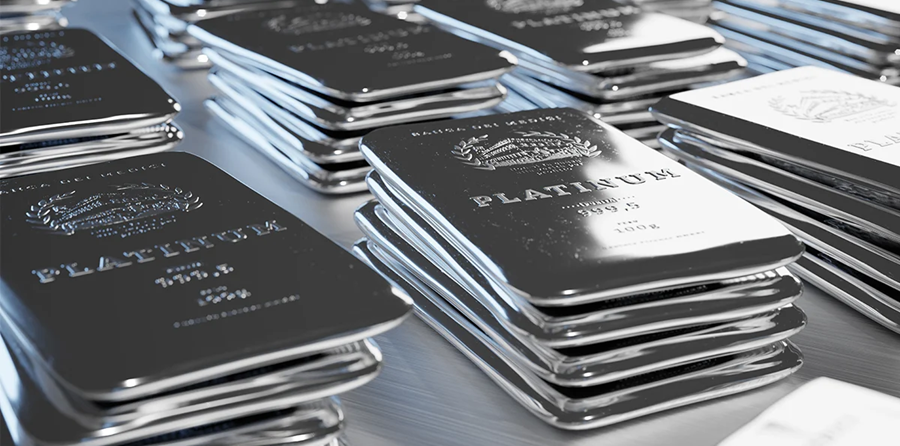
How the London PGM Market Works
Platinum and palladium trade in London and Zurich much as gold and silver trade in London. Business is done over the counter. Banks, refiners and traders deal directly with each other or with their clients, rather than through an exchange. Prices are quoted in US dollars per troy ounce for spot settlement two business days after the trade. Trades are normally in multiples of 500 to 1,000 troy ounces, and the metal is delivered to a vault nominated by the member.
Loco London and Zurich
The market has two settlement locations, London and Zurich. That is why the LPPM’s standard is formally the London/Zurich Good Delivery List. A trade settled “loco Zurich” is delivered in Switzerland, and Zurich is far more central to platinum and palladium than it is to gold, because so much of the metal is refined and stored in Switzerland.
Most metal in the market is held in unallocated accounts. In an unallocated account, no specific bars are set aside for the customer. The holder has a general claim to an amount of metal, and is in effect a creditor of the bank that holds the account. It is the cheapest and most common way to hold platinum and palladium in the wholesale market.
Allocated accounts, where specific bars are segregated in the customer’s name with a list of serial numbers, weights and assays, cost more and are used less. That trade-off between cost and ownership is the same one that runs through the gold market. For a private investor, allocated metal is the form of ownership that leaves no counterparty between them and their bars.
The Good Delivery Standard
Metal delivered in settlement of a London or Zurich trade has to meet the LPPM’s Good Delivery specification. The rules are the same for platinum and palladium.
| Specification | Platinum and palladium Good Delivery |
|---|---|
| Form | Plate or ingot |
| Weight | 1 kg to 6 kg (32.151 to 192.904 troy ounces) |
| Minimum fineness | 99.95% |
| Required marks | Serial number, refiner’s assay stamp, fineness, metal (PT or PD), month and year of manufacture, weight |
| Weight stamp | Treated as a minimum weight and never rounded up |
How a Refiner Gets on the List
Getting on the list is demanding. An applicant must have existed for at least five years and refined the metal for at least three. It must produce at least 500 kg of that metal a year and have a tangible net worth of at least 15 million GBP. It also needs references from existing LPPM members and must pass a responsible sourcing audit before it applies. It then submits sample bars to the LPPM’s nominated London vault for testing.
Staying on the list takes ongoing work too. Under the LPPM’s proactive monitoring programme, every listed refiner is retested roughly once every three years. The sixth three-year cycle is now under way.
The LBMA Platinum and Palladium Prices
The market’s benchmark prices are the LBMA Platinum Price and LBMA Palladium Price. They are set twice each London business day, at 9:45am and 2pm London time. This is done via electronic auctions for unallocated platinum and palladium held loco London. The platinum auction runs first and the palladium auction follows immediately afterwards. Prices are formed in US dollars, with sterling and euro equivalents published alongside.
The prices replaced the old London platinum and palladium fixings in December 2014. They are owned by Precious Metals Prices Ltd, a subsidiary of the LBMA, rather than by the LPPM. The London Metal Exchange administered the auctions until 30 June 2026, and ICE Benchmark Administration took over on 1 July 2026. IBA already ran the LBMA Gold and Silver Prices, so all four LBMA precious metals benchmarks now sit with one administrator for the first time. The benchmarks are used to price industrial supply contracts and to value platinum and palladium funds. As with gold, though, the live platinum price quoted on screens throughout the day reflects futures and OTC trading as well as the twice-daily auctions. You can find the current platinum and palladium price on our fully customisable price charts.
LPPM vs LBMA vs NYMEX
Three institutions shape the platinum and palladium market, and they are easy to confuse. The LPPM and the LBMA are sister trade associations for the London over-the-counter market. NYMEX, part of CME Group, is the futures exchange where most platinum and palladium futures trade. Each has a distinct job.
| LPPM | LBMA | NYMEX | |
|---|---|---|---|
| What it is | Trade association for the London and Zurich platinum and palladium market | Trade association for the London gold and silver market | Regulated futures exchange owned by CME Group |
| Metals | Platinum and palladium | Gold and silver | Platinum and palladium futures (gold and silver futures trade on its sister exchange, COMEX) |
| Accreditation | London/Zurich Good Delivery Lists for platinum and palladium refiners | Good Delivery Lists for gold and silver refiners | Approved brands for delivery, with CME Group an LPPM Affiliated Exchange |
| Prices | Does not own or set a price | Owns the LBMA Platinum and Palladium Prices, as well as its gold and silver prices | Live futures prices, traded almost around the clock |
| Standard bar | 1 to 6 kg plate or ingot, minimum 99.95% | Not applicable to platinum or palladium | 50 oz platinum and 100 oz palladium contracts, delivered as plate or ingot, minimum 99.95% |
| How metal trades | Bilaterally between members, settled loco London or loco Zurich | Not applicable to platinum or palladium | Standardised contracts cleared centrally by CME Clearing |
How the Three Fit Together
The simplest way to separate them is by function. The LPPM decides which refiners’ platinum and palladium the London and Zurich market will accept. The LBMA owns the twice-daily benchmark prices, though it has nothing to do with the bars themselves. NYMEX provides a futures market where most of the trading in platinum and palladium price exposure happens.
That split is a source of confusion, because the benchmarks carry the LBMA’s name even though the LBMA does not oversee platinum or palladium trading. The benchmarks were created in 2014, when the old London fixings were replaced and the London Metal Exchange took over running the auctions for the LBMA. The LME’s role ended on 30 June 2026, and ICE Benchmark Administration has run them since. The LME itself does not list platinum or palladium contracts.
NYMEX works much as COMEX does for gold, which is covered on our COMEX page. A futures position is a leveraged claim on the price, most contracts are closed or rolled before expiry, and only a small share ever ends in delivery. It is a separate exchange from COMEX, but both sit in the same CME Group metals complex and clear through CME Clearing.
CME Group is also one of only three Affiliated Exchanges of the LPPM, a membership category that gives an exchange the right to use the LPPM Good Delivery List as its delivery standard. The other two are ICE Benchmark Administration, which runs the benchmark auctions, and Japan’s Osaka Exchange, home of Asia’s main platinum futures market.
For anyone buying physical platinum, the LPPM is the institution that matters most of the three. It is the LPPM’s list, not the LBMA’s or NYMEX’s, that decides whether a refiner’s platinum is accepted in the wholesale market. In Singapore, it also decides whether a bar qualifies for the GST exemption.
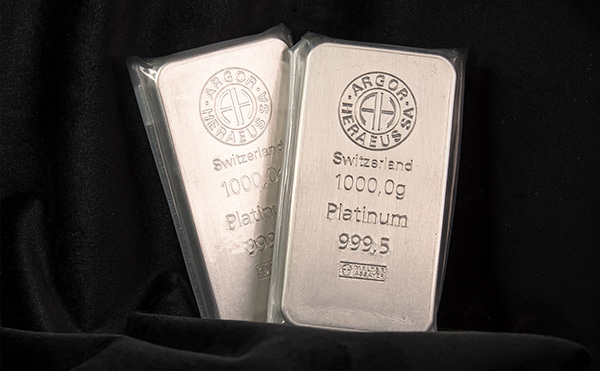
What LPPM Accreditation Means When You Buy
For a private investor, the LPPM’s lists are not an academic detail. A refiner’s place on the platinum or palladium Good Delivery List tells you three things about its bars. They have been made to a tested standard, the refiner is retested every few years, and the wholesale market will accept its metal without questioning its weight or purity. Those three facts make accredited bars easier to verify, easier to sell and, in Singapore, cheaper to buy.
Retail Bars and Good Delivery Bars
Strictly speaking, only 1 to 6 kg plates and ingots meeting the LPPM specification are Good Delivery bars. A 1 oz or 100 g platinum bar from an accredited refiner is not itself a Good Delivery bar, but it carries the refiner’s reputation and is made in the same facilities to the same purity. That is what investors are relying on when they buy a small bar from a listed refiner rather than an unlisted one.
Some investors do buy full Good Delivery sizes. These are the same plates and ingots that trade between banks in London and Zurich, sold at their individual stamped weights rather than in round sizes. Because the price per ounce falls as bar size rises, a Good Delivery bar is usually the lowest-premium way to hold a large amount of platinum. The trade-off is that it can only be sold whole.
Why Accreditation Matters in Singapore
In Singapore, LPPM accreditation decides how platinum is taxed. Platinum qualifies as an Investment Precious Metal, and is therefore exempt from GST, only if it is at least 99% pure and produced by a refiner that is or has been on the LPPM’s platinum Good Delivery List. Including former members means a bar does not lose its status if its refiner later leaves the list, which matters for older and pre-owned bars. A platinum bar from a refiner that has never been accredited attracts GST at the full rate, however pure it is.
Palladium is treated differently. It is not covered by the Investment Precious Metals exemption at all, so GST applies to palladium bars and coins in Singapore whoever made them. That is one reason platinum is by far the more popular of the two with Singapore investors. Our guide to how gold and other investment precious metals are taxed in Singapore explains the rules in full.
The LPPM Refiners We Stock
All of the platinum BullionStar sells comes from LPPM-accredited refiners, and most of it from the Swiss and German refiners covered in our Mints and Refineries guides.
| Refiner | LPPM platinum | LPPM palladium | What we stock |
|---|---|---|---|
| PAMP | Yes | Yes | Platinum bars from 1 g to 1 oz |
| Valcambi | Yes | Yes | Platinum bars from 1 g to 1 kg, Credit Suisse platinum bars made by Valcambi, and a 1 oz palladium bar |
| Argor-Heraeus | Yes | Yes | Platinum bars from 1 g to 1 kg, and Good Delivery bars of around 50 oz |
| Heraeus | Yes | Yes | Platinum bars from 100 g to 1 kg, and Good Delivery bars of around 95 to 150 oz |
| Metalor | Yes | Yes | Good Delivery platinum bars of around 150 to 170 oz |
| Tanaka | Yes | Yes | A 500 g platinum bar |
You can browse the full range of platinum bars and palladium. For a broader introduction, see our guides to investing in platinum and investing in palladium.
Selling Platinum Back
Accreditation also makes bars easier to sell. BullionStar buys back platinum bars from all LPPM-accredited refiners at the same price for a given size, so a Valcambi bar and an Argor-Heraeus bar of the same weight fetch the same buy-back price. As with any bullion, bars that are no longer in their original condition may be bought back at a small markdown. An unaccredited bar is a different proposition: a buyer may want it assayed first, and in Singapore it would not qualify for the GST exemption on resale.
Frequently Asked Questions
What does LPPM stand for?
LPPM stands for the London Platinum and Palladium Market. It is the trade association for the wholesale platinum and palladium market in London and Zurich, and was formalised in 1987. It is a members’ body, not an exchange. It maintains the Good Delivery Lists of accredited platinum and palladium refiners and sets the standards for bars traded between its members.
What is the difference between the LPPM and the LBMA?
The LPPM and the LBMA are separate sister associations. The LPPM covers platinum and palladium and keeps the Good Delivery Lists for those two metals. The LBMA covers gold and silver and keeps the gold and silver lists. The LBMA also owns the LBMA Platinum and Palladium Prices, which is why the two are often confused. They have never merged.
What is LPPM Good Delivery?
LPPM Good Delivery is the standard for platinum and palladium bars traded in the London and Zurich wholesale market. A Good Delivery bar is a plate or ingot of 1 to 6 kg, at least 99.95% pure, made by a refiner on the LPPM’s Good Delivery List. It is stamped with a serial number, the refiner’s mark, its fineness, weight and date of manufacture.
Who sets the platinum price?
The benchmark platinum price is the LBMA Platinum Price. It is set in an electronic auction at 9:45am and 2pm London time each business day. The auctions are run by ICE Benchmark Administration, which took over from the London Metal Exchange on 1 July 2026. Live platinum prices through the day are driven by over-the-counter and futures trading, mainly on NYMEX.
Which refiners are LPPM accredited?
As of October 2026, 39 refiners are on the LPPM’s platinum Good Delivery List and 33 on its palladium list. They include Valcambi, PAMP, Argor-Heraeus, Heraeus, Metalor, Tanaka and Johnson Matthey. Each listed refiner is retested roughly once every three years. Refiners that close, merge or no longer meet the standard are moved to a separate Former List.
Does LPPM accreditation affect resale value?
Yes. Bars from LPPM-accredited refiners are accepted across the wholesale market and by dealers without needing to be assayed, which makes them easier to sell. BullionStar buys back platinum bars from all LPPM refiners at the same price for a given size. In Singapore, accreditation also decides whether platinum is exempt from GST, which affects both buying and selling.
Buying Platinum and Palladium from LPPM-Accredited Refiners
The LPPM rarely makes headlines, but it underpins every platinum and palladium bar that trades in the wholesale market. Its Good Delivery Lists tell buyers which refiners can be trusted, and the regular retesting keeps that trust current. In Singapore, those same lists decide whether platinum is exempt from GST. For anyone buying platinum, a bar from an LPPM-accredited refiner is the starting point.
BullionStar sells platinum exclusively from LPPM-accredited refiners, in sizes from 1 gram to full Good Delivery bars, all GST-exempt in Singapore. We also stock palladium, to which GST applies. Either metal can be stored in BullionStar’s vaults in Singapore as fully allocated metal held in your name, and bars from any LPPM refiner can be sold back to us at the same price for a given size.
Subscribe to Gold University Articles
Copyright Information: BullionStar permits you to copy and publicize articles or information from the BullionStar Gold University provided that a link to the article's URL or to https://bullionstar.com is included in your introduction of the article or blog post together with the name BullionStar. The link must be target="_blank" without re="nofollow". All other rights are reserved. BullionStar reserves the right to withdraw the permission to copy content for any or all websites at any time.