 Contact
 Help
Help





How to Invest in Platinum: A Complete Guide
 Gold & Silver 101



If you’re considering how to invest in platinum, you’re looking at a smaller, more specialised corner of the precious metals market than gold or silver, but one that offers unique opportunities. Platinum trades at a steep discount to gold today, after decades of trading at a premium to it, and carries industrial demand from diesel autocatalysts and a growing hydrogen economy that gold and silver don’t share.
Like gold and silver, there are several ways to invest in platinum: physical bars and coins, ETFs, and mining stocks, each with a different risk profile and, for Singapore-based investors, a different tax treatment. While the London Bullion Market Association (LBMA) maintains the Good Delivery list for gold and silver, the list for platinum is maintained by the London Platinum & Palladium Market (LPPM).
At BullionStar, we’ve been helping customers invest in precious metals since 2012, including platinum bars and platinum coins from LPPM-accredited refiners. In this guide, we walk through why investors consider platinum, the different ways to invest in it, the platinum products worth considering, and how to choose the approach that fits your goals.
Please note that BullionStar does not provide investment or financial advice. The information below is for informational purposes only. Your individual circumstances and goals will always be the most important factors in any investment decision.
Why Invest in Platinum?
Why invest in platinum rather than gold or silver? The case starts with genuine rarity: global platinum mine supply runs to around 6 million ounces a year, compared with gold’s roughly 106 million ounces. This makes platinum meaningfully scarcer than the metal it’s most often compared against. That scarcity sits alongside real industrial demand that gold and silver don’t carry to the same degree — platinum is used heavily in diesel vehicle catalytic converters, and increasingly in hydrogen fuel cells and electrolysers, a new source of demand that barely existed a decade ago.
Platinum’s price history adds a further wrinkle to the case. For decades leading up to the 2008 financial crisis, platinum traded at a substantial premium to gold, prized for its rarity and heavy industrial use. That relationship has since reversed entirely: platinum now trades at well under half the price of gold, a discount some investors read as a genuine opportunity, and others as a reflection of platinum’s weaker safe-haven credentials relative to gold.
As with any precious metal, platinum as an investment comes with real trade-offs alongside these attractions, including higher volatility and a smaller, less liquid market than gold or silver. For a full breakdown of platinum’s case for and against, and how it stacks up directly against gold, silver, and palladium, see our dedicated Is Platinum a Good Investment? guide.
How to Invest in Platinum
There are three main ways of investing in platinum: physical bullion (bars and coins), exchange-traded funds (ETFs), and mining company shares. Each offers a different balance of ownership, cost, and risk, summarised below before we look at each option in more detail.
| Physical Bullion (Bars & Coins) | Platinum ETFs | Platinum Mining Stocks | |
|---|---|---|---|
| Ownership | Direct, full ownership of the metal | Indirect — a claim on a fund | Indirect — equity in a mining company |
| Counterparty Risk | None | Fund, custodian, and Authorized Participant risk | Company and operational risk |
| Liquidity | High, via dealer buy-back | Very high, exchange-traded during market hours | High, exchange-traded during market hours |
| Singapore Tax Treatment | GST-exempt for qualifying IPM bars and coins | No exemption — taxed under ordinary securities rules | No exemption — taxed under ordinary securities rules |
| Best For | Long-term holders wanting no counterparty risk | Low-friction, liquid price exposure | Leveraged, higher-risk exposure |
Platinum Bullion Investment: Bars and Coins
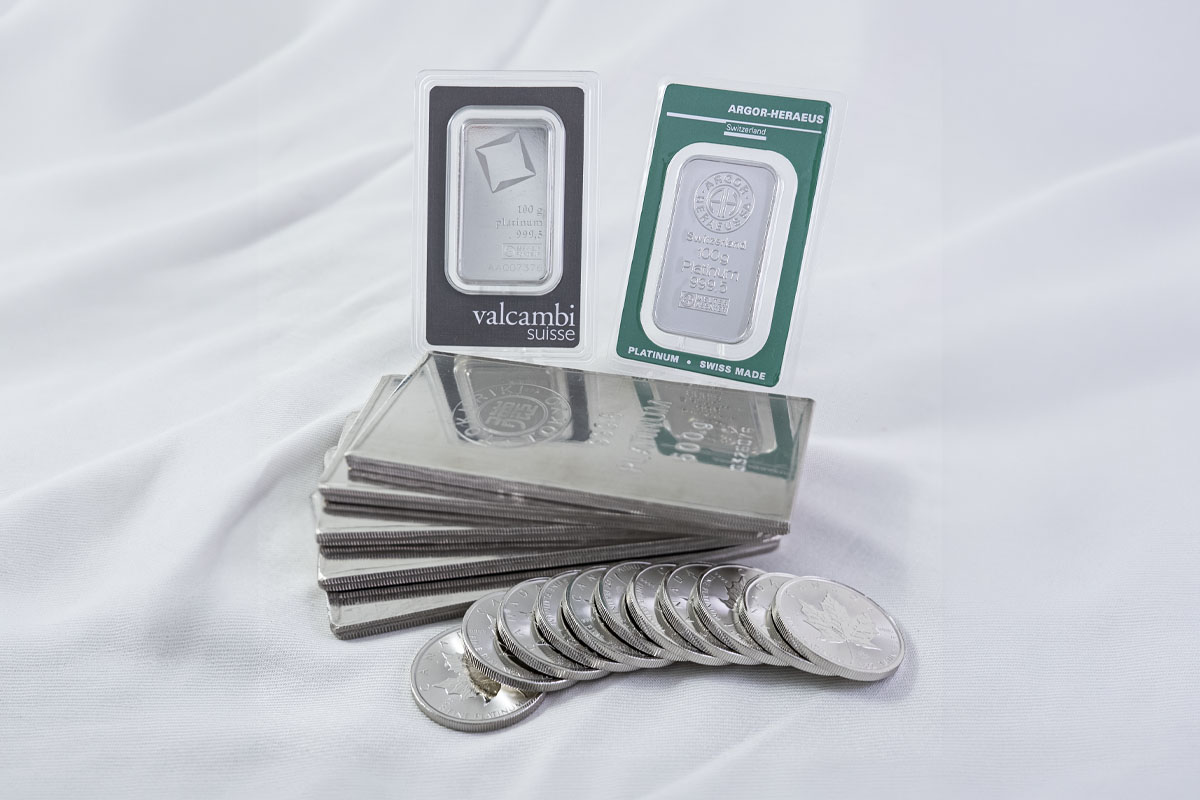
Buying platinum bars and coins is the most direct form of platinum bullion investment: you own the metal outright, with no fund, trustee, or counterparty standing between you and your holding. Platinum bars and platinum coins are produced by national mints and LPPM-accredited refiners, and several mints produce platinum versions of their flagship bullion coins, which we cover in the next section.
For Singapore-based investors specifically, physical platinum carries a genuine tax advantage that platinum ETFs and mining stocks don’t share: platinum bars and coins meeting Investment Precious Metal (IPM) purity and refiner standards are exempt from Singapore’s Goods and Services Tax (GST). ETF shares or mining stock holdings do not benefit from this tax advantage.
Buying this way means paying a small premium over the spot price and arranging storage, whether at home, in a safe deposit box, or through a vault storage service. In exchange, you hold an asset with no reliance on a fund structure or a third party’s solvency.
Platinum ETFs
Platinum ETFs are a popular way of investing in platinum. They offer straightforward exposure to the platinum price through an ordinary brokerage account, with no need to arrange storage or insurance. The largest is the abrdn Physical Platinum Shares ETF (PPLT), which holds physical platinum bullion in vaults in London and Zurich and charges a 0.60% expense ratio.
As with gold ETFs, though, owning shares in a platinum ETF isn’t the same as owning platinum directly. Shareholders own a claim on the fund, not a specific bar of metal, and in almost all cases cannot redeem shares for physical platinum. The fund’s expense ratio is also deducted continuously from its holdings, meaning the actual amount of platinum backing each share gradually declines over time. The same creation-and-redemption mechanics covered in BullionStar’s Gold ETFs guide apply here too.
A Physical Alternative With ETF-Like Convenience
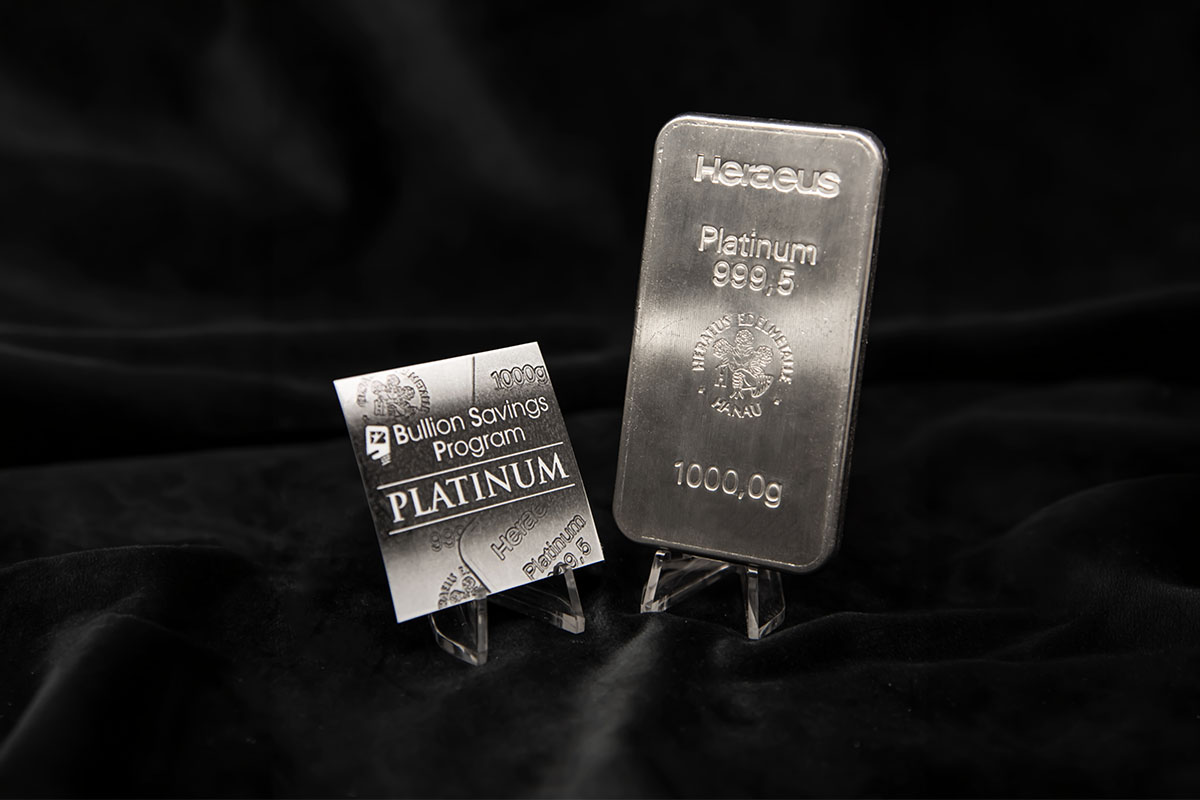
Platinum ETFs aren’t the only way to buy small, flexible amounts of platinum online without a large upfront purchase. BullionStar’s Bullion Savings Program (BSP) offers the same low-friction entry point, letting you buy platinum by the gram, fully backed by physical metal held in BullionStar’s Singapore vault, for a storage fee of just 0.19% a year. Unlike a platinum ETF, though, BSP grams carry no fund structure or counterparty risk, and can be converted free of charge into physical 1 kilogram platinum bars, or other LPPM-accredited bars, once your holding reaches the conversion threshold — giving you a direct path from a low-cost, flexible savings product into bullion you can actually hold or have delivered.
Platinum Mining Stocks
Platinum mining stocks offer a different, more leveraged kind of exposure: you’re investing in the business of mining platinum, not the metal itself. Because roughly 75% of global platinum supply comes from a small number of South African producers, mining stocks carry concentrated geographic and operational risk on top of ordinary equity risk, including labour disputes, rising costs, and the power disruptions that have weighed on South African output in recent years.
Mining stocks can offer leveraged upside when the platinum price rises, since a producer’s costs are relatively fixed while revenue moves with the metal price. But they behave more like conventional equities than a platinum investment, and should be approached as such.

Choosing Between Bullion, ETFs, and Mining Stocks
For investors seeking genuine diversification and a hedge against financial system risk, physical platinum bullion is the most straightforward choice, and the only option of the three with no counterparty risk. Platinum ETFs suit investors who want simple, liquid price exposure without the responsibility of storage. Mining stocks suit investors comfortable with equity-level risk in exchange for leveraged upside.
Best Platinum Products to Buy
Whether coins or bars suit you better usually comes down to premium, liquidity, and personal preference rather than one being objectively superior. Among the platinum investment options available, coins typically carry a higher premium over spot but benefit from government backing and easy recognition, while bars usually offer a lower cost per ounce, particularly in larger sizes.
Best Platinum Coins to Buy
The American Platinum Eagle is the only platinum bullion coin whose weight, purity, and content are guaranteed by the US government. First issued in 1997, it’s struck in .9995 fine platinum and carries a face value of $100. The Canadian Platinum Maple Leaf, produced by the Royal Canadian Mint at 99.95% purity, is one of the longest-running platinum bullion coins available, first issued in 1988.
The UK Platinum Britannia, produced by the Royal Mint at 99.95% purity, carries some of the most advanced security features of any platinum bullion coin available today. Modern issues include a latent image that shifts between a padlock and Britannia’s trident depending on the viewing angle, surface animation that brings the background waves to life, micro-text reading “DECUS ET TUTAMEN," and tincture lines picking out the Union Jack shield.
All three coins are globally recognised, backed by national mints, and qualify as Investment Precious Metals, meaning they can be bought free of GST in Singapore.
Best Platinum Bars to Buy
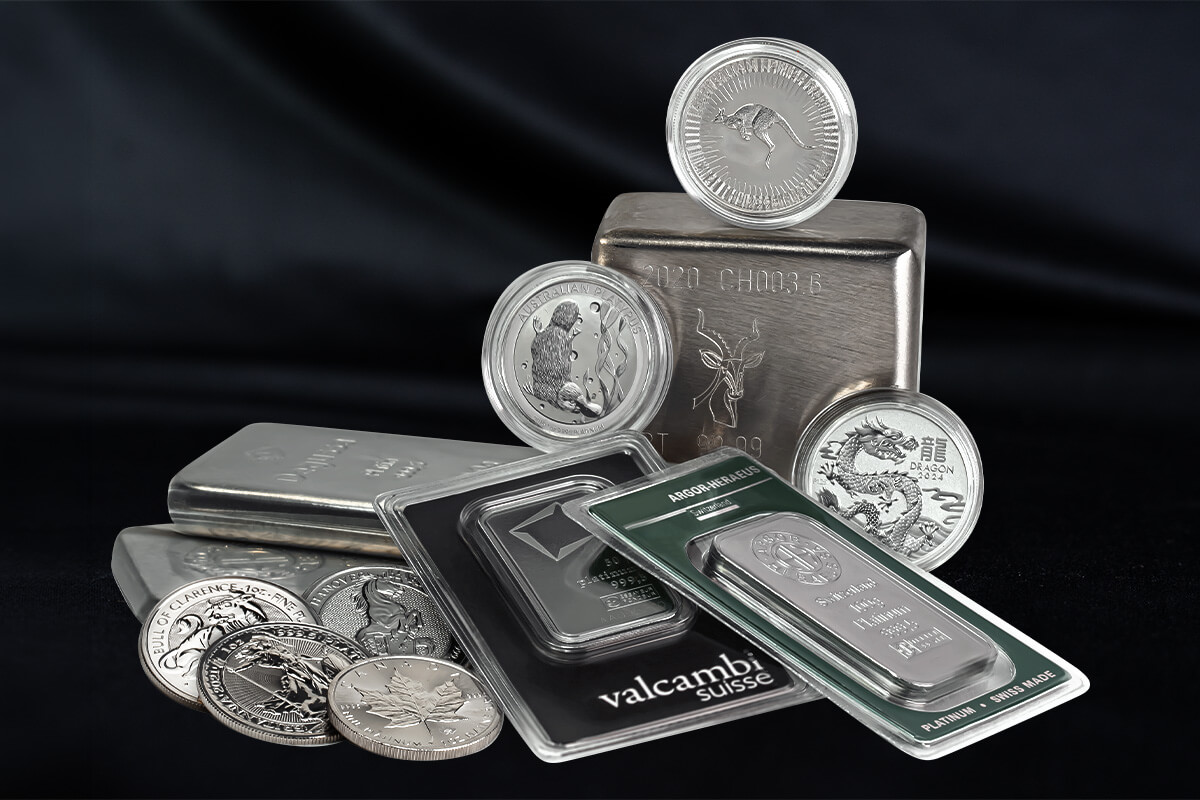
Despite platinum’s smaller market than gold or silver, a wide range of the world’s leading refiners produce platinum bars, including PAMP, Argor-Heraeus, Metalor, and Credit Suisse. Available in sizes from 1 gram up to the 1–6 kilogram ‘Good Delivery’ bars used by large-scale institutional buyers, investors have plenty of options to choose from, whatever their budget.
Our platinum bars qualify as Investment Precious Metals (IPM), meaning they can be bought free of GST. Thanks to Singapore’s lack of capital gains tax, platinum bars and coins can also be sold without tax on any profit you make, making them a tax-efficient way to invest in platinum, and own a physical product you control directly.
For investors who’d rather build a position gradually than commit to a full coin or bar upfront, BullionStar’s Bullion Savings Program remains worth considering, covered in the previous section.
Frequently Asked Questions
Is platinum investment good for beginners?
Platinum can be a suitable starting point for beginners, provided you understand it behaves differently to gold. Its price is more volatile, and the market is smaller and less liquid, so it suits investors comfortable with bigger price swings in exchange for diversification and industrial demand exposure. For beginners specifically, starting small, whether through a single platinum coin or BullionStar’s Bullion Savings Program, is a more sensible entry point than committing a large sum upfront to a market you haven’t yet gotten a feel for.
Can I invest in platinum from Singapore?
Yes. Singapore is one of the more straightforward places to invest in platinum, thanks to its Investment Precious Metal (IPM) exemption from GST and its lack of capital gains tax on bullion profits. BullionStar offers platinum bars, coins, and Bullion Savings Program grams to Singapore-based investors, with options for in-person collection, insured worldwide delivery, or vault storage.
What’s the minimum amount to invest in platinum?
You can invest in platinum from as small as 1 gram. BullionStar sells a 1 gram PAMP platinum bar for investors who want to own physical metal outright from the very start, and the Bullion Savings Program offers the same gram-based entry point, letting you buy in small, flexible amounts and convert into larger bars once your holding grows. Larger bars and coins carry a higher effective minimum, generally starting from around one troy ounce.
How do I sell platinum?
You can sell platinum bars, coins, or Bullion Savings Program grams back to BullionStar at any time, at a transparent, published price. Selling this way is more straightforward than routing a sale through a broker or a private buyer, since BullionStar publishes live buy-back prices rather than requiring you to negotiate one.
How should I store platinum bars and coins?
Platinum bars and coins can be stored the same way as gold or silver: at home in a secure safe, in a bank safe deposit box, or through a professional vault storage service. BullionStar offers fully insured vault storage in Singapore, letting you buy and hold platinum without arranging storage yourself, while retaining full legal ownership and the ability to withdraw your metal at any time.
Can I convert a platinum ETF into physical platinum?
For almost all retail investors, no. Only large institutions known as Authorized Participants can redeem blocks of ETF shares for physical platinum directly with the fund; individual shareholders can only sell their shares for cash on the open market. If converting into physical metal matters to you, BullionStar’s Bullion Savings Program is built specifically to let you convert gram-based holdings into physical platinum bars for free once you’ve accumulated enough.
Start Investing in Platinum with BullionStar
Platinum earns its place as a genuine portfolio diversifier alongside gold and silver: rarer than gold by production volume, driven by a different mix of industrial and jewellery demand, and currently trading at a steep discount to gold after decades of the relationship running the other way. That combination makes it worth a look for investors who understand the trade-offs, chiefly higher volatility and a smaller, less liquid market than gold or silver.
How you invest matters as much as the decision to invest at all. Physical bullion, whether bars, coins, or gram-based Bullion Savings Program holdings, offers direct ownership with no counterparty risk and the tax advantages of Singapore’s IPM exemption.
Ready to add platinum to your portfolio? Browse our range of platinum bars and platinum coins, start small with the Bullion Savings Program, or get in touch with our team at support@bullionstar.com — we’re happy to help.
Popular Blog Posts by Gold & Silver 101
 An Introduction to Gold & Silver Investing
 Should I Invest in Gold, Silver, or Platinum Bullion?
 Gold Coins vs Gold Bars: Which Is Better?
 How Is Gold Taxed in Singapore? The IPM GST Exemption Explained
 Storing Precious Metals, Gold, and Silver Bullion
 Gold & Silver Bullion Investing FAQs
 Karat vs Carat: What’s the Difference?
 Gold Purity: The Complete Guide
 How Much Gold Is There in the World?
 Junk Silver: What It Is and What It’s Worth