 Contact
 Help




Singapore Gold Reserves: How Much Gold Does Singapore Have?


Singapore held 193.53 tonnes of gold at the end of 2025, according to the World Gold Council, ranking it 23rd among the official gold reserves in the world. The gold is held by the Monetary Authority of Singapore (MAS), the country’s central bank, as part of its Official Foreign Reserves.
For decades, Singapore’s gold holdings barely changed. That ended in 2021, when MAS began buying gold for the first time in at least 20 years. In early 2023 it was briefly the largest central bank buyer of gold in the world. Since mid-2024, MAS has sold part of those reserves, though it still holds far more gold than it did before 2021. MAS does not disclose where its gold is stored, saying only that it is spread across different locations.
Gold also has a link to the Singapore dollar itself. For most of its history, every Singapore dollar note and coin had to be fully backed by external assets, which could include gold and silver, a legacy of the currency board system that Singapore kept long after most countries had abandoned theirs. Today the currency is backed by the full assets of MAS. This page explains how much gold Singapore has, how its holdings have changed, where Singapore’s gold reserves are stored, how the Singapore dollar is backed, and Singapore’s growing role as a global gold hub.
Highlights
- Singapore held 193.53 tonnes of gold at the end of 2025, according to the World Gold Council, the 23rd-largest official reserve in the world.
- The Monetary Authority of Singapore bought about 95 tonnes in 2021–23, briefly becoming the world’s largest central bank buyer in early 2023, before selling part of its holdings from mid-2024.
- Singapore does not disclose where its gold is stored, saying only that it is diversified across different locations for accessibility and resilience.
- For most of its history, every Singapore dollar note and coin was fully backed by external assets, which could include gold, under Singapore’s currency board system.
- Singapore has become a major gold hub since removing GST on investment precious metals in 2012, and MAS now plans to offer vaulting for foreign central banks’ gold.
How Much Gold Does Singapore Have?
Singapore held 193.53 tonnes of gold at the end of 2025, according to the World Gold Council. That’s about 6.2 million troy ounces. MAS reports its gold holdings every month, and they have moved in both directions recently. After further sales in early 2026, MAS returned to buying in May, taking its holdings to about 197 tonnes.
| Singapore’s gold reserves | Figure |
|---|---|
| Official holdings, end-2025 (WGC) | 193.53 tonnes |
| In troy ounces | About 6.2 million oz |
| Holdings, end-May 2026 (WGC) | About 197 tonnes |
| Approximate value | About US$26 billion |
| Share of total reserves (end-2025) | 6.29% |
| World ranking (end-2025) | 23rd |
| Storage | Not disclosed |
| Gold per person | About 32 grams |
Gold is only a small part of Singapore’s reserves. MAS holds hundreds of billions of US dollars in Official Foreign Reserves, mostly in foreign currency bonds and other financial assets, and gold makes up about 6% of the total. That puts Singapore closer to Japan than to the large European holders, where gold is around 80% of reserves. MAS has said its gold holdings do “not constitute a large fraction” of its portfolio.
Relative to its population, though, Singapore holds a lot of gold. Spread across around 6.1 million people, its reserve works out at about 32 grams per person. That’s similar to France or the Netherlands and far more than Japan or Turkey, at about 7 grams each.
Who Manages Singapore’s Gold?
Singapore’s gold is held by MAS as part of the Official Foreign Reserves, which it uses to manage the Singapore dollar and support financial stability. These are the reserves reported to the IMF and the World Gold Council.
Singapore also has much larger government reserves, managed by GIC, the government’s investment company. GIC invests the bulk of Singapore’s foreign reserves for long-term returns. It doesn’t publish how much gold it holds, if any, and nothing it holds is counted in Singapore’s official gold reserves. Temasek, the state investment company, is separate again and invests mainly in companies.
Singapore’s Gold Purchases and Sales
Decades of Little Change
Singapore built its first gold reserve soon after independence. In 1968, the country’s monetary authorities bought 100 tonnes of gold in a single transaction from the South African government, delivered in Switzerland. Holdings later rose to 127.4 tonnes. MAS has not said when, and from the early 2000s they stayed at that level for about two decades.
The Buying Phase, 2021–2024
In May and June 2021, MAS added about 26 tonnes, its first increase in data going back to 2000. In early 2023 it bought much more. Between January and March, MAS added about 69 tonnes, taking its holdings to 222.4 tonnes. For that quarter, Singapore was briefly the largest central bank buyer of gold in the world, ahead of China and Turkey. BullionStar covered the purchases at the time in Singapore Was the World’s Largest Central Bank Gold Buyer in Q1 2023, which also traces the history of MAS’s gold back to 1968.
MAS did not announce these purchases. They appeared only in its monthly reserve data. When asked, it said the changes were part of efforts to keep its Official Foreign Reserves portfolio diversified. Smaller additions continued after that, and by mid-2024 Singapore’s gold holdings had peaked at about 240 tonnes, nearly double the level of 2020.
The Selling Phase, 2024–2026
From mid-2024, MAS began reducing its gold. In June 2024 its holdings fell by about 12 tonnes, the largest monthly fall in records going back to 2000. Further sales followed, and holdings fell to 223 tonnes by November 2024 and 204 tonnes by June 2025. By the end of 2025 they stood at 193.53 tonnes. In May 2026, MAS made its first net purchase since September 2025, adding about 4 tonnes.
| Period | Change | Holdings after |
|---|---|---|
| 1968 | First purchase | 100 tonnes |
| By the early 2000s | Increase (date not disclosed) | 127.4 tonnes |
| May–June 2021 | +26 tonnes | About 154 tonnes |
| January–March 2023 | +69 tonnes | 222.4 tonnes |
| Mid-2024 | Peak | About 240 tonnes |
| June 2024 | −12 tonnes | About 229 tonnes |
| November 2024 | — | 223 tonnes |
| First half of 2025 | −16 tonnes | 204 tonnes |
| End of 2025 | — | 193.53 tonnes |
| May 2026 | +4 tonnes | About 197 tonnes |
Sources: MAS data, as reported by the World Gold Council, Bloomberg and BullionStar.
MAS has not explained the sales. As with its purchases, it doesn’t comment on changes in the make-up of its reserves. They came as the gold price rose to record highs, which may have led MAS to take some profits and rebalance its portfolio. Even after the sales, Singapore holds about 50% more gold than it did before 2021.
Where Is Singapore’s Gold Stored?
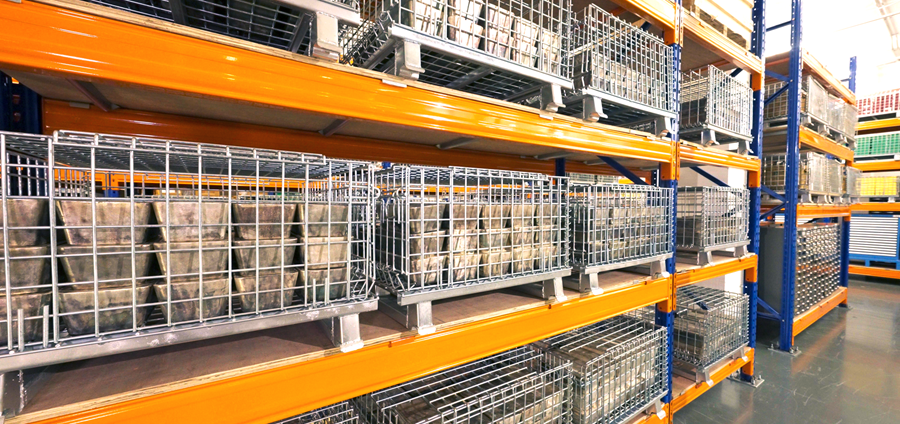
Singapore does not disclose where its gold is stored. MAS has said for years that the information is confidential. In February 2026 the question was raised in Parliament, when an MP asked how much of Singapore’s gold is held outside the country and whether this would be reviewed in light of rising geopolitical tensions.
Senior Minister of State for Finance Jeffrey Siow replied that Singapore’s gold reserves are “diversified across geographies to ensure accessibility and resilience,” and that the government regularly reviews the arrangement. He did not give a breakdown. “For security reasons,” he said, “we do not disclose the proportion of gold stored in any particular jurisdiction.”
The reply suggests Singapore’s gold is held in more than one country, but it is not known where or how much. Singapore’s first 100 tonnes were delivered in Switzerland in 1968. BullionStar has suggested that some of the gold has been held in London, one of the main centres where central banks keep gold, but this has never been confirmed.
Singapore’s approach is similar to Japan’s and China’s, which also do not disclose where their gold is stored. Germany, Italy and the Netherlands, by contrast, now publish full breakdowns. There is also an irony in Singapore’s position. While it keeps quiet about where its own gold is, it is now positioning itself as a place for other countries’ central banks to store theirs, as explained later on this page.
How the Singapore Dollar Is Backed
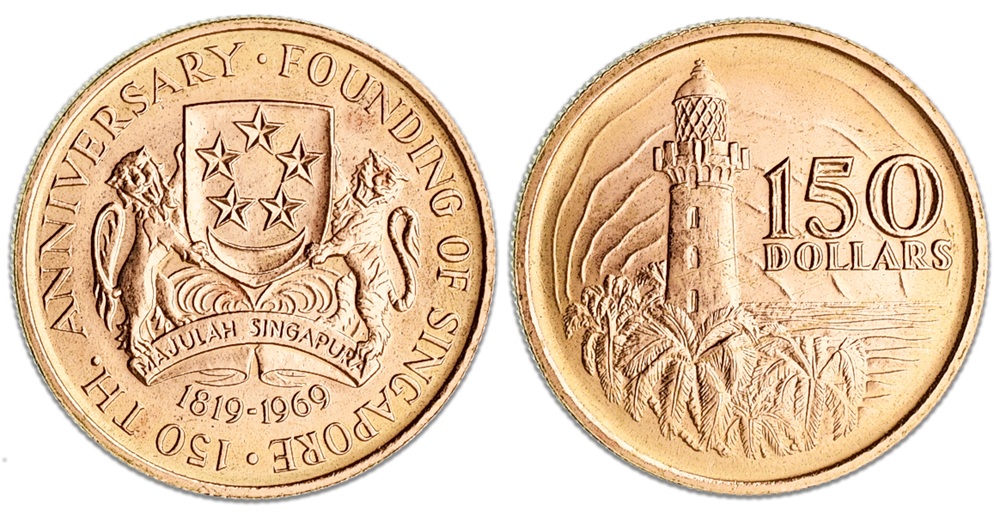
Singapore’s currency has an unusual history. For most of its existence, every Singapore dollar note and coin was fully backed by gold and foreign assets. That’s a much stricter rule than most modern currencies have ever followed.
The Currency Board System
The arrangement goes back to the colonial era, when the Straits dollar and its successors were issued by currency boards. A currency board can only issue money that is fully covered by reserves held in foreign assets. When Singapore issued its own currency in 1967, it kept the system. The Board of Commissioners of Currency, Singapore, set up that year, had the sole right to issue notes and coins, and every dollar it issued had to be backed 100% by external assets, which could include gold and silver.
The aim was confidence. Singapore was a young, small country, and its leaders wanted to show that it wouldn’t simply print money. In 1970, Finance Minister Hon Sui Sen described the board’s “100 percent external assets backing” as psychologically important for confidence in the Singapore dollar. When MAS was created in 1971 to act as the central bank, currency issuance was deliberately kept separate, with the Currency Board, for the same reason.
How the System Has Changed
The Singapore dollar was floated in 1973, and in 1982 the right to exchange notes and coins for gold or foreign currency on demand was removed. Full external-asset backing remained a requirement under the Currency Act.
In 2002, the Currency Board merged with MAS, which became a full central bank able to issue notes and coins. In 2017, the separate Currency Fund that held the backing assets was merged into MAS’s other funds. MAS explained that the currency in circulation is now backed by “the full financial strength and assets of MAS.” Its assets of about S$395 billion at the time were more than seven times larger than the Currency Fund’s S$55 billion. The government’s support for the currency under the Currency Act remains unchanged.
The Singapore dollar has also kept a link with one neighbour. Under a long-standing agreement, it is still exchangeable at par with the Brunei dollar, and each is accepted in the other country.
Why It Matters
Singapore’s notes and coins are not backed by gold alone, and they can no longer be exchanged for gold. The system should not be confused with a gold standard. Even so, the principle behind Singapore’s currency is closer to the old gold-backed systems than most. The money in circulation is covered many times over by MAS’s foreign assets, which include its gold. For a country that has never been able to rely on natural resources, that backing has been central to the Singapore dollar’s reputation as one of the world’s more stable currencies.
Singapore as a Gold Hub
Singapore’s official gold reserves are modest, but it has become one of the world’s main centres for trading and storing gold. That role has grown quickly over the past 15 years, and the government is now trying to expand it further.
Building the Gold Market
A key turning point came in October 2012, when Singapore removed GST from investment-grade gold, silver and platinum. Before then, gold bought in Singapore carried the same goods and services tax as other purchases, which pushed trading and storage to other centres. The exemption put Singapore on an equal footing with other major gold markets and made it far more attractive to investors and dealers. For details of which products qualify, see our guide to investment precious metals exempt from GST.
Singapore’s infrastructure has grown alongside the market. Le Freeport, a high-security storage facility next to Changi Airport, opened in 2010 and holds gold for banks, dealers and private investors. Several international refiners, including Metalor, produce gold bars in Singapore, and the Singapore Bullion Market Association represents the banks, dealers, refiners and vault operators that make up the market. Singapore’s location also makes it a natural link between Western gold markets and buyers in China, India and the rest of Asia.
Plans to Store Central Banks’ Gold
In March 2026, MAS announced plans to strengthen Singapore’s role further. It said it would “look to provide vaulting services for foreign central banks and sovereign entities to meet potential demand,” making Singapore a possible storage location for other countries’ gold reserves alongside London and New York. MAS and the Singapore Bullion Market Association also announced plans for a local clearing system to settle gold trades, and MAS said it was developing gold-related financial products to support trading and price discovery. A government working group including JPMorgan, UBS, DBS, UOB and ICBC Standard is involved in the effort.
The plans come as many central banks are reconsidering where their gold is held, as covered on our pages on Russia’s gold reserves and the Netherlands’ gold reserves. Hong Kong is pursuing similar ambitions. MAS deputy chairman Chee Hong Tat said the space was “big enough for us to co-exist and for both cities to be able to grow our respective services.”
Frequently Asked Questions
How much gold does Singapore have?
Singapore held 193.53 tonnes of gold at the end of 2025, according to the World Gold Council, making it the 23rd-largest official holder in the world. After a small purchase in May 2026, its holdings rose to about 197 tonnes.
Is Singapore buying or selling gold?
Both, at different times. MAS bought about 95 tonnes between 2021 and 2023, briefly becoming the world’s largest central bank buyer in early 2023. It has sold some gold since mid-2024. It returned to buying in May 2026, with its first net purchase since September 2025.
Where does Singapore keep its gold?
Singapore does not disclose where its gold is stored. In February 2026, the government told Parliament that its gold reserves are diversified across different locations to ensure accessibility and resilience. It said it does not disclose how much is held in any particular country, for security reasons.
Is the Singapore dollar backed by gold?
Not by gold alone. For most of its history, every Singapore dollar note and coin was fully backed by external assets, which could include gold, under Singapore’s currency board system. Today the currency is backed by the full assets of MAS, including its foreign reserves and gold, and it can no longer be exchanged for gold.
Who manages Singapore’s gold?
Singapore’s official gold reserves are held by the Monetary Authority of Singapore as part of its Official Foreign Reserves. GIC, which manages most of Singapore’s other government reserves, does not report any gold holdings, and nothing it holds is counted in Singapore’s official gold figures.
How much gold does Singapore have per person?
Singapore’s 193.53 tonnes work out at about 32 grams of gold per person, based on a population of around 6.1 million. That is similar to France and the Netherlands, and much higher than Japan or Turkey.
Storing Gold in Singapore
Singapore’s government holds only a modest share of its reserves in gold, but the country has become one of the most popular places in the world for investors to buy and store it. It offers political and economic stability, a strong legal system, GST-free investment precious metals, and secure, independent storage outside the banking system. Those are many of the same qualities central banks now look for when deciding where to keep their own gold.
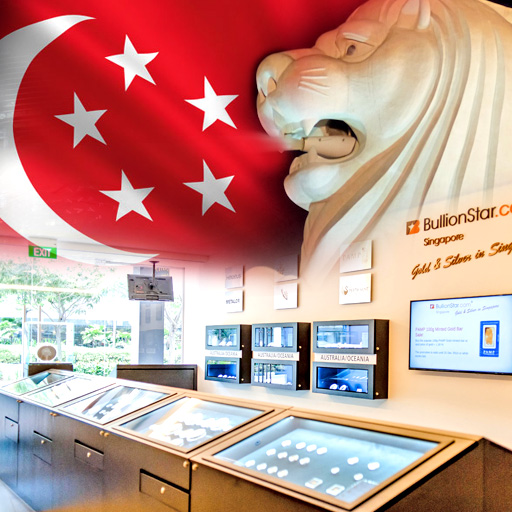
BullionStar is based in Singapore and operates from its Bullion Center in the city, where customers can buy, sell and collect precious metals in person. Investors can choose from gold bars and gold coins from leading refiners and mints, as well as silver bars and silver coins. Investment-grade gold, silver and platinum are GST-exempt in Singapore.
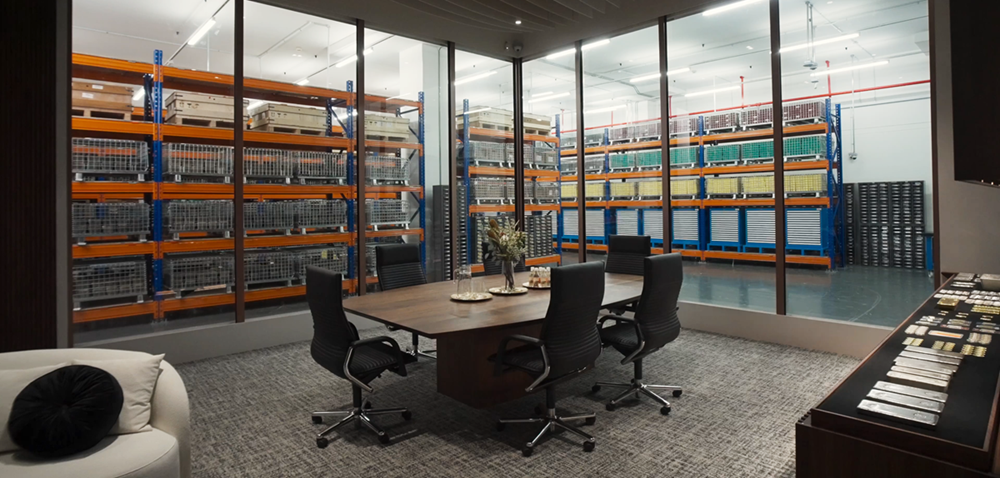
For those who prefer not to keep their metals at home, BullionStar offers vault storage at Le Freeport in Singapore, where customers’ bullion is fully allocated and insured. Every bar is photographed, holdings are independently audited, and customers can visit their metals in person. Customers can also have their purchases delivered to their home.
Subscribe to Gold University Articles
Copyright Information: BullionStar permits you to copy and publicize articles or information from the BullionStar Gold University provided that a link to the article's URL or to https://bullionstar.com is included in your introduction of the article or blog post together with the name BullionStar. The link must be target="_blank" without re="nofollow". All other rights are reserved. BullionStar reserves the right to withdraw the permission to copy content for any or all websites at any time.