 Contact
 Help
Help





Offshore Gold Storage in Singapore: A Secure Jurisdiction for International Investors
 Gold & Silver 101



For investors looking to hold physical gold and silver outside their home country, the choice of jurisdiction matters as much as the metal itself. Offshore storage is about more than convenience — it is a way to diversify the legal, political, and banking risks that come with holding all of your wealth in a single country. The right jurisdiction combines genuine security with a stable legal system and a tax framework that does not erode your holding.
Singapore has become one of the world’s leading destinations for offshore precious metals storage. It pairs political stability, an AAA credit rating, and strong rule of law with two significant advantages for bullion investors: qualifying investment-grade gold and silver are exempt from Goods and Services Tax (GST), and there is no Capital Gains Tax (CGT) for individuals — though your own CGT position is generally determined by your country of residence, not where your metal is stored. Add world-class vaulting infrastructure such as Le Freeport (often described as Asia’s Fort Knox), and Singapore offers a combination of safety and tax efficiency that few jurisdictions can match.
This guide explains what offshore gold storage is, why Singapore stands out against both well-known and lesser-known alternatives, how allocated vault storage works, and how international investors can buy and store physical bullion in Singapore.
Please note that BullionStar does not provide investment or financial advice. The information below is for informational purposes only.
What Is Offshore Gold Storage?
Offshore gold storage means holding physical gold or silver in a secure vault located in a jurisdiction outside your country of residence. Rather than keeping bullion at home, or with a dealer in your own country, you store it in a stable foreign jurisdiction chosen specifically for its security, legal framework, and tax treatment.
The motivation is rarely about secrecy and almost always about resilience. Holding all of your assets within a single country concentrates your exposure to that country’s legal system, banking sector, currency, and political decisions. Storing precious metals offshore is a way of spreading that risk, much as investors diversify across asset classes. The metal sits outside the reach of any single domestic event.

Investors typically store gold and silver offshore for a few core reasons:
- Jurisdictional diversification — your wealth is no longer wholly dependent on the stability of one country’s institutions, banks, and currency.
- Protection against domestic risk — offshore holdings sit beyond the reach of capital controls, asset freezes, or the confiscation precedents some countries have set in the past.
- Security within a strong legal framework — a well-chosen jurisdiction offers institutional-grade vaulting backed by clear property rights and reliable legal recourse.
- No counterparty risk — when metal is held in allocated storage, you own specific bars outright. They are not a claim against any bank or institution and do not sit on anyone’s balance sheet.
Not all offshore storage is equal. A low-cost vault in a jurisdiction with weak rule of law or limited legal recourse can introduce more risk than it removes. The jurisdictions that genuinely protect investors are those that combine tax efficiency with political stability, mature vaulting infrastructure, and a legal system you can rely on — which is where Singapore stands out.
Why Store Gold in Singapore?
Singapore is widely regarded as one of the best jurisdictions in the world for storing physical gold and silver. It offers a rare combination of political stability, financial transparency, and tax efficiency, underpinned by a deliberate national strategy to position the country as a global precious metals hub. For an international investor deciding where to hold bullion, these are the factors that set Singapore apart:
- Political and economic stability. Singapore is one of the most stable countries in the world, with an AAA credit rating, a strong currency, and a long track record of sound governance. This stability is the foundation of its appeal as a place to safeguard long-term wealth.
- Strong rule of law and property rights. Singapore consistently ranks among the world’s least corrupt jurisdictions, with a transparent legal system and robust protection of private property. Your ownership rights are clear and enforceable.
- GST exemption on investment-grade bullion. Since 2012, gold and silver that qualify as Investment Precious Metals (IPM) have been exempt from Singapore’s Goods and Services Tax (equivalent to VAT or Sales Tax). This means qualifying bullion can be bought and stored without a consumption tax eroding your holding from the outset.
- No Capital Gains Tax. Singapore does not levy CGT on individual investors, so profits realised when you sell your gold or silver are not taxed within Singapore, regardless of the size of the gain. Bear in mind that CGT liability usually follows your country of tax residence rather than the location of your metal, so investors resident elsewhere should check their own domestic rules.
- World-class vaulting infrastructure. Singapore is home to purpose-built, high-security storage facilities, including Le Freeport near Changi Airport. Combined with deep dealer liquidity and a mature bullion market, this makes buying, storing, and eventually selling physical metal straightforward.
- Strategic location and connectivity. Singapore’s position as a major Asian financial centre, with the world-class logistics of Changi Airport, supports secure transfer and delivery of high-value assets.
Taken together, these advantages make Singapore not just a tax-efficient place to buy gold and silver, but a genuinely secure one. The GST exemption applies equally to both metals, so investors can hold gold and silver under the same favourable framework — an important point for anyone building a diversified precious metals position.

For overseas investors specifically, Singapore offers something valuable: a way to hold bullion in a stable, low-tax environment entirely separate from the conditions in their home country, while retaining full ownership and easy online access to their holdings.
Singapore vs Other Offshore Storage Jurisdictions
Singapore is not the only option for offshore precious metals storage, and the right choice depends on your priorities around cost, location, and the metals you hold. The most established alternatives are Switzerland and Hong Kong, while a number of lesser-known jurisdictions market themselves on low fees. The table below benchmarks the main considerations when deciding where to store gold.
| Jurisdiction | Tax on purchase | Capital gains tax | Political stability | Rule of law |
|---|---|---|---|---|
| Singapore | None on IPM gold & silver | None | Very high | Very strong |
| Switzerland | Gold VAT-exempt; silver may attract VAT | None for private investors | Very high | Very strong |
| Hong Kong | None | None | Medium | Strong, with some uncertainty |
| Lesser-known havens | Varies | Varies | Lower / variable | Often weaker |
Switzerland has the longest history as a gold storage destination and remains a strong, stable choice. However, while investment gold is exempt from Swiss VAT, silver is generally not — meaning a tax disadvantage applies to silver from the point of purchase, unlike in Singapore where the exemption covers both metals. Storage costs in Switzerland can also be higher.
Hong Kong offers tax advantages similar to Singapore’s and is a long-established Asian bullion centre. For some investors, however, the large-scale protests of 2019–2020 and the subsequent changes to the territory’s legal and political landscape have raised questions about its long-term autonomy and its closer alignment with mainland China. Where the entire purpose of offshore storage is jurisdictional independence and stability, that uncertainty leads some to favour Singapore.
Lesser-known jurisdictions often advertise lower storage fees, but the trade-off is usually weaker rule of law, less transparency, and limited legal recourse if something goes wrong. A small annual saving on storage fees can be a poor exchange for uncertainty over whether you can reliably access or reclaim your metal. The whole point of storing gold offshore is to reduce risk, not to introduce more of it.
This is where Singapore’s combination is hard to beat. It delivers the tax efficiency that draws investors to offshore storage in the first place, but pairs it with the institutional-grade security, transparency, and legal certainty that the cheaper alternatives cannot match. For most international investors, the safest place to store gold is one that scores well on every measure at once — and Singapore does exactly that.
How Offshore Allocated Gold Storage Works
Once you have chosen a jurisdiction, the next decision is how your metal is actually held. This is where the distinction between allocated and unallocated storage becomes critical, and it is the single most important thing for an offshore investor to understand.
Allocated vs. Unallocated Storage
With allocated storage, specific, identified bars or coins are held in your name. You are the legal owner of those exact items. They are segregated from the vault operator’s own assets, which means they do not form part of the operator’s balance sheet and are recoverable even in the unlikely event of its insolvency.
With unallocated storage, you do not own specific bars. Instead, you hold a claim against the storage provider for a quantity of metal. This is typically cheaper and is favoured by some traders for its flexibility, but it reintroduces the very counterparty risk that offshore storage is meant to eliminate: if the provider fails, you become an unsecured creditor rather than an outright owner. For long-term offshore investors, allocated storage is almost always the appropriate choice.
What Secure Vault Storage Should Include
A professional bullion vault should offer more than a locked door. Look for:
- Full insurance of your holdings, underwritten by a reputable insurer.
- Clear legal title so your metal is unambiguously yours.
- Photographic records and serial numbers for the specific bars allocated to you.
- Independent audits of vault holdings, with the option to inspect your metal in person.
- 24/7 online account access to view, buy, sell, or request withdrawal at any time.
BullionStar’s Vault at Le Freeport
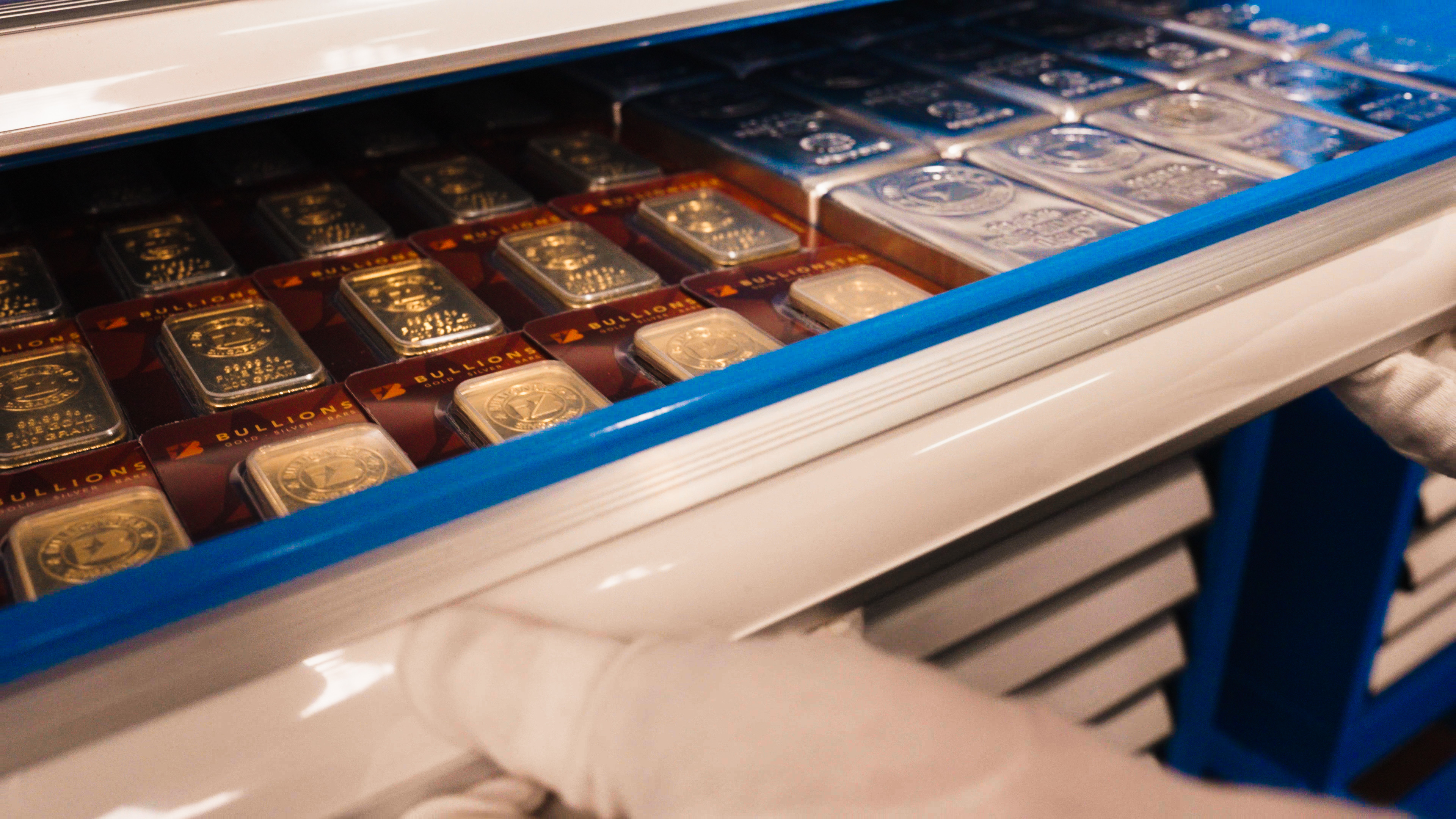
Singapore’s flagship facility is Le Freeport, a purpose-built, high-security storage complex located next to Changi Airport and often referred to as Asia’s Fort Knox. It was engineered from the ground up for the secure, discreet storage of high-value assets, with features including Grade 9 vault doors, round-the-clock armed monitoring, and backup power systems.

BullionStar operates its own vault within Le Freeport, holding customers’ metal on a fully allocated basis with insurance underwritten by syndicates at Lloyd’s of London. You hold specific bars under your own legal title, with photographic records, independent audits, and the ability to manage everything through your online account around the clock. International investors can hold metal in these vaults without ever taking physical delivery — benefiting from Singapore’s security and tax framework from anywhere in the world.
How to Buy and Store Gold in Singapore from Overseas
One of the most common questions international investors ask is whether they need to travel to Singapore to buy and store bullion there. The answer is no. The entire process can be completed online from anywhere in the world, and your metal never has to leave the security of the vault.
Buying gold internationally and storing it in Singapore typically works like this:
- Open an account online. You can register a BullionStar account from your home country in minutes. There is no requirement to visit Singapore or be a resident.
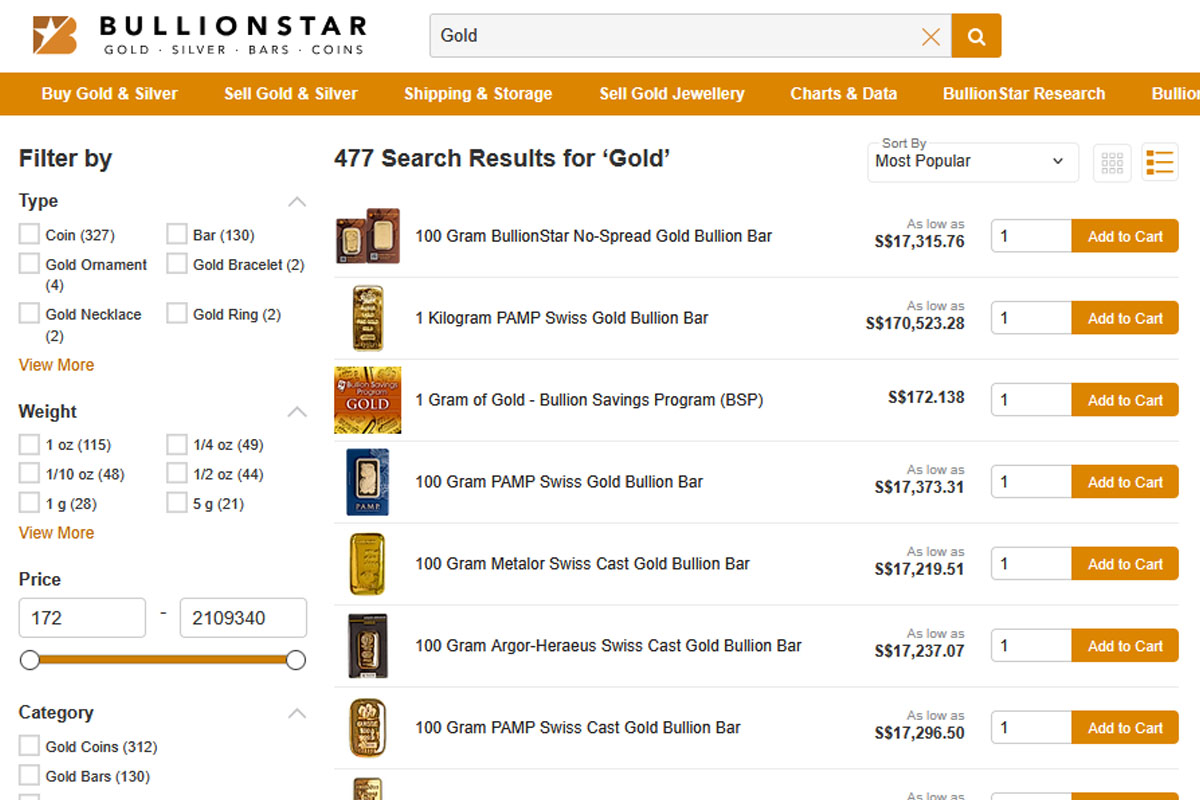
- Buy GST-free bullion at transparent prices. Purchase investment-grade gold or silver that qualifies as IPM, free of GST, at live prices with the premium and spread shown clearly on each product.
- Select allocated storage. Choose to have your metal held in allocated storage at Le Freeport. Specific bars are registered in your name, fully insured.
- Manage your holdings remotely. Through your online account you can buy more, sell, or request an insured withdrawal at any time. You can also arrange to visit Singapore to audit or collect your metal in person if you wish.
This is what makes Singapore so practical for offshore investors: you gain exposure to a stable, low-tax jurisdiction and institutional-grade vaulting without taking delivery in your own country, and without the logistical burden of moving physical metal across borders yourself. The bullion is bought, stored, and (when the time comes) sold entirely within Singapore’s secure, GST-free environment.
For investors who prefer to build a position gradually, programs such as BullionStar’s Bullion Savings Program allow you to accumulate physical gold and silver in smaller increments — a flexible entry point for overseas investors starting out. View our detailed step-by-step guide to buying gold and silver for vault storage with BullionStar for more information.
Frequently Asked Questions
What is offshore gold storage?
Offshore gold storage means holding physical gold (or silver) in a secure vault in a jurisdiction outside your country of residence. Investors use it to diversify jurisdictional risk, protect against domestic capital controls or instability, and benefit from stronger legal and tax frameworks. When the metal is held in allocated storage, specific bars are owned outright in your name with no counterparty risk.
Why is Singapore a good place to store gold offshore?
Singapore combines political stability, an AAA credit rating and strong rule of law with two significant tax advantages: investment-grade gold and silver are exempt from GST under the Investment Precious Metals (IPM) scheme, and there is no capital gains tax for individuals. It is also a purpose-built gold hub with world-class vaulting facilities such as Le Freeport, making it one of the most secure and tax-efficient jurisdictions in the world for physical bullion.
Is storing gold in Singapore tax-free?
Investment-grade gold and silver that qualify as IPM have been exempt from Singapore’s GST since 2012, so qualifying bullion can be bought and stored without the 9% consumption tax. Singapore also levies no capital gains tax on individuals. Overseas investors should note that profits may still be reportable in their country of tax residence, so local tax advice is recommended.
Is Singapore better than Switzerland for storing gold?
Both are leading, stable jurisdictions with no capital gains tax and strong vaulting traditions. Singapore’s advantages are its GST exemption that applies equally to gold and silver, generally lower storage costs, English-language administration and Asian time-zone access. Switzerland is long-established but can carry higher costs, and silver may attract VAT.
What is the safest country to store gold?
The safest jurisdictions combine political stability, strong rule of law, mature vaulting infrastructure and tax efficiency. Singapore, Switzerland and (to a lesser degree) Hong Kong are the most commonly cited. Lesser-known jurisdictions may advertise lower fees but often have weaker legal recourse and transparency, which can outweigh any savings.
Can I store gold in Singapore if I don’t live there?
Yes. International investors can open a BullionStar account online, buy GST-free bullion and hold it in allocated storage in Singapore without ever visiting or taking delivery. You can manage, sell or withdraw your holdings 24/7 online, and visit to audit or collect in person if you wish.
What is the difference between allocated and unallocated storage?
With allocated storage, specific bars or coins are registered in your name; you are the legal owner, fully insured and segregated from the vault operator’s own assets. With unallocated storage you hold only a claim against the provider for a quantity of metal, which introduces counterparty risk. For long-term offshore holdings, allocated storage is almost always the appropriate choice.
How much does it cost to store gold in Singapore?
At BullionStar, allocated storage at Le Freeport is 0.39% per annum for physical products, and just 0.09% per annum for gold grams held in the Bullion Savings Program. Storage is fully insured, and storage fees are invoiced annually or when you sell or withdraw — whichever comes first.
How do I buy gold internationally and store it in Singapore?
Open a BullionStar account online from your home country, purchase GST-free IPM gold or silver at transparent live prices, and select allocated storage at Le Freeport. You then manage everything remotely — buying, selling, requesting insured delivery, or arranging an in-person audit.
Store Gold and Silver Offshore in Singapore with BullionStar
For international investors, Singapore offers a rare combination: the tax efficiency that makes offshore storage worthwhile, paired with the political stability, rule of law, and institutional-grade security that protect your wealth over the long term. GST-free investment bullion, no capital gains tax, and world-class allocated vaulting at Le Freeport make it one of the most compelling jurisdictions in the world to hold physical gold and silver.
BullionStar makes it straightforward to access all of this from anywhere. You can open an account online, buy GST-free gold and silver at transparent live prices, and store your metal on a fully allocated, insured basis within Le Freeport — managing everything through your account 24/7, without ever needing to take delivery in your home country.
Whether you are diversifying jurisdictional risk, protecting against instability at home, or simply looking for the most secure and tax-efficient place to hold bullion, our team is here to help. Open an account or explore our Singapore vault storage options to start storing gold and silver offshore with BullionStar today.
Popular Blog Posts by Gold & Silver 101
 An Introduction to Gold & Silver Investing
 Should I Invest in Gold, Silver, or Platinum Bullion?
 Gold Coins vs Gold Bars: Which Is Better?
 How Is Gold Taxed in Singapore? The IPM GST Exemption Explained
 Storing Precious Metals, Gold, and Silver Bullion
 Gold & Silver Bullion Investing FAQs
 Karat vs Carat: What’s the Difference?
 Gold Purity: The Complete Guide
 How Much Gold Is There in the World?
 Junk Silver: What It Is and What It’s Worth