 Contact
 Help
Help





How to Invest in Gold: A Complete Guide
 Gold & Silver 101



If you’re considering how to invest in gold, you’re not alone. Gold is one of the world’s most sought-after investment assets, and demand for gold investment has grown significantly in recent years. But a quick search returns a daunting number of options: physical gold, ETFs, gold mining stocks, IRAs. Knowing where to start, and which option is right for you, isn’t always obvious.
At BullionStar, we’ve been helping customers invest in gold since 2012. In this guide, we walk you through the different ways to invest in gold, what each option offers, the risks involved, and how to choose the approach that fits your goals.
Please note that BullionStar does not provide investment or financial advice. The information below is for informational purposes only. Your individual circumstances and goals will always be the most important factors in any investment decision.
How to Start Investing in Gold
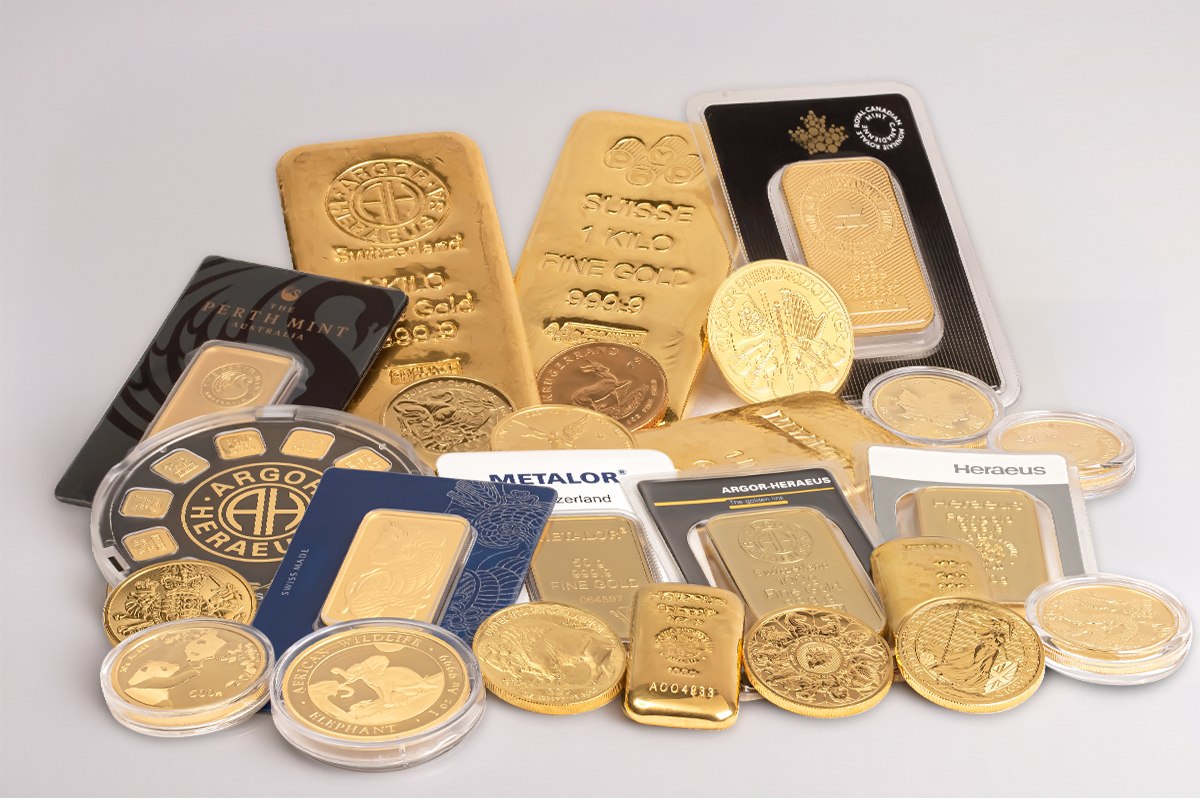
Starting to invest in gold is simpler than most people expect. Unlike many investment assets, you can buy physical gold bullion online or in person, without a broker, a licence, or a large upfront sum. Fractional gold coins and small gold bars mean you can start with whatever budget you have. Many investors begin with modest, regular purchases, steadily building a position over time.
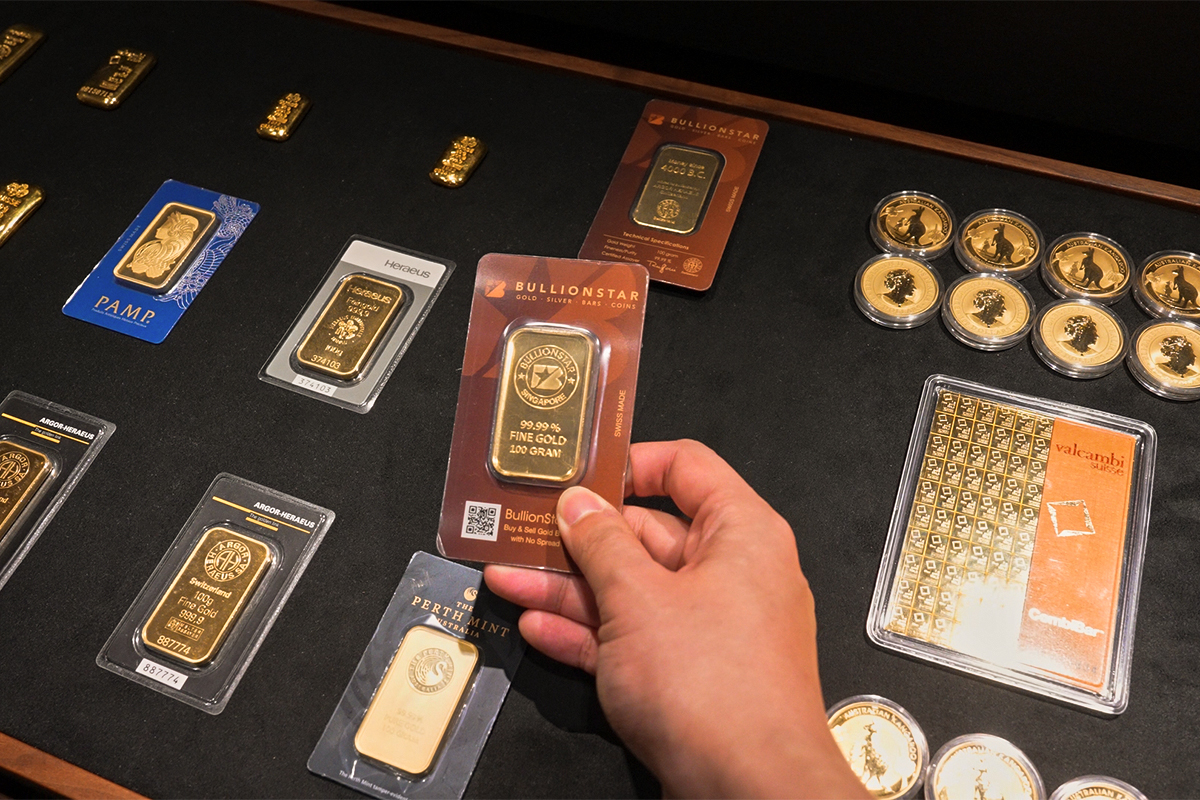
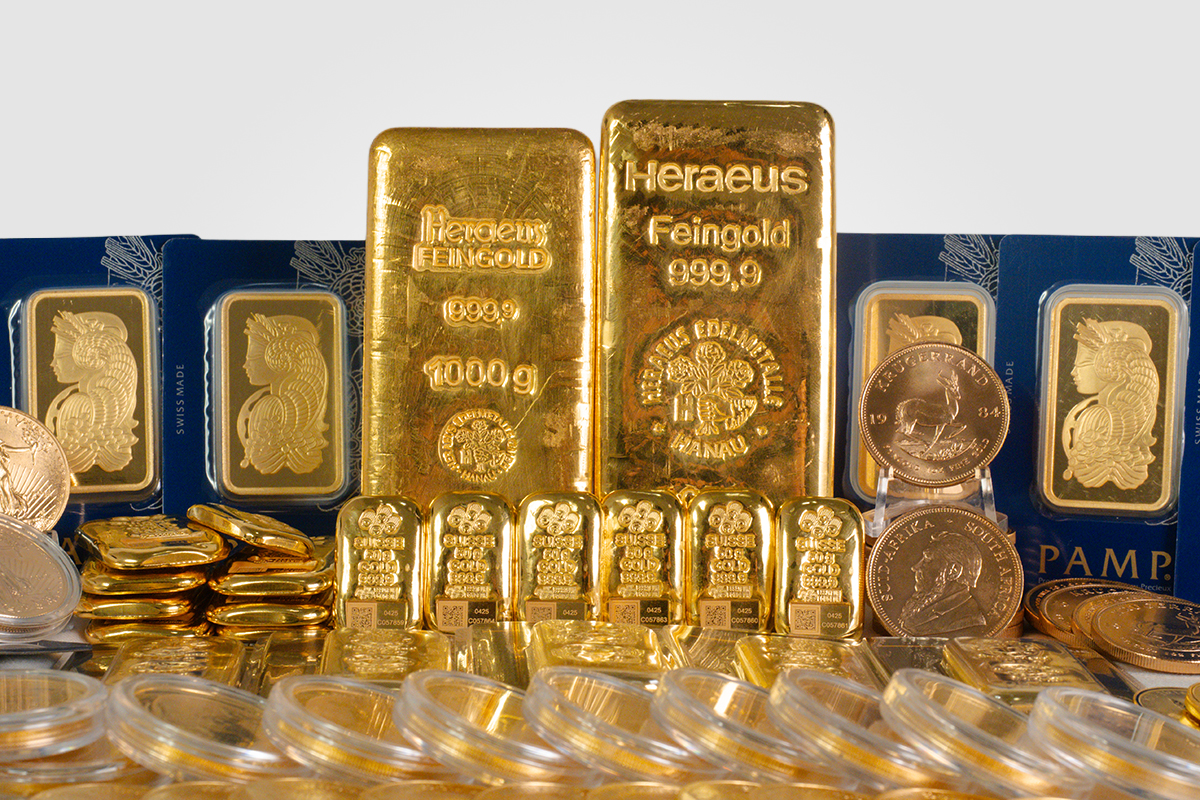
At BullionStar, we stock a wide range of gold bars and gold coins produced by national mints and accredited refiners, with transparent pricing and no hidden fees. Whether you’re making your first purchase or adding to an existing holding, browse our gold bullion range to get started.
How to Invest in Gold for Beginners
Whether you’re new to investing altogether or just new to gold, a little research goes a long way. Understanding your options before you buy helps you avoid common mistakes and make a purchase you’re confident in. The five-step process below is a straightforward guide to investing in gold for beginners.
- Define Your Goal – Start by thinking about why you want to invest in gold. Are you looking to preserve wealth over the long term, hedge against inflation, or build up a small holding gradually? Your goals will shape which format makes most sense.
- Choose a Format – Once you know your goals, you can choose the type of gold investment that fits them best: physical bullion, ETFs, mining stocks, and more. We cover each option in detail below.
- Choose a Dealer – Research reputable dealers before committing. Look for transparent pricing, positive independent reviews, clear buy-back policies, and industry accreditations.
- Make Your Purchase – Once you’ve chosen your dealer, placing an order is straightforward. Select your product, choose a payment method that suits you, and confirm your purchase.
- Store Your Gold – If you’ve bought physical gold, decide how you’ll store it: at home in a safe, or via a professional vault storage service. BullionStar offers secure vault storage for those who’d prefer a professional secure storage solution.
For most beginners, physical gold is the simplest and most straightforward starting point. There’s no counterparty risk, no ongoing management fees, and no complexity. You buy it, store it, and let it hold value over time. If you’re already familiar with financial markets and comfortable with more complexity, something like a gold ETF may also be worth exploring, but take your time, understand each option, and invest when you’re ready.
How to Invest in Gold Online
Buying gold online follows the same process as outlined above, but comes with some additional considerations, particularly around choosing a dealer you can trust.
The internet gives you access to a wide range of bullion dealers, both local and international, which is a major advantage. But it also means doing a little more homework before you commit. When evaluating an online gold dealer, check for:
- Verified customer reviews on independent platforms like Trustpilot – not just testimonials on the dealer’s own website.
- That they stock products from recognised mints and refiners, such as the Perth Mint, Royal Mint, or PAMP Suisse.
- Transparent, real-time pricing with clearly displayed premiums over spot price.
- A clear buy-back policy, so you know you can sell when the time comes.
- Industry accreditations and memberships, which signal accountability to professional standards.
It’s also worth understanding how your gold will be delivered. Reputable online dealers will ship insured and tracked, with discreet packaging. If you’d prefer not to take delivery at home, look for dealers who offer a professional vault storage option.
BullionStar has been selling gold online since 2012, with thousands of verified Trustpilot reviews, products from the world’s leading mints, and fully insured vault storage available for customers who prefer it.
The Different Ways to Invest in Gold
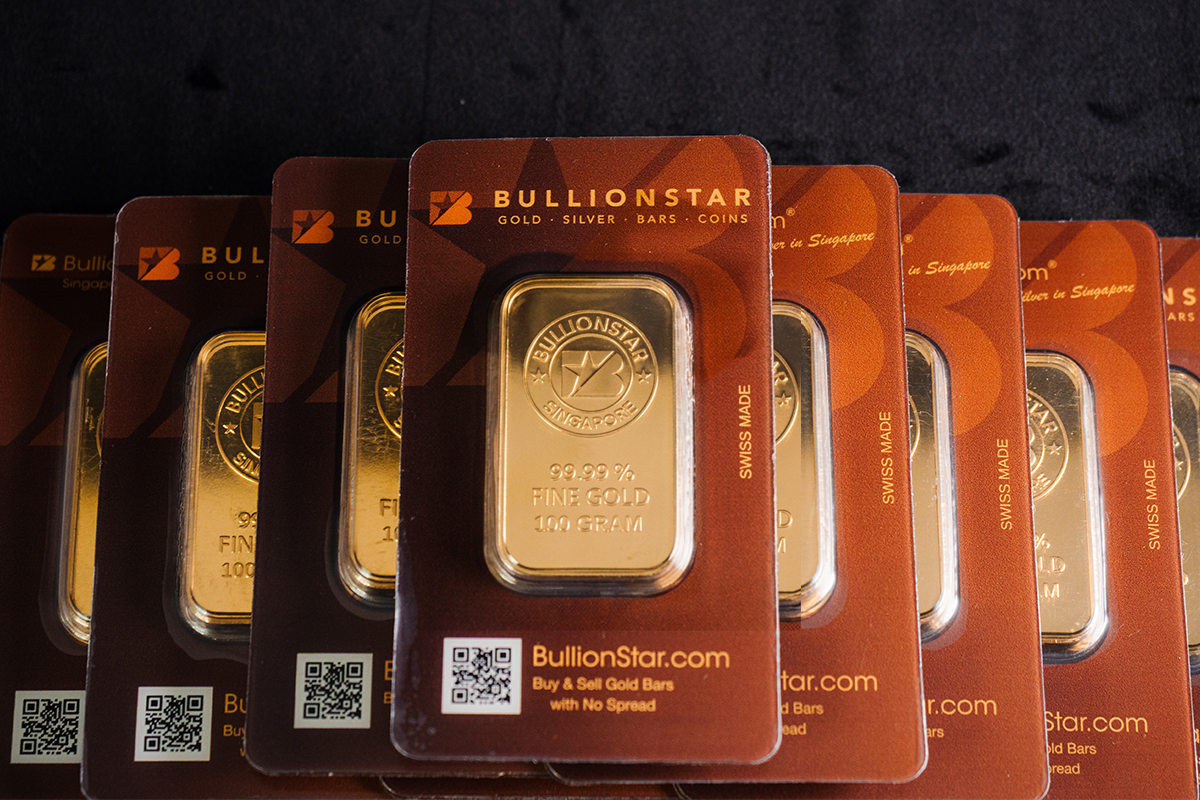
Gold investment comes in several forms, each with its own risk profile, ownership structure, and practical considerations. Below are the main options available to investors.
- Physical Bullion – Buying gold bars or gold coins offers direct ownership of the physical commodity itself. There is no counterparty risk, your gold is yours outright, and you can choose between home delivery or professional vault storage.
- ETFs – Exchange Traded Funds (ETFs) are investment funds traded on stock exchanges that track the price of gold. They offer easy exposure to gold price movements without the need to store anything, but you don’t own any physical gold directly. Gold ETFs carry counterparty risk, and most do not allow conversion to physical bullion.
- Mining Stocks – Investing in the stocks of gold mining companies gives you indirect exposure to gold. You’re investing in the business of mining it, not the metal itself. Because operational costs are relatively stable, miners can benefit disproportionately from rising gold prices. However, mining stocks carry significantly higher risk, including operational, regulatory, and environmental factors.
- Gold IRAs – In some countries, investors can hold gold within tax-advantaged retirement accounts. In the US, a self-directed Gold IRA allows you to hold IRS-approved physical gold with tax benefits. The UK equivalent is a SIPP. Gold in these schemes is typically held in professional storage rather than delivered to you.
At BullionStar, we believe owning physical gold outright is the strongest foundation for a gold investment strategy. It carries no counterparty risk and sits outside the traditional financial system. That said, every investor’s circumstances are different, and some strategies combine methods: physical gold as a long-term safe haven anchor, alongside ETFs or mining stocks for higher-risk, higher-reward exposure.
If you’re unsure which approach suits you, it’s worth consulting an independent financial adviser who can give guidance based on your specific situation.
Physical Gold vs Gold ETFs
Physical gold and gold ETFs are the two most popular ways to invest in gold, used by millions of investors worldwide. While both provide exposure to the gold price, they work very differently, and tend to suit different kinds of investors. The table below sets out the key differences.
| Physical Gold | Gold ETFs | |
|---|---|---|
| Risk Profile | Lower Risk | Higher Risk |
| Ownership | Full Ownership | No Direct Ownership |
| Counterparty Risk | None | High |
| Ongoing Costs | Storage & Insurance Fees | Annual Management Fees |
| Liquidity | High | Very High |
| Typical Time-Frame | Long Term | Short to Long Term |
| Suitable For | Wealth Preservation | Price Exposure / Trading |
For investors focused on wealth preservation and long-term security, physical gold is typically the stronger choice. For those who want flexible, low-friction exposure to gold price movements, ETFs may be more convenient, though it’s important to understand you won’t own any gold directly.
Gold Mining Stocks
Gold mining stocks are another way to gain exposure to gold, though an indirect one. When you invest in a mining company, you’re buying into a business that extracts gold, not the metal itself. The gold price is an important factor, but it’s not the only one.
The potential upside is that mining companies have leveraged exposure to gold price gains. When the gold price rises, revenue increases while many operational costs remain relatively stable, meaning profit margins can expand disproportionately. This can translate into strong share price performance or dividends during bull runs.
The risks, however, are considerably higher than physical gold. A mine’s reserves can be depleted, costs can spiral, and companies are exposed to operational, environmental, and geopolitical risks that have nothing to do with the gold price. Individual miners can and do fail. For this reason, many investors who want equity exposure to gold prefer diversified mining funds or ETFs – such as the VanEck Gold Miners ETF (GDX) – rather than picking individual stocks.
Gold mining stocks behave more like conventional equities than a gold investment, and should be approached as such. BullionStar does not offer mining stocks directly. If this is an avenue you want to explore, a licensed stockbroker or investment platform would be the appropriate route.
Gold Mutual Funds
Gold mutual funds pool investor capital to invest across multiple gold-related assets: physical gold, gold ETFs, and gold mining stocks. The appeal is diversification, rather than concentrating exposure in one method, a mutual fund spreads it across several, which can reduce the impact of any single method underperforming.
The trade-offs are worth understanding. Mutual funds carry management fees, which can erode returns over time. Volatility can still be significant, particularly in funds with heavy allocations to mining stocks. And depending on your jurisdiction, mutual funds may not carry the same tax advantages as holding physical bullion directly.
Gold mutual funds tend to suit investors who want broad gold exposure through a single managed vehicle, without selecting individual assets themselves. They are actively managed, which distinguishes them from passive gold ETFs, though that active management comes at a cost.
As with mining stocks, BullionStar does not offer mutual funds directly. If this is an approach you want to explore, a licensed financial adviser or investment platform would be the right starting point.
How Much to Invest in Gold
Gold works best as part of a balanced, diversified portfolio. The right allocation depends on your view of gold’s price trajectory, your investment time horizon, and your overall risk appetite.
For most investors, a conservative allocation sits between 5–10% of total portfolio value. This broadly aligns with Ray Dalio’s All-Weather Portfolio, which allocates 7.5% to gold as part of a balanced, all-conditions strategy. More conviction in gold’s outlook might lead an investor toward a 10–20% allocation, while the Permanent Portfolio (developed by Harry Browne) recommends holding as much as 25% in gold, on the basis that it performs strongly during periods of inflation and economic uncertainty. Learn more about different gold allocation strategies.
Gold is generally considered a lower-risk asset than equities, but risks do exist. The gold price can be volatile in the short term, and gold is best suited to investors with a long-term horizon rather than those seeking quick gains. It should complement a broader portfolio, not replace one.
Frequently Asked Questions
Is gold a good investment in 2026?
Yes, gold is a good investment in 2026. Gold has historically been one of the strongest long-term stores of value, performing well during periods of inflation, currency weakness, and economic uncertainty, all conditions that have been present in recent years. As with any asset, past performance doesn’t guarantee future returns, but gold’s fundamentals remain strong heading into 2026.
How do I invest in a gold IRA?
A Gold IRA is a self-directed individual retirement account (SDIRA) that allows you to hold IRS-approved physical gold as part of your retirement savings. To set one up, you’ll need to open an SDIRA with a qualified custodian, fund the account, and purchase eligible gold bullion, which must meet IRS purity standards and be held in an approved depository. Learn more about investing in a gold IRA with BullionStar.
How much should I invest in gold?
Most financial advisers suggest allocating 5–20% of your investment portfolio to gold. Conservative investors typically start at 5–10%, moderate investors may hold 10–15%, and those with strong conviction in gold’s outlook might go higher. The right amount depends on your overall financial situation, time horizon, and risk appetite, and it’s worth reviewing your allocation periodically as circumstances change.
What is the safest way to invest in gold?
The safest way to invest in gold is to buy physical bullion from a reputable, accredited dealer and store it securely – either at home in a quality safe, or through a professional vault storage service. Physical gold carries no counterparty risk, meaning its value isn’t dependent on any third party’s financial health. Choosing a dealer with transparent pricing, verified customer reviews, and a clear buy-back policy reduces risk further.
How is gold taxed?
Tax treatment on gold varies by country and by the type of gold investment. In some jurisdictions, certain gold coins with legal tender status are exempt from VAT or sales tax. Capital gains tax may apply when you sell gold at a profit, though thresholds and rates differ significantly by location. Gold held within a pension scheme such as a Gold IRA or SIPP may benefit from specific tax advantages. We recommend consulting a tax adviser for guidance specific to your situation.
Start Investing in Gold with BullionStar
Whether it’s your first purchase or you’re looking to build on an existing holding, understanding your options is the right place to start.
For most investors, physical gold remains the simplest and most secure foundation. No counterparty risk, no ongoing management fees, and full ownership of a tangible asset that has held value for thousands of years. At BullionStar, we’ve been helping customers buy gold since 2012, with a wide range of gold bars and coins from the world’s leading mints, transparent pricing, and secure vault storage for those who prefer not to take delivery.
Browse our full range of gold bullion and take the first step toward investing in gold today.
Popular Blog Posts by Gold & Silver 101
 An Introduction to Gold & Silver Investing
 Should I Invest in Gold, Silver, or Platinum Bullion?
 Gold Coins vs Gold Bars: Which Is Better?
 How Is Gold Taxed in Singapore? The IPM GST Exemption Explained
 Storing Precious Metals, Gold, and Silver Bullion
 Gold & Silver Bullion Investing FAQs
 Karat vs Carat: What’s the Difference?
 Gold Purity: The Complete Guide
 How Much Gold Is There in the World?
 Junk Silver: What It Is and What It’s Worth