 Contact
 Help
Help





Fiat Currency: What It Is and How It Works
 Gold & Silver 101



Fiat currency (also called fiat money) is the form of money most of us use every day, yet few stop to consider what it actually is or where its value comes from. The term comes from the Latin word for decree: fiat currency is money that a government declares to be legal tender, not because it is backed by a physical commodity, but simply because the state says so.
Every major currency in use today, including the US dollar, the euro, the British pound, and the Japanese yen is a fiat currency. Their value rests on institutional trust, government authority, and the expectation that others will accept them in exchange for goods and services. Unlike gold and silver, which have been used as money for thousands of years because of their inherent properties, fiat money carries no intrinsic value of its own.
This page covers what fiat currency is, how it works, and how it compares to commodity money and gold. It also looks at the history of how the world moved to fiat money, and the risks (such as inflation) that come with a monetary system built on trust rather than tangible value.

What Is Fiat Currency? Definition and Mechanism
Fiat currency is government-issued money that is not backed by a physical commodity such as gold or silver. Its value is not derived from any material it can be exchanged for — it is established by government decree and maintained by public trust in the issuing authority. The word “fiat" is Latin for “let it be done," reflecting the fact that this form of money exists by official declaration rather than intrinsic worth.
Fiat money functions as a medium of exchange, a unit of account, and a store of value — the core roles that any form of money must fulfil. What distinguishes it from earlier forms of currency is that there is no underlying asset underpinning it. A holder of US dollars cannot redeem them for a fixed quantity of gold or any other commodity. The dollar’s value exists because governments enforce its use as legal tender, and because the people and institutions that use it collectively trust that it will continue to be accepted.
How Does Fiat Currency Work?
Fiat currency is issued and managed by central banks — such as the US Federal Reserve, the European Central Bank, or the Bank of England. Central banks control the money supply through monetary policy: adjusting interest rates, buying or selling government bonds, and setting reserve requirements for commercial banks.
In practice, most fiat money in circulation is not physical cash but digital balances created through the banking system. When a commercial bank extends a loan, it does not lend out existing deposits — it creates new money as a ledger entry. This process, known as fractional reserve banking, means that the total amount of money in the economy can expand far beyond the physical notes and coins in circulation. The result is a monetary system in which money supply is elastic, and can be expanded by policy decisions rather than constrained by a finite physical resource.
This flexibility is often cited as fiat money’s greatest advantage: governments and central banks can respond to economic crises by adjusting the money supply. It is also, as we explore later in this page, one of its most significant risks.
Fiat Currency vs Commodity Money (and Gold)
Not all forms of money work the same way. To understand fiat currency fully, it helps to compare it with what came before (commodity money), and with gold, which remains the most enduring monetary asset in human history.
Fiat Money Vs Commodity Money
Commodity money is money that has intrinsic value in its own right. Throughout history, societies have used gold, silver, copper, grain, and other physical goods as currency — not because a government decreed their value, but because the commodities themselves were useful, scarce, and widely desired.
The key distinction is that commodity money carries value independent of any institution. A gold coin holds worth whether or not the government that minted it still exists. Fiat money, by contrast, is only as valuable as the trust and authority that backs it. If a government collapses or loses credibility, its currency can become worthless — as history has demonstrated on many occasions.
Commodity-backed currencies occupied a middle ground between the two: paper notes that could be redeemed for a fixed amount of gold or silver. The US dollar itself was once a commodity-backed currency — prior to 1971, holders could exchange dollars for gold at a fixed rate. Today, no major currency operates on this basis.
Fiat Vs Gold
Gold occupies a unique position in the story of money. It has served as a store of value for over 5,000 years — longer than any government, central bank, or fiat currency system. Its monetary properties are well-established: it is durable, divisible, scarce, fungible, and resistant to counterfeiting. Crucially, its supply cannot be expanded by policy decision. No central bank can print gold.
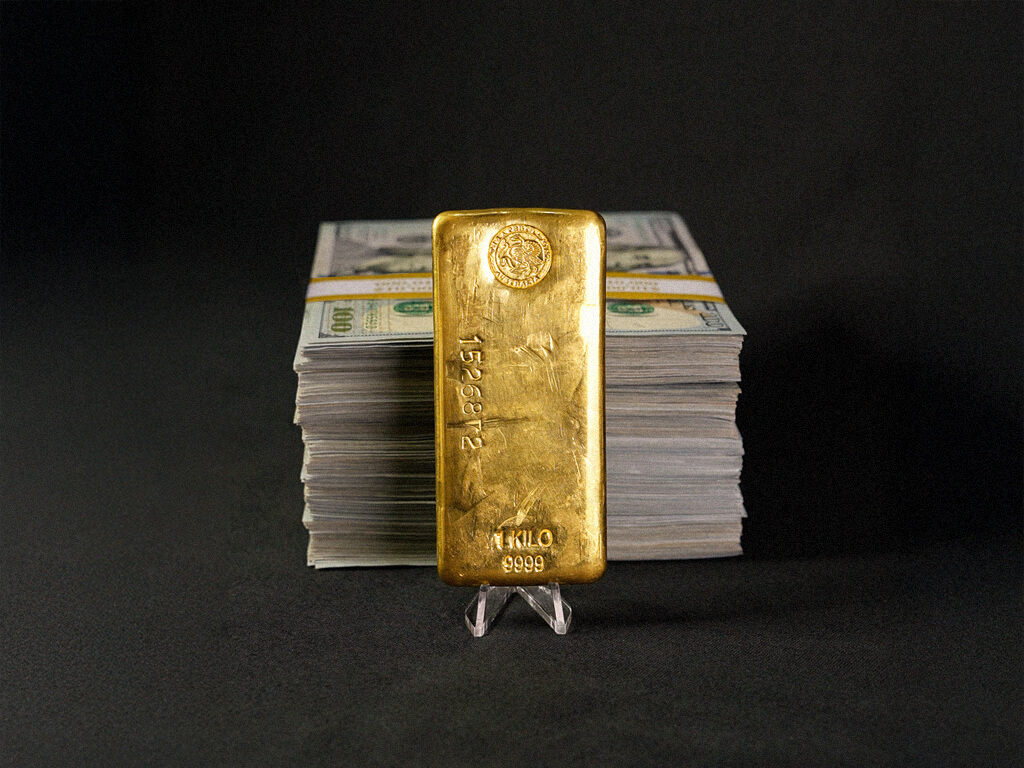
This scarcity has made gold a consistent hedge against the erosion of fiat currency’s purchasing power. Since the US abandoned the gold standard in 1971, the dollar has lost over 85% of its purchasing power against gold. Those who held gold over the same period saw their wealth preserved in real terms; those who held cash did not.
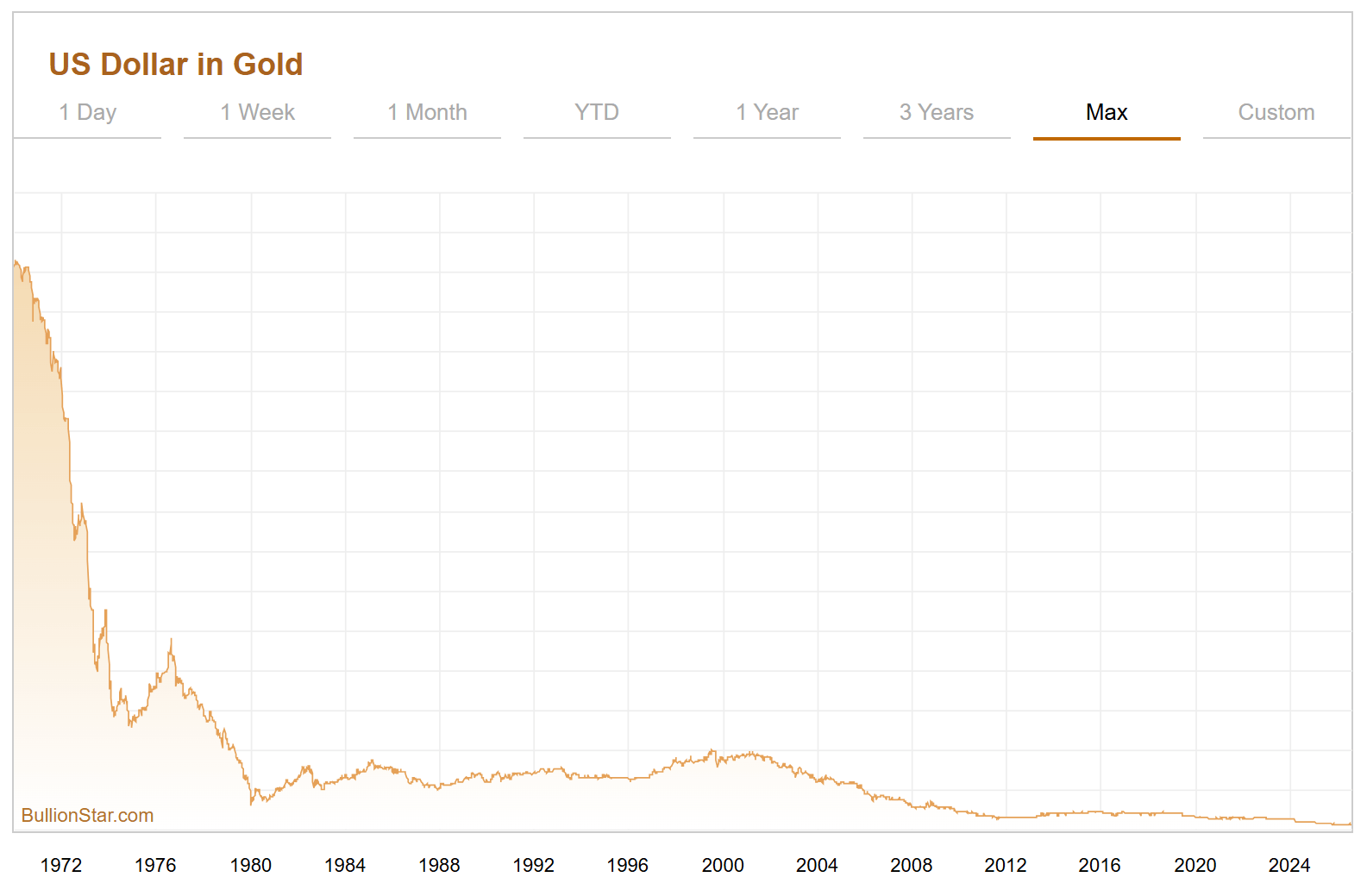
For this reason, many investors hold gold not as a speculative asset but as a monetary anchor — a portion of their wealth kept outside the fiat system, in an asset with no counterparty risk and no dependence on government credibility. BullionStar offers a range of gold bullion bars and coins for investors looking to hold physical gold as a long-term store of value.
Examples of Fiat Currency Around the World
Virtually every currency in use today is a fiat currency. There is no major economy currently operating a gold standard or commodity-backed monetary system. The shift to fiat money was completed globally over the course of the twentieth century, with the final link to gold severed when the United States ended dollar-gold convertibility in 1971.
Some of the most widely used fiat currencies include:
- US Dollar (USD) — the world’s primary reserve currency, issued by the US Federal Reserve
- Euro (EUR) — the shared currency of 20 EU member states, managed by the European Central Bank
- British Pound (GBP) — issued by the Bank of England, one of the oldest currencies still in circulation
- Japanese Yen (JPY) — the most traded currency in Asia and third most held reserve currency globally
- Chinese Renminbi (CNY) — managed by the People’s Bank of China, with a growing global role
- Singapore Dollar (SGD) — issued by the Monetary Authority of Singapore, one of Southeast Asia’s most stable currencies
These currencies differ in scale, reach, and the monetary policies that govern them — but they share the same fundamental characteristic: their value rests entirely on institutional authority and public trust, not on any underlying physical asset. SGD holds a partial exception: Singapore’s Currency Act requires all currency in circulation to be fully backed (100%) by reserve assets — gold among them, alongside foreign currencies and securities. That said, its value still rests on a policy requiring this backing, rather than on any inherent worth of the currency itself.
A Brief History of Fiat Currency
Fiat currency is a relatively recent development in the long history of money. For most of recorded history, money was either a physical commodity (gold, silver, or copper) or a paper claim directly redeemable for one.
The First Paper Money
The earliest known paper currency appeared in China during the Tang Dynasty in the 7th century AD, originally as certificates of deposit used by merchants to avoid carrying heavy coins over long distances. By the Song Dynasty (960–1279 AD), government-issued paper money was in widespread circulation. These early notes were not fully fiat, as they were typically backed by reserves of copper or silver, but they established the concept of a paper medium of exchange.
Gold as the Global Standard
Outside China, gold and silver dominated monetary systems for millennia. Gold’s durability, scarcity, and universal desirability made it the natural choice as a store of value and medium of exchange across civilisations. By the 19th century, most major economies had formalised this into the gold standard — a system in which paper currency was issued in fixed proportion to gold reserves, and could be redeemed for gold on demand.
The gold standard imposed discipline on governments and central banks: money supply could only expand as fast as gold reserves allowed. Inflation was constrained. Exchange rates were stable. Cross-border trade was predictable.
Bretton Woods and the Erosion of Gold
Following the Second World War, the Bretton Woods Agreement of 1944 established a new international monetary order. The US dollar was pegged to gold at $35 per ounce, and other major currencies were pegged to the dollar. The system effectively made the dollar the world’s reserve currency, with gold as its ultimate anchor.
By the late 1960s, the US was running significant budget deficits to fund the Vietnam War and domestic spending programmes. Gold reserves were under pressure as foreign governments, holding dollars, began redeeming them for gold. The system became unsustainable.
The Nixon Shock: 1971
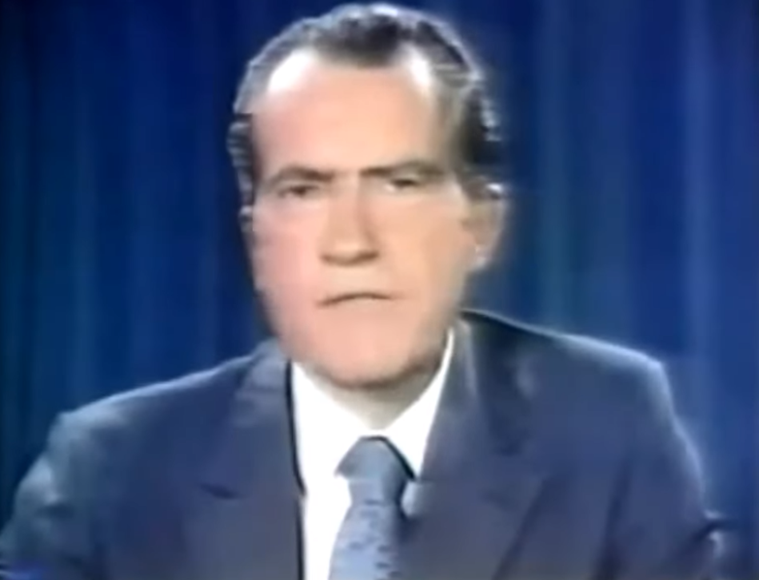
On 15 August 1971, US President Richard Nixon announced the suspension of the dollar’s convertibility into gold. The move, known as the Nixon Shock, ended the Bretton Woods system and severed the last direct link between the world’s reserve currency and a physical commodity. Within two years, the major economies had transitioned to floating exchange rates, and the era of pure fiat currency had begun.
Since 1971, no major currency has been backed by gold or any other commodity. The dollar, the euro, the pound, and every other reserve currency in circulation today exist entirely on the basis of government authority and institutional trust.
Risks: Inflation, Collapse, and Loss of Purchasing Power
Because fiat currency is not constrained by a finite physical resource, governments and central banks can expand the money supply at will. This flexibility, although framed as useful in managing short-term economic conditions, carries structural risks that commodity-backed money does not. The history of fiat currency is also a history of inflation, devaluation, and in extreme cases, complete monetary collapse.
Inflation and the Erosion of Purchasing Power
Inflation is the gradual rise in prices, or equivalently, the gradual decline in a currency’s purchasing power, and is an inherent feature of fiat monetary systems. When more money is created without a corresponding increase in goods and services, each unit of currency buys less than it did before.
The US dollar is often held up as a model of monetary stability, yet since the Nixon Shock of 1971 (when the dollar was fully decoupled from gold) it has lost over 85% of its purchasing power. What $100 could buy in 1971 requires more than $750 today. This is not considered a crisis; it is simply the ordinary, sustained consequence of managing a fiat currency over decades.
Hyperinflation: When Fiat Currency Fails
In more extreme cases, fiat currencies have lost their value almost entirely. There are two examples that are frequently cited. Firstly, Weimar Germany in the early 1920s, where hyperinflation became so severe that workers were paid twice daily so they could spend their wages before prices rose again. Secondly, Zimbabwe in the 2000s, where the government eventually issued a 100 trillion dollar note before abandoning the currency altogether.
These are not isolated historical curiosities. In recent years, a number of fiat currencies have suffered severe devaluations:
- Venezuela (Bolívar) — Lost over 99% of its value against the US dollar, requiring a full currency redenomination in 2021
- Lebanon (Lebanese Pound) — Devalued by roughly 90% following a financial collapse that began in 2019
- Turkey (Turkish Lira) — Lost nearly 50% of its value in a single year (2021–22) due to unconventional monetary policy
- Sri Lanka (Sri Lankan Rupee) — Suffered severe devaluation following the country’s 2022 economic crisis and sovereign default
- Iran (Iranian Rial) — Has lost over 50% of its value since 2020, compounded by sanctions and falling oil revenues
In each case, the collapse was driven by a loss of confidence in the government or institution behind the currency — a reminder that fiat money is only as stable as the authority that issues it.
Systemic Risk: Debt, Banking, and Bail-Ins
Beyond inflation, fiat monetary systems carry structural risks rooted in how modern money is created and held. Because the banking system operates on fractional reserves (holding only a fraction of deposits as actual reserves) bank deposits are not simply money held in safekeeping. They are, legally, loans to the bank. In the event of a banking crisis, depositors can find themselves exposed.
This was demonstrated in Cyprus in 2013, when account holders saw a portion of their deposits converted into bank equity during a government-mandated bail-in. These risks are explored in detail in our articles on Debt 101 and Bank Bail-Ins.
Gold as a Hedge Against Fiat Risk
For investors concerned about inflation, devaluation, or systemic monetary risk, physical gold has historically served as the most reliable store of value outside the fiat system. Unlike bank deposits, physical gold held in your possession carries no counterparty risk — its value does not depend on any government, institution, or promise to pay. It cannot be inflated away, redenominated, or subject to a bail-in.
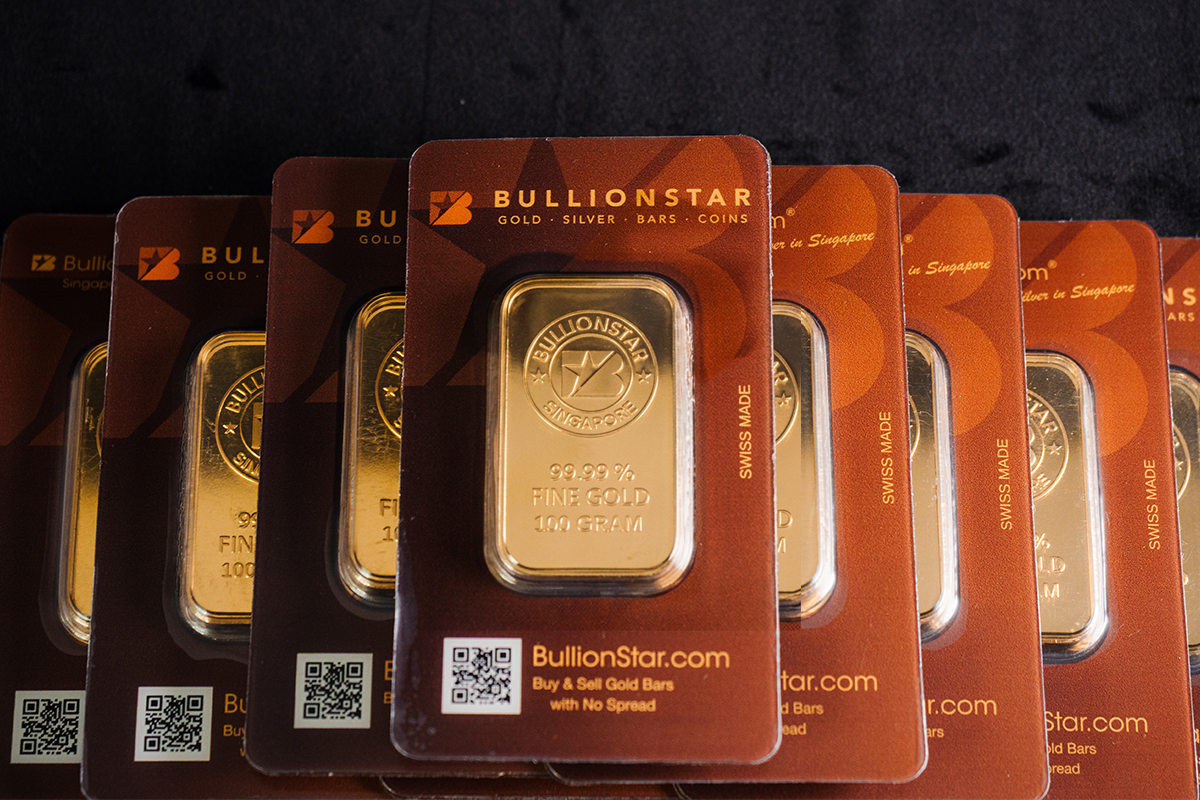
BullionStar offers a range of physical gold bars and gold coins for investors looking to hold a portion of their wealth in an asset with a 5,000-year monetary track record.
Frequently Asked Questions
Is fiat currency the same as paper money?
Not exactly. Paper notes are one form of fiat currency, but most fiat money in circulation today is not physical at all. When a bank extends a loan, it creates new money as a digital ledger entry — no notes are printed. The vast majority of the money supply in modern economies exists as electronic balances in bank accounts, created through the banking system rather than printed by a central bank. So while all paper money in use today is fiat currency, fiat currency itself extends well beyond paper.
How is fiat currency different from cryptocurrency?
Fiat currency is issued and regulated by governments and central banks, carries legal tender status, and has no hard limit on how much can be created. Cryptocurrency is decentralised (not issued or controlled by any government) and many cryptocurrencies, including Bitcoin, have a fixed maximum supply built into their code. Both fiat currency and most cryptocurrencies lack intrinsic value; their worth depends on trust and demand rather than any underlying physical asset. Gold differs from both: it is scarce, tangible, and has carried monetary value across cultures and centuries without relying on any issuing authority.
What gives fiat currency value?
Fiat currency derives its value from government authority and collective trust. Governments designate it as legal tender and the institutions that issue it, primarily central banks, are expected to manage its supply responsibly. In practical terms, fiat money has value because everyone agrees it does and because the state enforces its use. This is fundamentally different from gold or silver, which hold value based on their physical properties and scarcity, independent of any government or institution.
Why is it called fiat?
The word “fiat" comes from Latin, meaning “let it be done" or “by decree." Fiat currency is so named because its status as money is established by government declaration rather than by any intrinsic quality. A government does not need gold reserves or any other backing to issue fiat currency — it simply decrees that the notes and coins it produces are legal tender, and the monetary system is built on that foundation.
Is the US dollar a fiat currency?
Yes. The US dollar has been a fiat currency since 1971, when President Nixon ended the dollar’s convertibility into gold, dismantling the Bretton Woods system. Before that, the dollar was backed by gold at a fixed rate of $35 per ounce, meaning foreign governments could redeem their dollar holdings for physical gold. Since the Nixon Shock, the dollar has been backed by nothing other than the authority of the US government and the trust of the institutions and individuals that hold it.
Is gold a fiat currency?
No. Gold is the opposite of a fiat currency. Fiat money derives its value from government decree and institutional trust — it has no intrinsic worth of its own. Gold derives its value from its physical properties: it is scarce, durable, divisible, and chemically stable, and it cannot be created or expanded by any government or central bank. Gold’s monetary role has never depended on the authority of an issuing institution — it has been recognised as a store of value across cultures and civilisations for over 5,000 years. While fiat currencies come and go, gold has outlasted every monetary system it has coexisted with.
Can fiat currency become worthless?
Yes, and history shows it has happened repeatedly. A fiat currency’s value depends entirely on confidence in the issuing authority. When that confidence collapses, the currency can lose its value rapidly and, in extreme cases, completely. Weimar Germany, Zimbabwe, and more recently Venezuela and Lebanon have all experienced catastrophic currency failures. Even stable currencies experience gradual purchasing power erosion over time through inflation. Physical gold, by contrast, has never gone to zero — its value exists independently of any government or monetary system.
Fiat Currency and the Case for Gold
Fiat currency has been the foundation of the global monetary system for over fifty years. It is flexible, convenient, and deeply embedded in every aspect of modern economic life. For everyday transactions, it functions well. But as a long-term store of value, its structural limitations are difficult to ignore: it can be created in unlimited quantities, its purchasing power erodes over time, and its worth ultimately depends on the continued credibility of the governments and institutions that issue it.
Gold operates on entirely different principles. Its supply is finite. It requires no issuing authority. It carries no counterparty risk. These are not new observations — they are the reason gold has functioned as money and as a store of wealth across every major civilisation in recorded history, and why it continues to do so today. For investors seeking to preserve purchasing power outside the fiat system, physical gold remains the most proven option available.
BullionStar offers a full range of gold bullion bars and coins, available for delivery or secure vault storage in Singapore. Whether you are new to precious metals or looking to expand an existing position, our team is on hand to help you find the right product for your needs.
Popular Blog Posts by Gold & Silver 101
 An Introduction to Gold & Silver Investing
 Should I Invest in Gold, Silver, or Platinum Bullion?
 Gold Coins vs Gold Bars: Which Is Better?
 How Is Gold Taxed in Singapore? The IPM GST Exemption Explained
 Storing Precious Metals, Gold, and Silver Bullion
 Gold & Silver Bullion Investing FAQs
 Karat vs Carat: What’s the Difference?
 Gold Purity: The Complete Guide
 How Much Gold Is There in the World?
 Junk Silver: What It Is and What It’s Worth